North Macedonia.
Северна Македонија
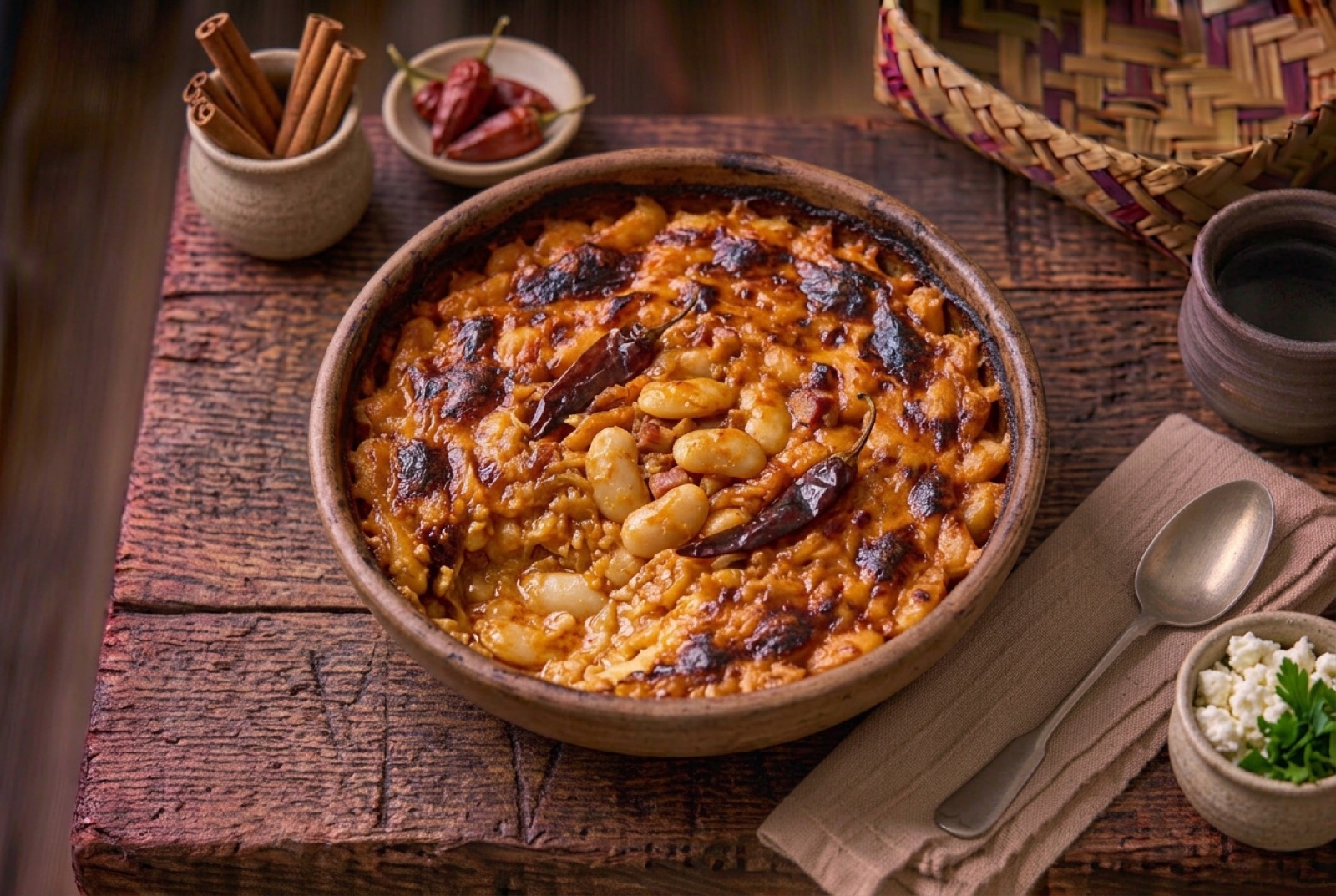
Macedonian cooking is pepper cooking. Long thick-walled red peppers arrive by the crate in September and are roasted, peeled and reduced into ajvar; pale green horn peppers are stuffed, fried whole, or packed into brine for winter; and sweet dried paprika is stirred into hot oil at the start of half the savoury dishes in the country, which is why so many of them share the same warm orange colour. Beans matter almost as much — tavče gravče, the large flat Tetovo bean baked in a shallow earthenware pan until the surface crusts, is the dish the country names as its own. What separates it from its neighbours is the insistence on the shallow pan and the clay pot rather than the yogurt-set bake of Albania or the sour-cream habits further north: things are fried down on the stove, moved into earthenware, and finished in a hot oven until a dry crust forms on top. Meat is used sparingly, cheese is white and brined more often than yellow, and Orthodox fasting leaves much of the repertoire meatless by design rather than by fashion.

- Continent
- EuropeBalkans
- Recipes in atlas
- 10
- Must-try dishes
- 5
- Pantry staples
- 10
Start with the classics.
Must tryThe dishes that explain the North Macedonia kitchen fastest — if you cook only a few things from this page, cook these.
North Macedonia10 hr 20 min
Tavče Gravče
Macedonian Clay-Pot Baked Beans
North Macedonia2 hr 55 min
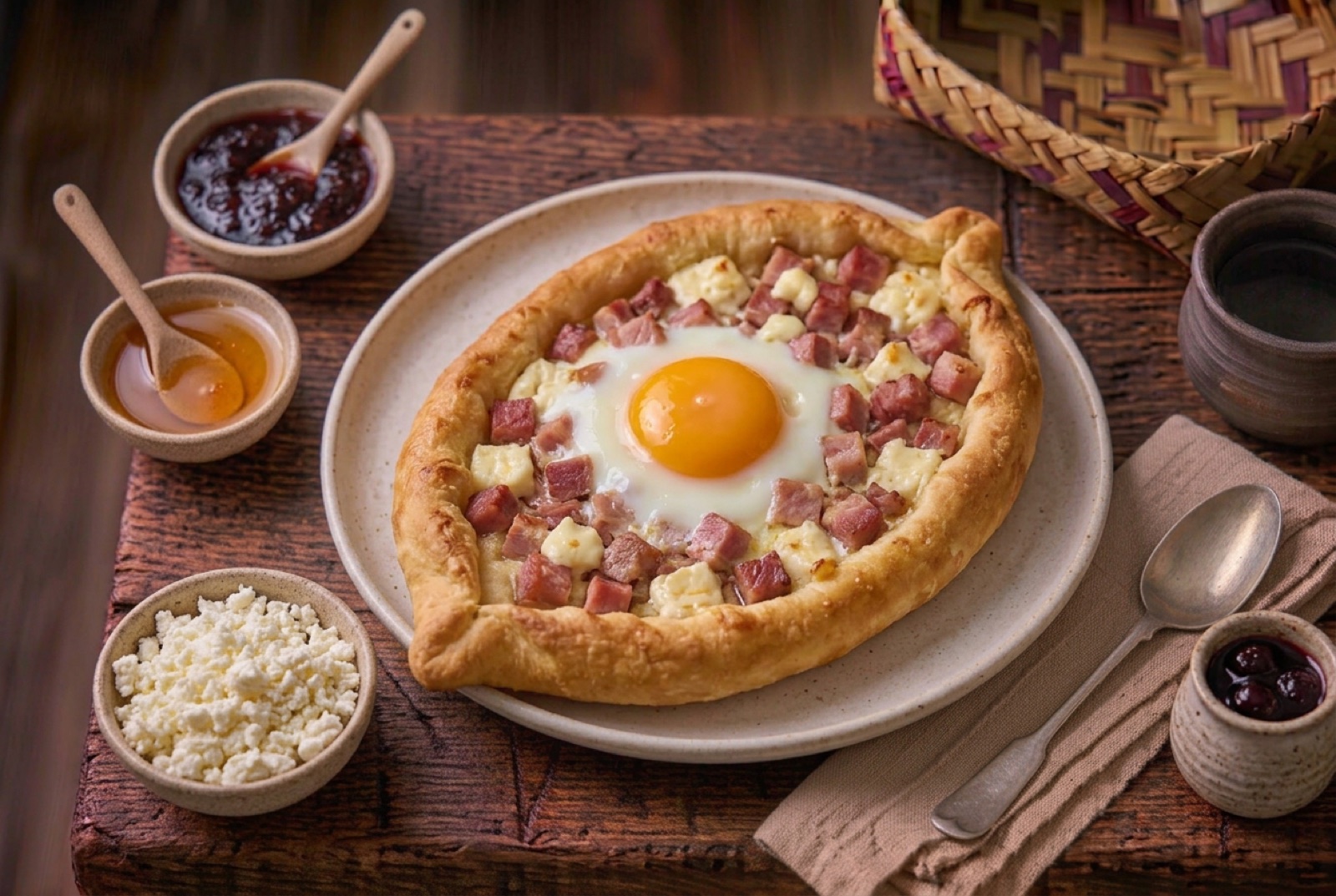
Pastrmajlija
Macedonian Boat-Shaped Meat Flatbread
North Macedonia3 hr 45 min
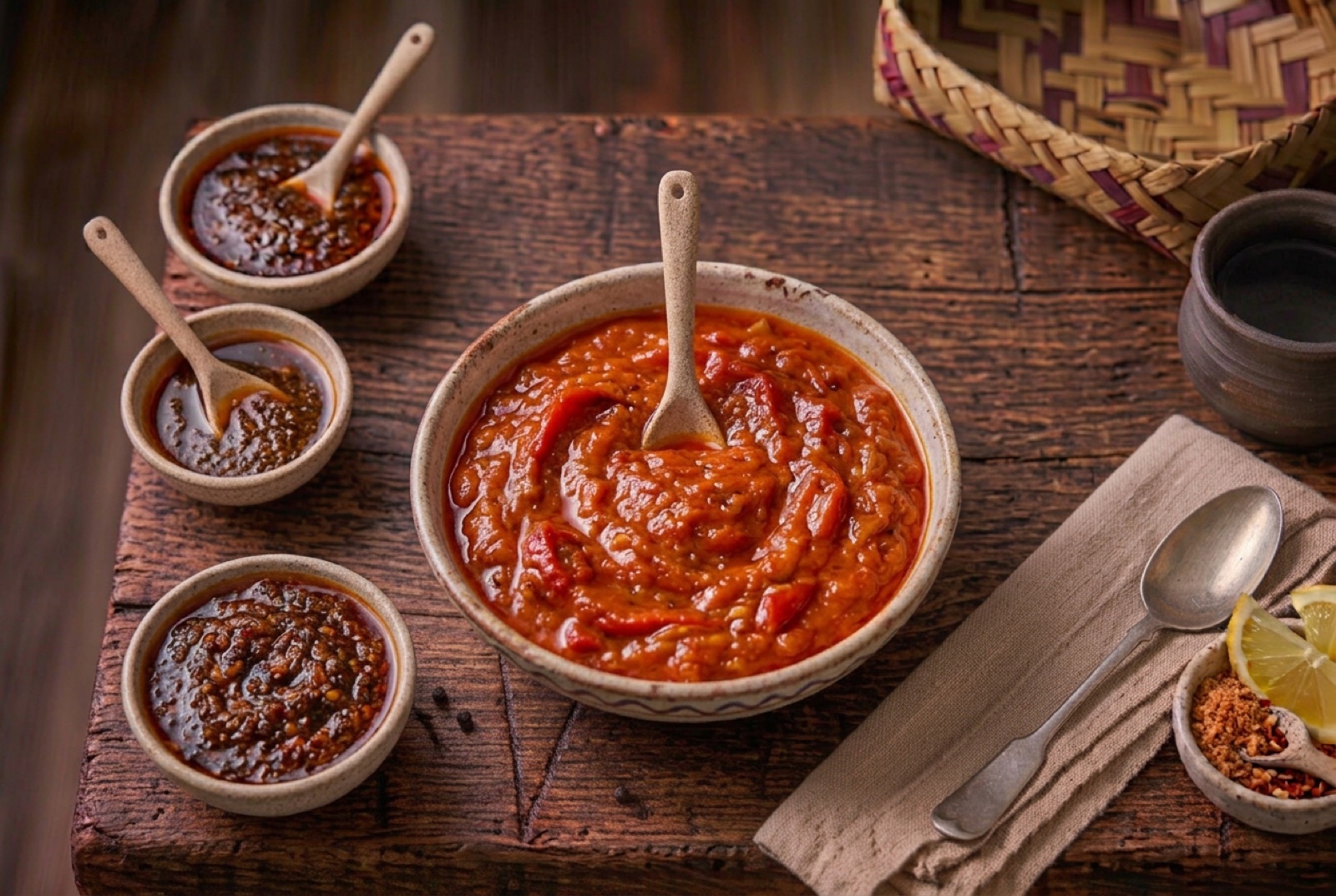
Macedonian Ajvar
Roasted Red Pepper Relish
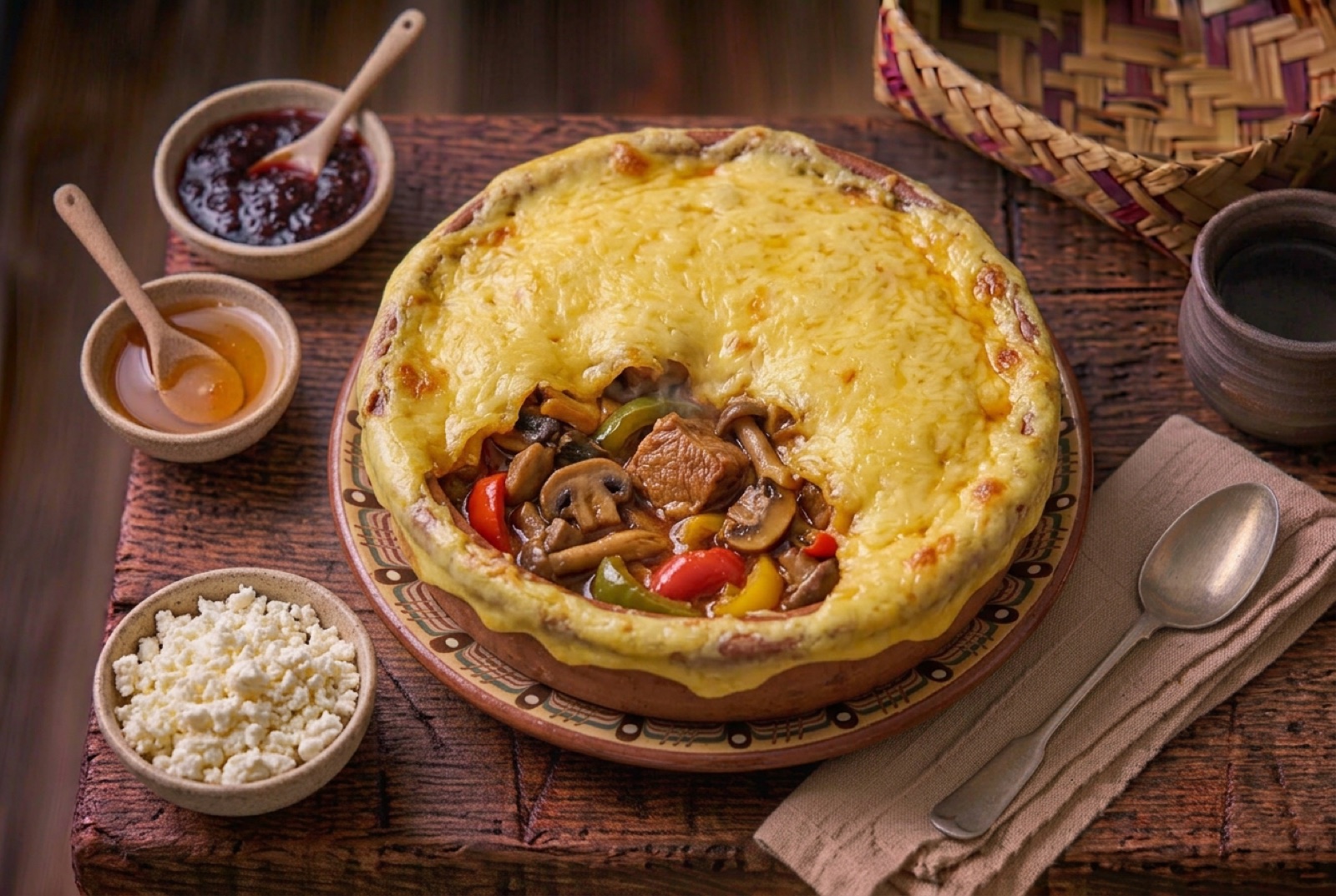
North Macedonia1 hr 55 min
Selsko Meso
Macedonian Village Pork and Mushroom Pot
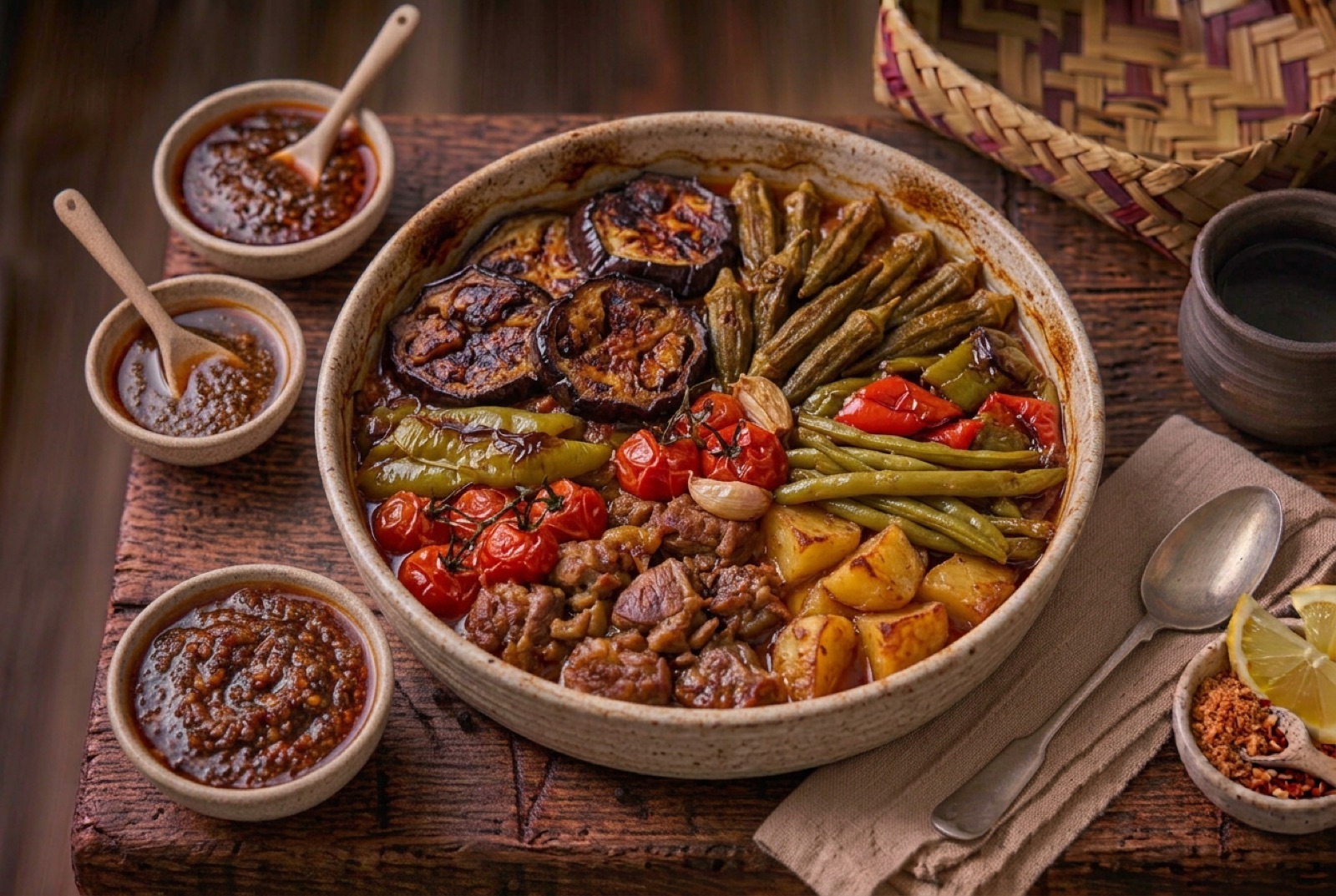
North Macedonia2 hr 55 min
Turli Tava
Macedonian Mixed Vegetable and Meat Bake
Inside the North Macedonia kitchen.
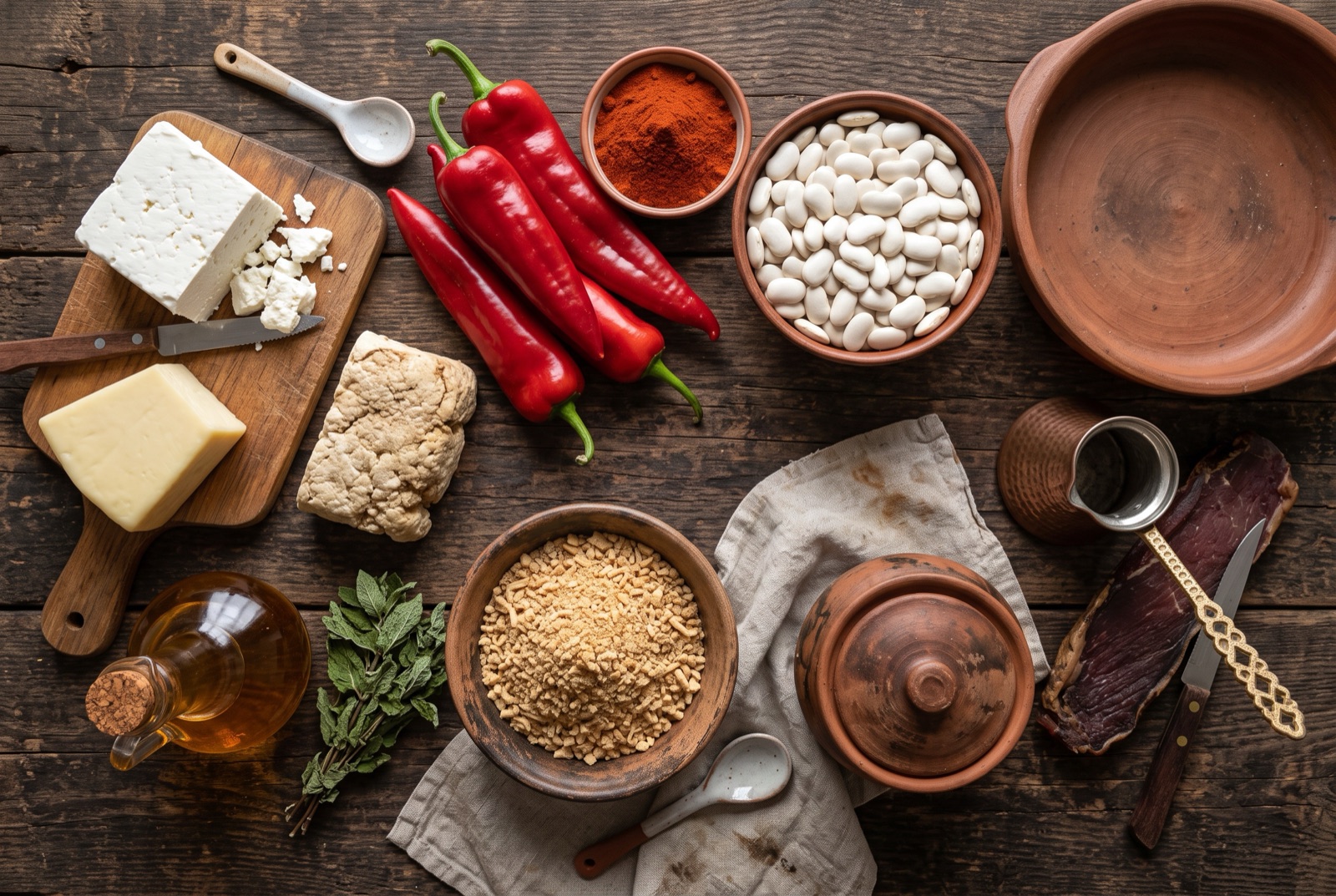
The pantry is short, seasonal and heavily preserved. Peppers dominate it: kurtovska kapija for ajvar, long green ones for stuffing, hot ones dried on strings, and paprika used by the tablespoon rather than the pinch. Beans come second, above all the tetovec, a large flat white bean from the Polog valley that cooks to a creamy interior without dissolving. Dairy is sheep-led and mostly white — sirenje, the brined cheese crumbled over almost everything, and bieno sirenje, the beaten cheese of Mariovo kneaded by hand until it turns dense and elastic — with kashkaval, the firm yellow cheese, kept for melting over meat. Sunflower oil does the frying, dried mint and black pepper do most of the seasoning, and tarana, coarse pasta crumbs rubbed by hand and dried in the sun, sits in sacks as insurance against a thin week.
Technique is built around two vessels and one habit. The tava is a wide shallow pan; the gjuveče is a small lidded clay pot; and the habit is the long unattended bake in falling heat, inherited from an era when villages shared a bread oven rather than owning one. Turli tava works exactly that way, with aubergine, okra, beans and peppers left to collapse into one another rather than roasted to a firm edge, and selsko meso does the same in miniature, one pot per person, sealed under melting kashkaval. Almost everything begins with onion fried in oil until soft, then paprika added off the heat so it blooms without burning — the single most recognisable Macedonian flavour.
Much of the repertoire is honestly shared. Ajvar, sarma, burek, shopska salad and grilled kebapi belong to the whole region, and no useful purpose is served by claiming otherwise. What is genuinely local is narrower and more interesting: pastrmajlija, the boat-shaped bread of Štip loaded with cured pork and finished with an egg; tavče gravče, which other Balkan countries make in some form but nobody else treats as a national emblem; malidžano, the walnut-and-aubergine spread; and the freshwater cooking of Lake Ohrid, where the endemic Ohrid trout — long overfished and now tightly protected — is prized above any sea fish.
Drink is taken as seriously as food. The Tikveš basin around Kavadarci and Negotino is one of the largest wine regions in southeastern Europe, planted mostly with vranec, a black, tannic red, and the aromatic white temjanika. Alongside it sits grape rakija and, distinctively, mastika — a strong anise spirit associated with Ohrid and Skopje that clouds with water and is drunk cold with meze. Coffee is Turkish more often than not, and boza, the thick fermented millet drink, is still sold in the Old Bazaar in Skopje.
The country's communities cook differently within the same market. Albanian households in Tetovo, Gostivar and Debar lean on pies, peppers and lamb, and avoid pork entirely; Turkish families in the bazaar quarters keep the syrup-sweet end of the repertoire alive with baklava, tulumbi and sutlijaš; and the Vlach town of Kruševo is known for pastry and for lokum made in the same handful of workshops for generations.
Signature pantry.
10 staplesThe ingredients this cuisine cannot function without.
- long red peppers (kurtovska kapija)
- sweet red paprika
- tetovec beans (large flat white beans)
- sirenje (white brined sheep cheese)
- kashkaval (firm yellow cheese for melting)
- bieno sirenje (hand-beaten Mariovo cheese)
- sunflower oil
- dried mint
- tarana (hand-rubbed dried pasta crumbs)
- pastrma (salted air-dried meat)
How people eat in North Macedonia.
Meals begin sideways, with meze rather than a starter: ajvar and bread, white cheese, olives, pickled peppers, cured meat, and a small glass of rakija or mastika sipped alongside rather than knocked back. Bread stays on the table throughout and does the work a fork will not. Lunch in the early afternoon is the main meal, and the food usually arrives in the vessel it cooked in, still bubbling at the rim. Orthodox fasting shapes the calendar seriously — during long fasts households switch to bean, pepper and vegetable versions of the same dishes — and the household slava, the family patron saint day, is the one occasion when the table is deliberately overloaded. Coffee ends everything, taken slowly and at length; leaving quickly afterwards is read as rudeness.
Regional kitchens.
North Macedonia cooks 4 distinctly different ways depending on where you stand — here is what changes between them.
- R1Polog and Tetovo (the North-West)
- Home of the tetovec bean that gives tavče gravče its texture, grown on the plain under the Šar mountains. The area has a large Albanian population, so pork is largely absent and the cooking runs to lamb, pies and sheep dairy from the high summer pastures.
- R2Štip and the Bregalnica Valley (the East)
- Pastrmajlija country, where the boat-shaped bread of cured pork and egg is baked all year and celebrated each autumn at the Pastrmalijada festival. The dry eastern hills also cure the pastrma the bread is named after, and grow much of the country's paprika.
- R3Pelagonia and Mariovo (the South)
- The wide grain and pepper plain around Bitola and Prilep, backed by the emptied villages of Mariovo. This is the source of bieno sirenje, the beaten sheep cheese, and of tarana, the dried pasta crumbs that become a fifteen-minute soup in a highland kitchen with nothing else in it.
- R4Ohrid, Struga and Prespa (the South-West)
- Lake cooking rather than sea cooking: Ohrid trout and Struga eel grilled plain with lemon, alongside apples from the Prespa basin and mastika from the Ohrid distilleries. Fishing pressure has made the endemic trout a protected and occasionally contested dish rather than an everyday one.
All North Macedonia recipes.
10 recipes and countingNorth Macedonia3 hr 45 min
Macedonian Ajvar
Roasted Red Pepper Relish
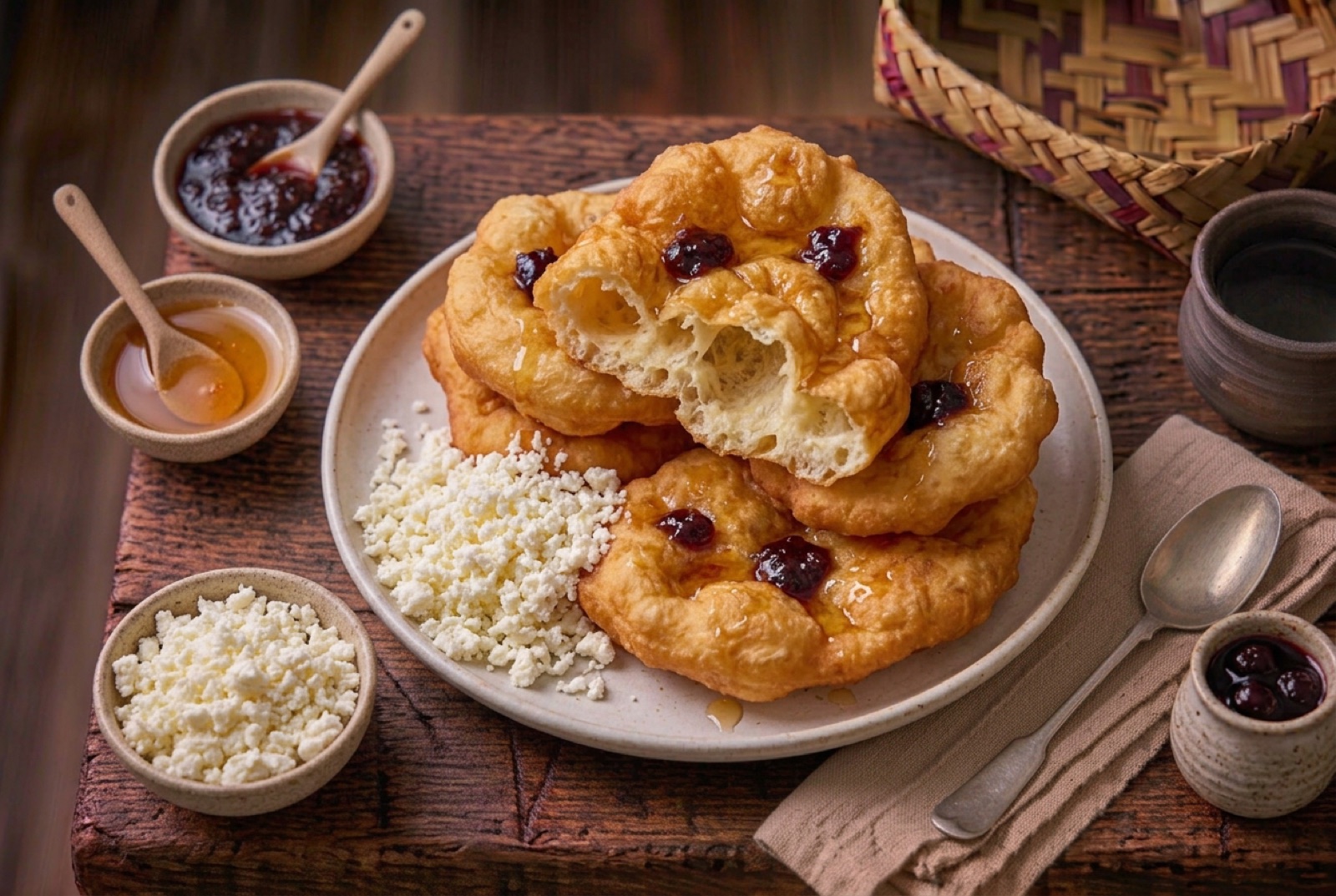
North Macedonia1 hr 35 min
Mekici
Macedonian Fried Breakfast Dough
North Macedonia2 hr 55 min
Pastrmajlija
Macedonian Boat-Shaped Meat Flatbread
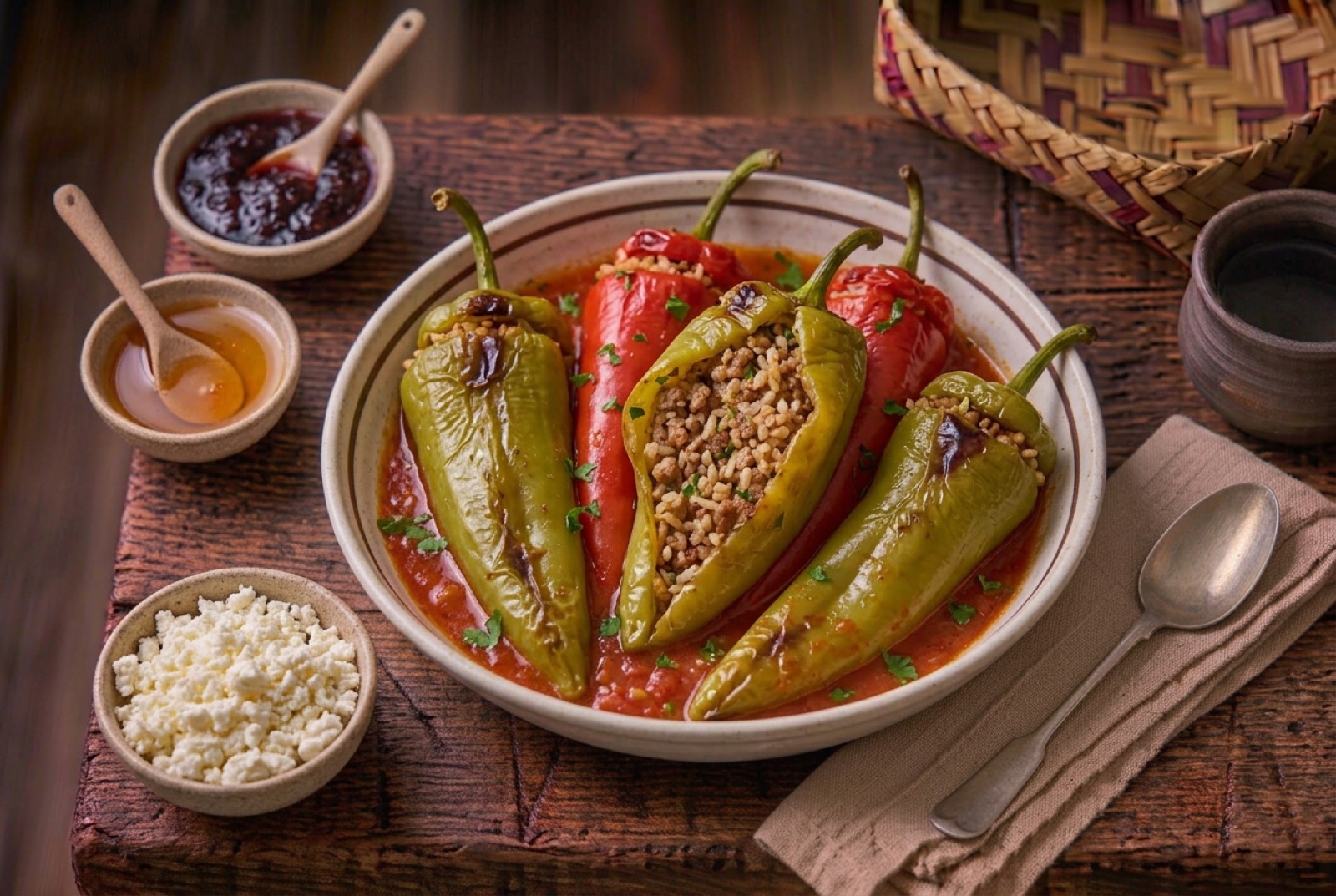
North Macedonia1 hr 30 min
Polneti Piperki
Macedonian Stuffed Peppers in Tomato
North Macedonia1 hr 55 min
Selsko Meso
Macedonian Village Pork and Mushroom Pot
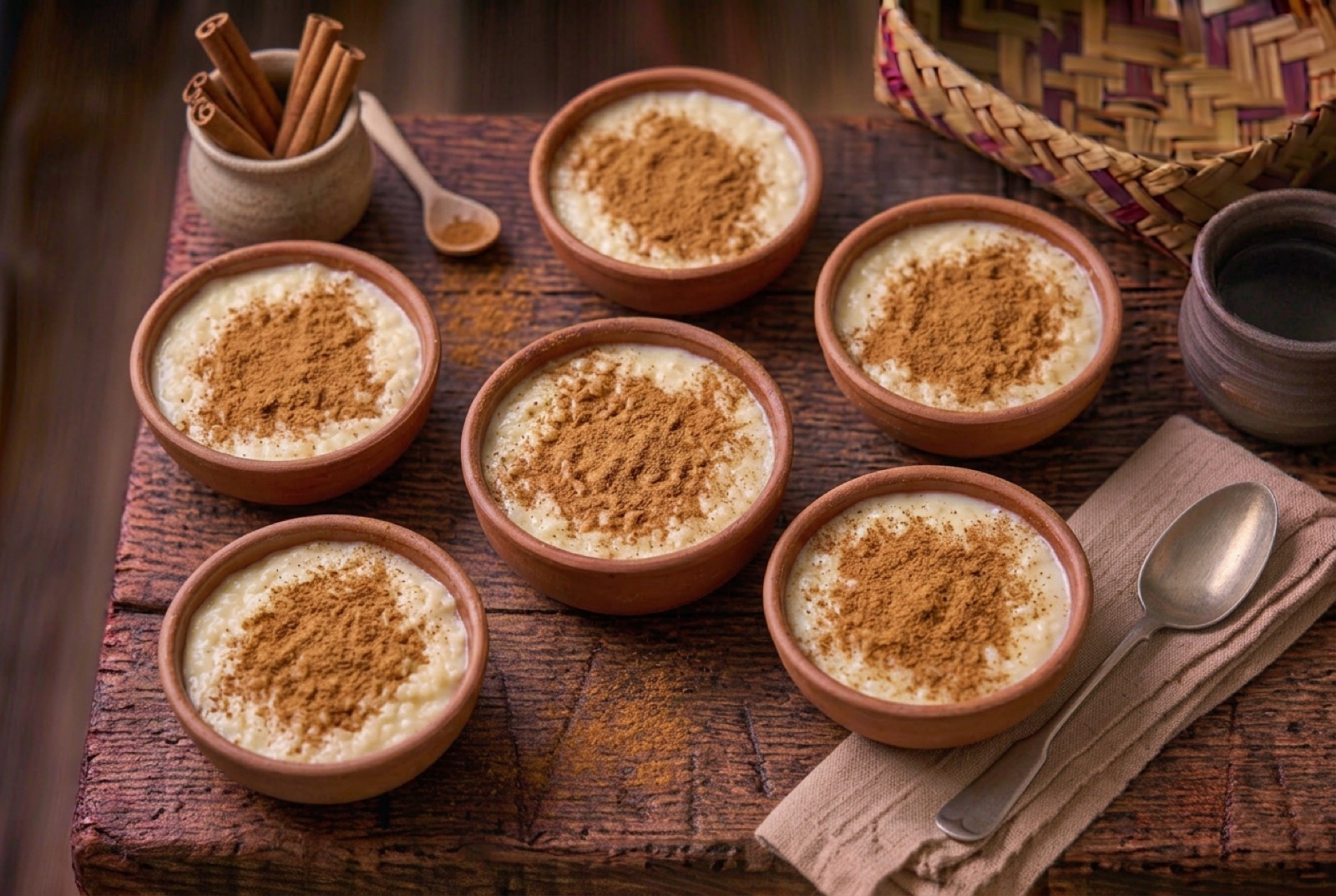
North Macedonia3 hr 50 min
Sutlijaš
Macedonian Cinnamon Rice Pudding
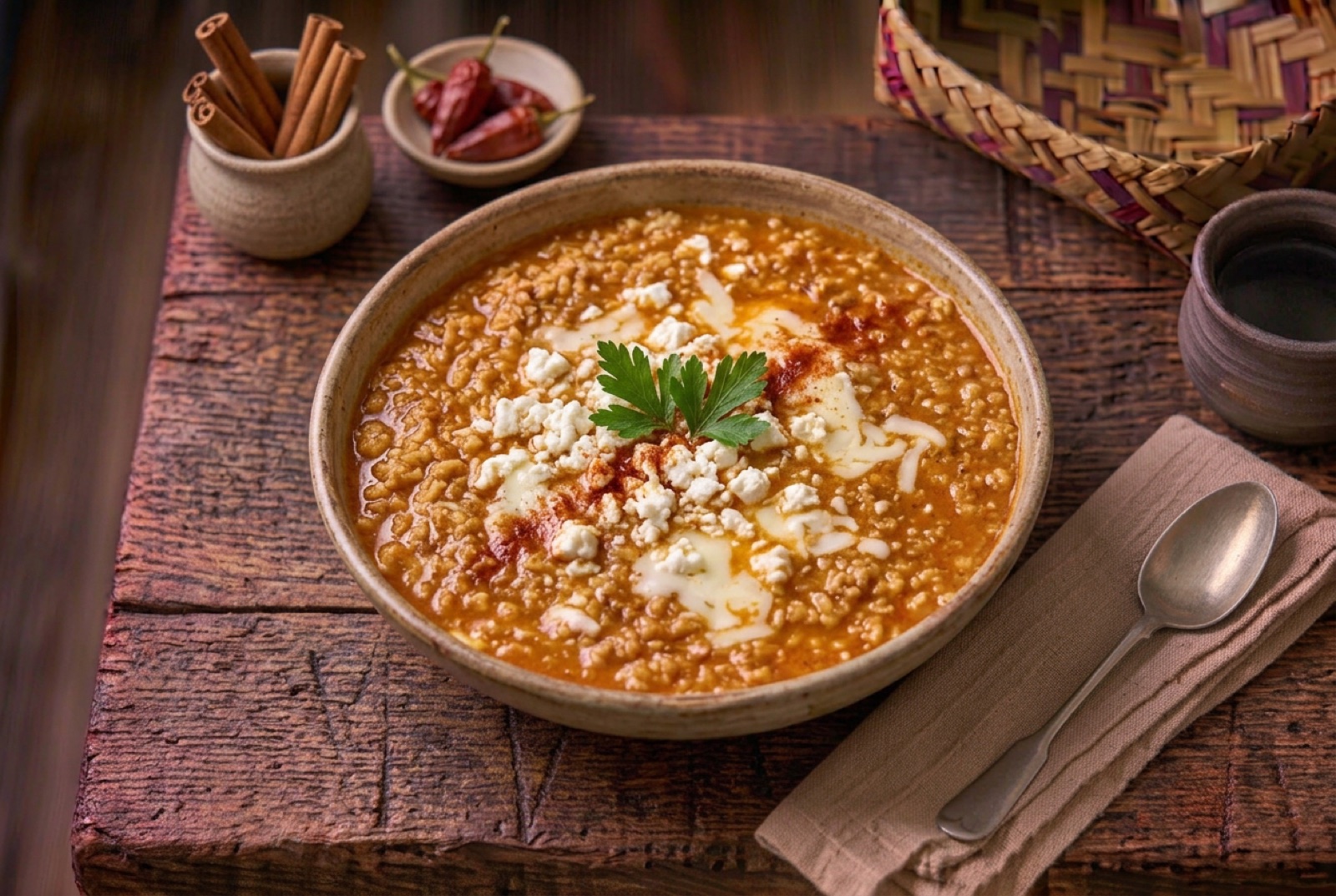
North Macedonia35 min
Tarana Čorba
Macedonian Toasted Crumb Pasta Soup
North Macedonia10 hr 20 min
Tavče Gravče
Macedonian Clay-Pot Baked Beans
North Macedonia2 hr 55 min
Turli Tava
Macedonian Mixed Vegetable and Meat Bake
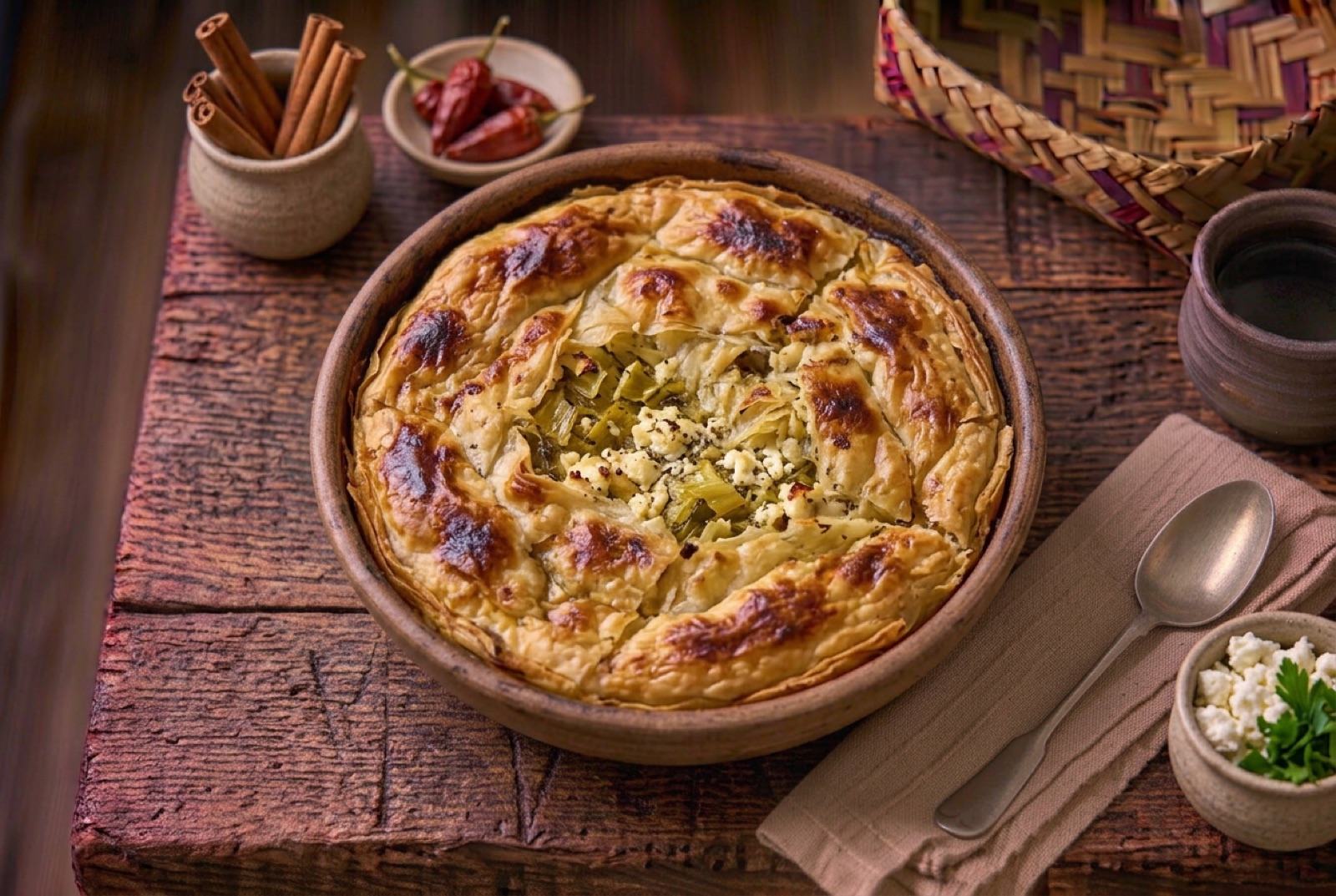
North Macedonia2 hr 5 min
Zelnik
Macedonian Leek and White Cheese Pie
Keep traveling.
North Macedonia sits in Balkans, and its kitchen shares borders as well as ingredients with Albania and Austria.
 Albania
 Austria