Tarana Čorba.
Macedonian Toasted Crumb Pasta Soup
Тарана чорба · say it: TAH-rah-nah CHOR-bah
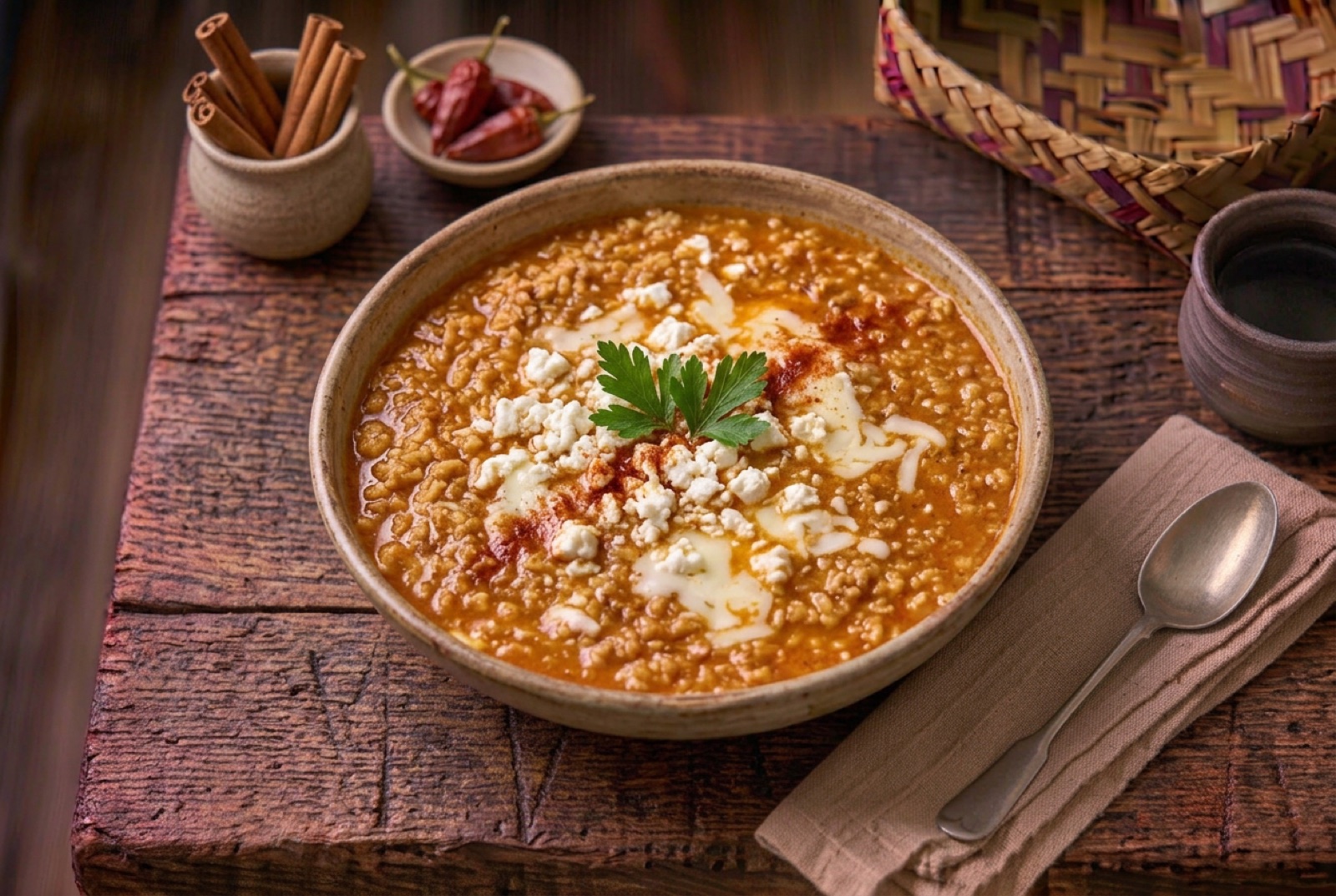
Tarana čorba is the soup a Macedonian household makes from almost nothing: coarse dried pasta crumbs, butter, paprika, water and a handful of white cheese. The crumbs — tarana — are rubbed by hand from flour and egg, dried in the sun, and stored by the sackful. Toasted in butter until they smell like a bakery, they thicken the pot into something between a soup and a very loose porridge, with a nutty background from the toasting and a mild savoury sharpness from the cheese stirred in at the end. It is a fifteen-minute dinner if you have the tarana, and it is what gets fed to anyone who is cold, ill, or hungry at an awkward hour.

- Gate
- North MacedoniaRural highlands, especially Mariovo and Pelagonia
- Prep
- 10 min
- Cook
- 25 min
- Total time
- 35 min
- Serves
- 4
- Status
- Easy
- Nutrition / serving · estimated
- Calories 380 kcal
- Protein 14 g
- Carbs 42 g
- Fat 18 g
- Fiber 3 g
- Sodium 950 mg
Why this recipe works.
- Includes a workable home method for making tarana from scratch, so you are not dependent on finding it in a Balkan shop.
- Toasts the crumbs in butter first, which is the step that separates a nutty, fragrant soup from a bland starchy one.
- Balances the liquid so the soup thickens properly without turning into paste as it sits.
- Finishes with brined white cheese off the heat, so it softens into the soup instead of seizing into rubbery threads.
Ingredients.
13 itemsFor homemade tarana (optional)
For the soup
To finish
Equipment
- Heavy saucepan
- Whisk
- Baking trays and a clean cloth if drying your own tarana
Instructions.
Make the tarana, if you are making your own
Rub the beaten eggs and salt into the flour with your fingertips for about 10 minutes, until the mixture breaks into coarse, uneven crumbs no larger than a lentil. Spread thinly on trays and dry in a warm airy place for 1 to 2 days, breaking up clumps every few hours until it rattles.
Tip Skip this entirely if you have bought tarana or trahana.
Soften the onion
Melt the butter in a heavy saucepan over medium heat and, if using, cook the chopped onion for 6 to 7 minutes until soft and translucent with the edges just turning gold. Add the garlic for the last 30 seconds.
Toast the tarana
Tip the dried tarana into the butter and stir constantly for 3 to 4 minutes. It is ready when the crumbs have darkened by a shade, are coated and glistening, and the pan smells distinctly of toasted bread rather than raw flour.
Tip Keep it moving. Butter and small crumbs go from toasted to burnt in under a minute.
Bloom the paprika
Pull the pan off the heat, wait a few seconds and stir in the paprika so it dissolves into the butter and turns the crumbs deep orange. If it hisses and smokes the pan was too hot and the soup will taste bitter.
Add the liquid
Return to the heat and pour in the hot stock in three additions, whisking after each so no lumps form. Season with salt and pepper, bring to a simmer and cook for 12 to 15 minutes, stirring often, until the crumbs are tender and the soup coats the back of a spoon.
Finish with cheese
Take the pan off the heat, stir in half the crumbled cheese and the dried mint, and let it stand for 2 minutes so the cheese softens into the soup without seizing. The soup should still pour easily; loosen with hot water if it does not.
Serve
Ladle into bowls, scatter over the remaining cheese and the parsley, and grind black pepper on top. Serve straight away with bread, before the tarana drinks any more liquid.
Tips from our kitchen.
- Toast the tarana until it turns a shade darker and smells like toasted bread, about 4 minutes. Stop short and the soup tastes of raw flour.
- Add the liquid hot and in stages, whisking, or the crumbs clump into lumps that never break up.
- Tarana keeps swelling after the pot leaves the heat, so pull it off while the soup still looks slightly too loose.
- Take the pot off the heat before the cheese goes in. Brined white cheese seizes and squeaks if boiled.
- If you are drying homemade tarana, break it up on the tray every few hours or it dries into slabs you have to smash apart.
- A spoonful of ajvar or a pinch of dried mint stirred in at the table is a common household touch and lifts an otherwise very mild soup.
Substitutions.
- Tarana → Greek or Turkish trahana, or coarsely crushed orzo
- Trahana is the closest relative and behaves almost identically. Crushed orzo or broken vermicelli gives the right body but not the fermented-dairy tang of some trahana varieties.
- Sirenje (white brined cheese) → Feta, or a mild crumbly goat cheese
- Feta is saltier than most Macedonian sirenje, so cut the added salt in the soup and taste before serving.
- Butter → Sunflower oil or olive oil
- Oil is what fasting households use, and it makes the soup fully dairy-free if you also leave out the cheese.
Variations.
- With egg
- An egg beaten with a ladle of the hot soup and whisked back in off the heat, giving a richer, slightly silkier body.
- Со лук (with fried onion)
- A finely chopped onion softened in the butter before the tarana goes in, which makes a sweeter and more substantial soup.
- Fasting tarana
- Made with oil instead of butter and no cheese, seasoned harder with paprika and dried mint — the version eaten during Orthodox fasts.
Storage & reheating.
The finished soup keeps 2 days refrigerated but thickens dramatically as the crumbs continue to swell — expect to whisk in 100 to 200 ml of hot water when reheating, and to re-season, since the salt gets diluted along with everything else. Reheat gently and do not boil, or the cheese already in the pot will turn grainy. Do not freeze the soup; the starch goes gluey. Dried tarana itself, kept in a sealed jar somewhere dark, lasts a year or more.
Serve with
Bread rubbed with garlic, a spoonful of ajvar, and pickled peppers on the side.
The story behind Tarana Čorba.
Tarana belongs to a family of dried grain-and-dairy preserves that stretches across the whole former Ottoman world — trahana in Greece, tarhana in Turkey, tarhonya in Hungary, kishk in the Levant. The idea is always the same: bind flour with something perishable, then dry it so thoroughly that it keeps for a year without refrigeration. In North Macedonia the binder is usually eggs and sometimes milk or yogurt, worked into flour by hand until the mixture breaks into irregular crumbs, then spread on cloths and dried in the summer sun, turned by hand until it rattles.
That work was done communally, typically in late summer when there were both eggs and sunshine to spare, and it produced a pantry staple that made winter cooking possible in villages cut off by snow. Because the crumbs are irregular and porous, they thicken liquid far faster than commercial pasta and give the soup a slightly rough, granular body that no substitute quite reproduces. Older cooks judge tarana by how it sounds when poured — good tarana clatters.
The soup itself is deliberately plain. Butter or oil, tarana, paprika, water or a light stock, and salt is the entire base, and the finish is a handful of crumbled sirenje, the white brined cheese found in every fridge in the country. Some households whisk in an egg or a spoonful of yogurt at the end for richness, some add a fried onion, and some serve it with a spoon of ajvar stirred through. In a country where much of the food is heavy with meat, paprika and oil, tarana čorba is the light thing, and it is eaten far more often at home than in any restaurant.
Questions, answered.
What exactly is tarana?
Tarana is a dried pasta made by rubbing flour together with eggs, and sometimes milk or yogurt, until it breaks into coarse irregular crumbs, which are then dried until hard. It is the Macedonian member of the same family as Greek trahana and Turkish tarhana, and it was developed as a way to preserve eggs and dairy through winter without refrigeration.
Can I buy tarana or do I have to make it?
Balkan, Greek and Turkish grocers usually stock trahana or tarhana, which work the same way in this soup. Making it at home is simple but slow, mostly because of the drying: a couple of days spread on trays in a warm dry place, broken up by hand every few hours. The recipe below covers both routes.
Why did my soup turn into a solid mass?
Tarana absorbs liquid long after the heat is off. Take the pot off the stove while the soup still looks looser than you want it, and serve promptly. If it has already set, whisk in hot water or stock a splash at a time until it flows again, then check the seasoning, which will have thinned along with the texture.
Is tarana čorba a meal or a starter?
Both, depending on how thick you make it and what goes in. As written it is substantial enough for a light supper with bread and cheese. Thinned with more stock and served in smaller bowls it becomes a first course, which is how it usually appears when there is a larger meal to follow.
Can I make it dairy-free?
Yes, if your tarana was made without milk or yogurt — check the packet, as many commercial trahana varieties contain dairy. Use oil instead of butter, leave out the cheese, and lean harder on paprika, garlic and dried mint for flavour. This is essentially the version eaten during Orthodox fasting periods.
You might also like.
All recipes →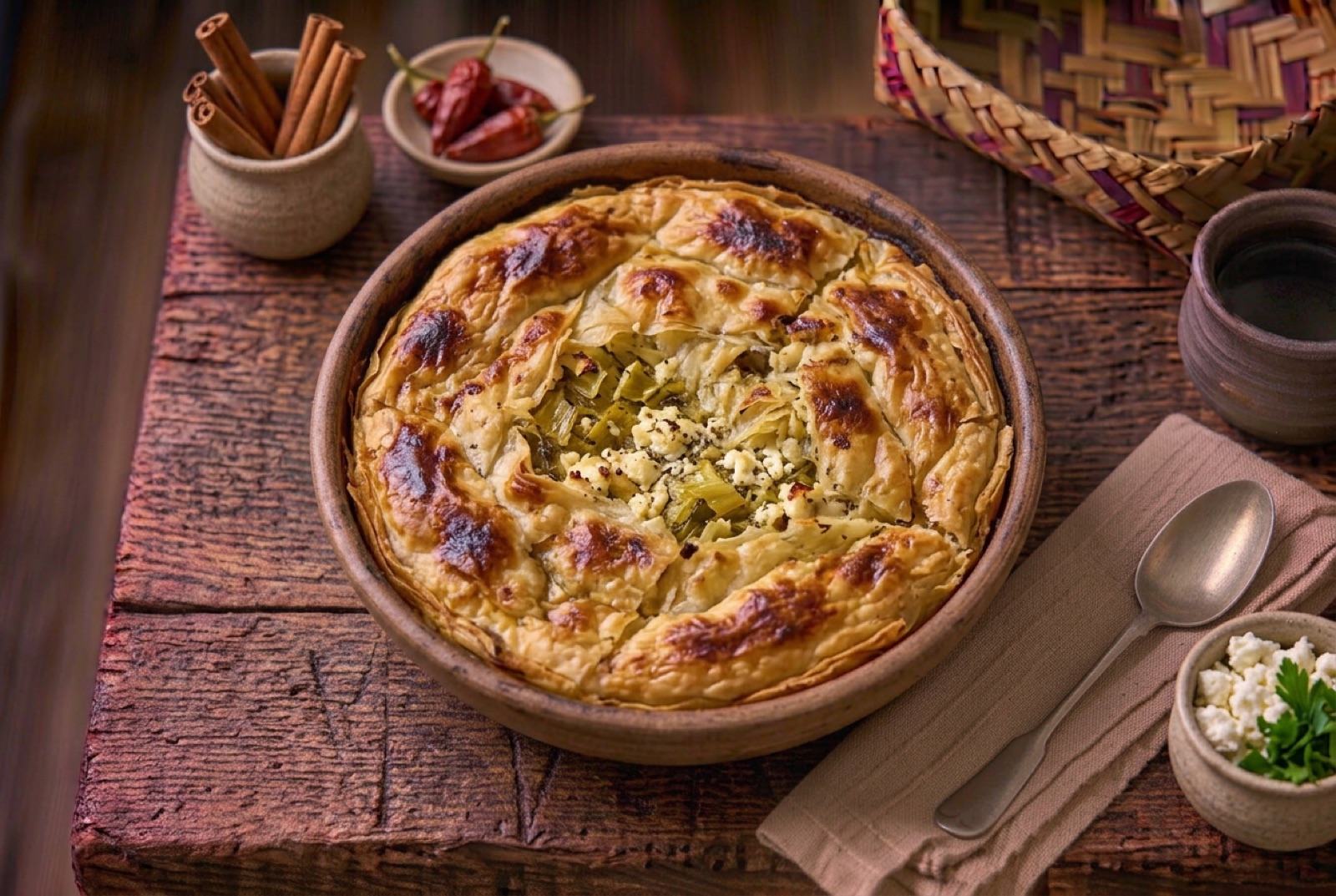
North Macedonia2 hr 5 min
Zelnik
Macedonian Leek and White Cheese Pie

North Macedonia2 hr 55 min
Pastrmajlija
Macedonian Boat-Shaped Meat Flatbread
North Macedonia1 hr 35 min
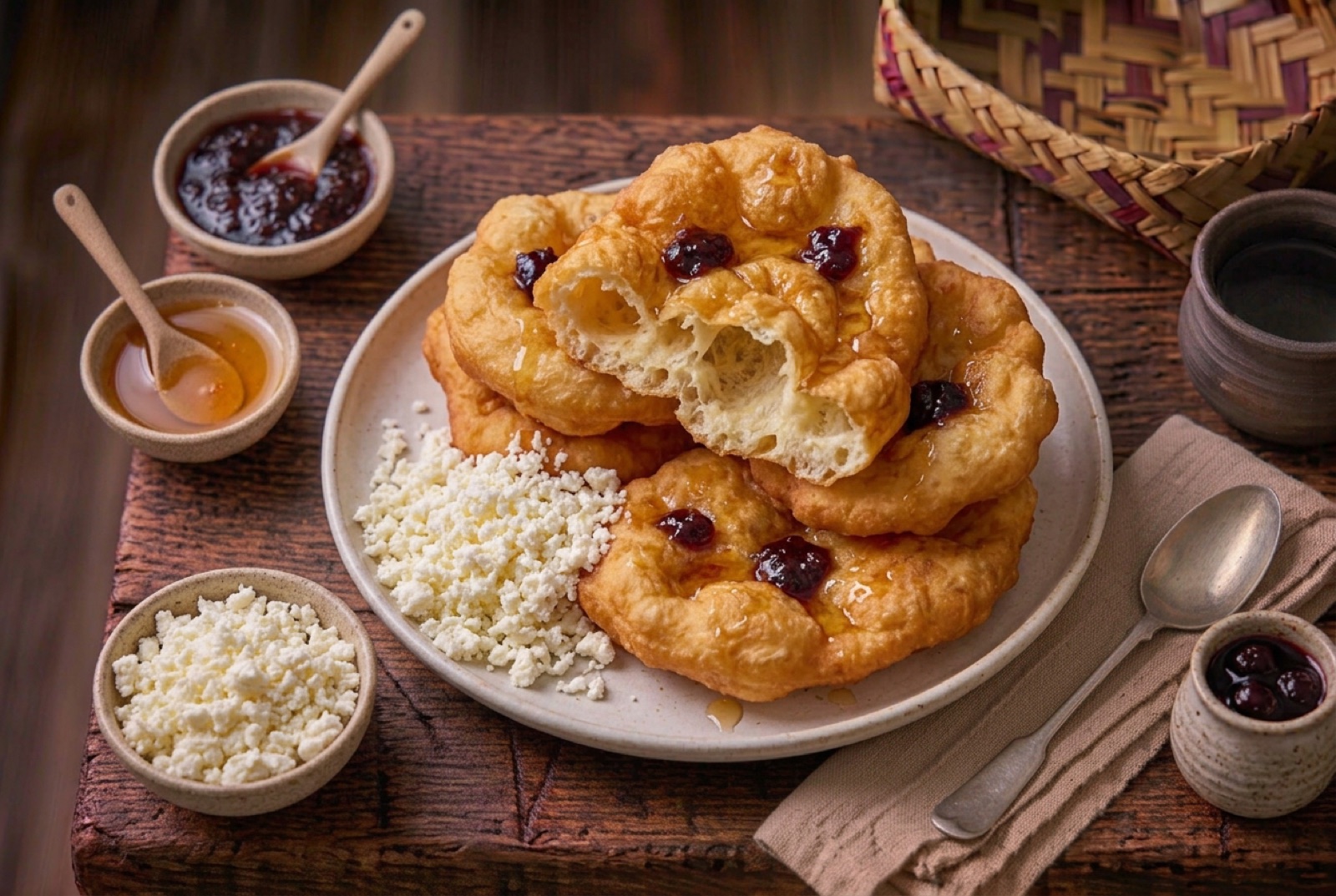
Mekici
Macedonian Fried Breakfast Dough
North Macedonia10 hr 20 min
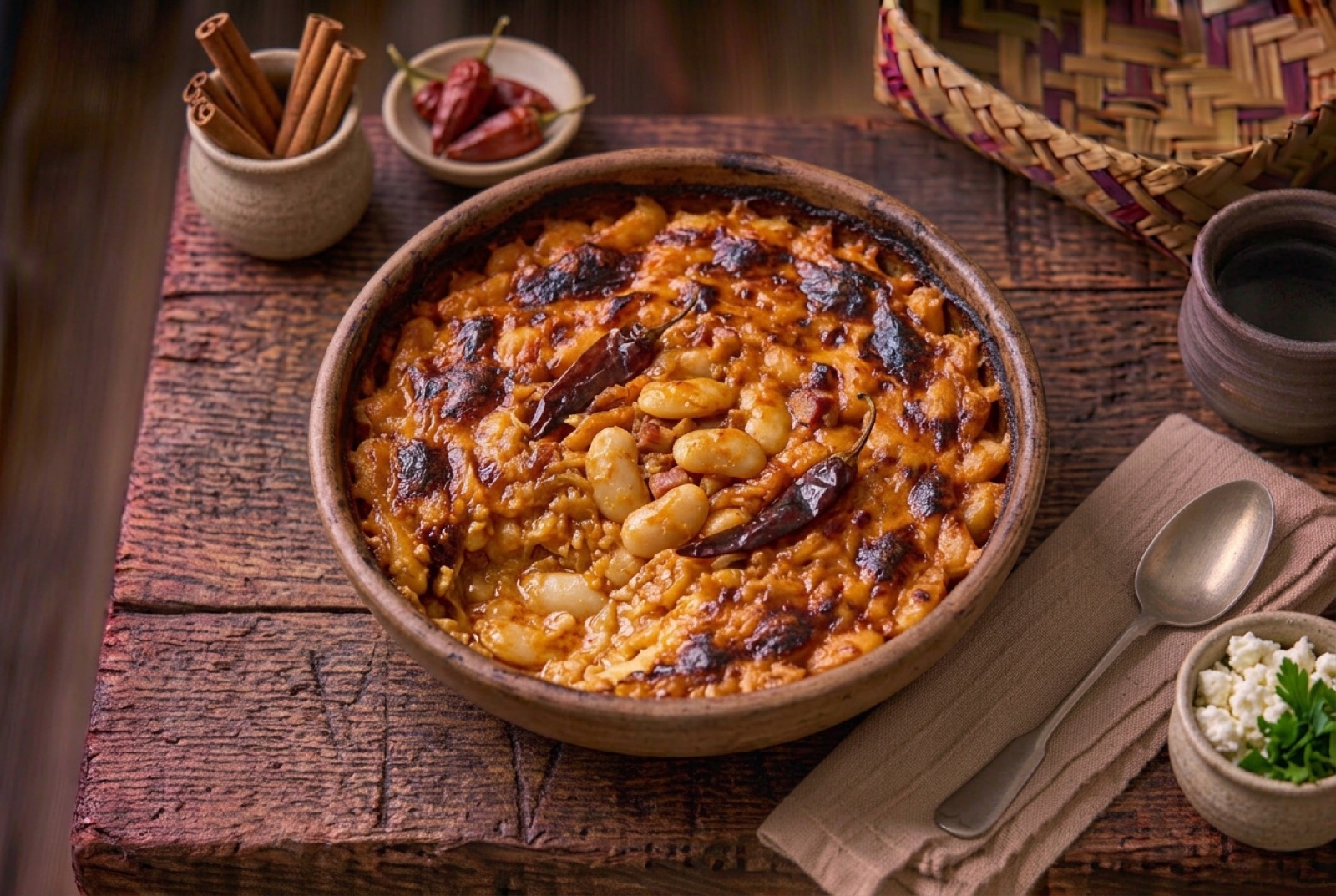
Tavče Gravče
Macedonian Clay-Pot Baked Beans
Keep exploring North Macedonia.
North Macedonia has 9 more dishes in the atlas — Macedonian Ajvar and Mekici, and 7 more.
Recipe by The DishRoute Kitchen · published August 20, 2026 · updated August 20, 2026