Zelnik.
Macedonian Leek and White Cheese Pie
Зелник · say it: ZEL-nik
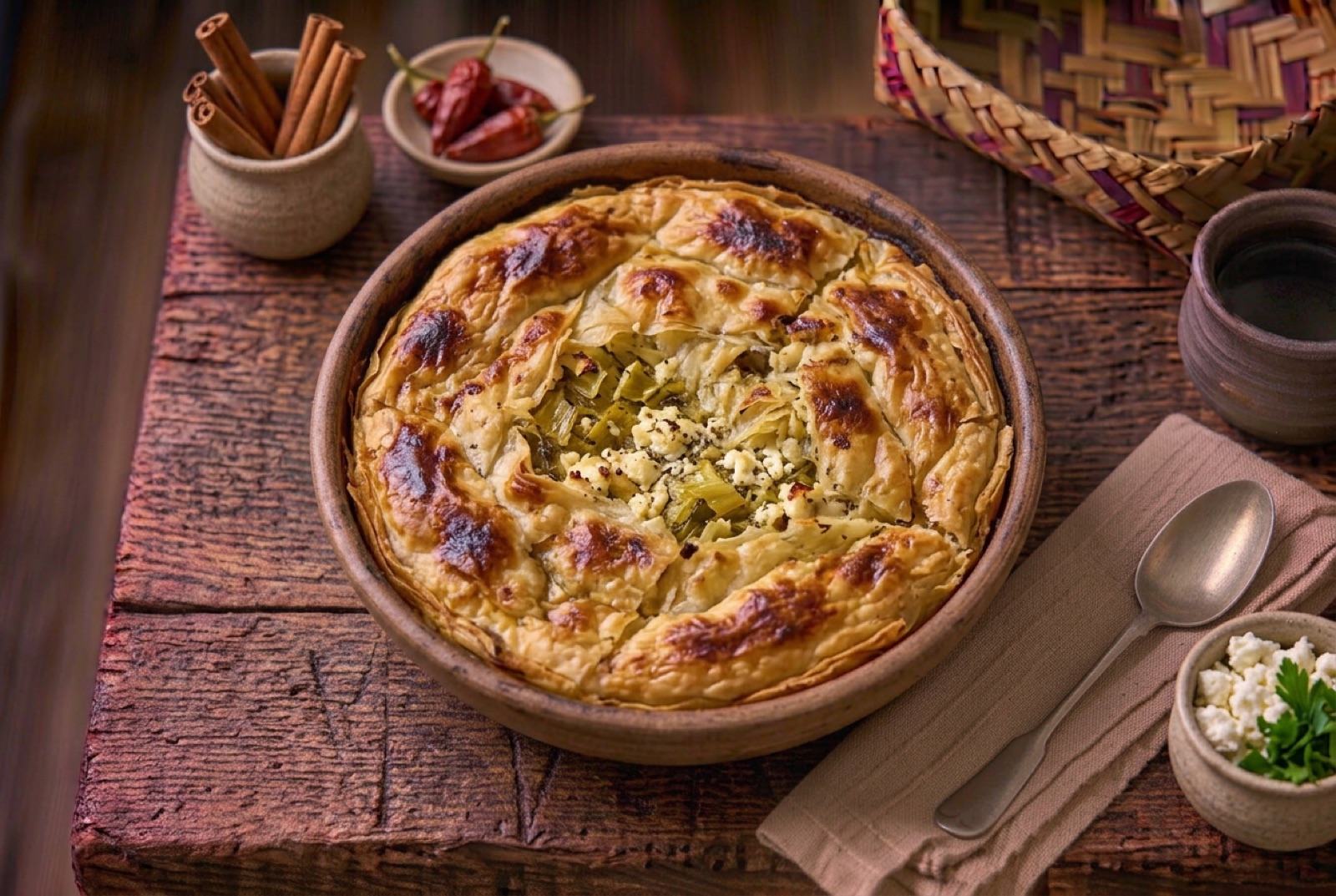
Zelnik is the everyday pie of the Macedonian highlands: a few sheets of thin oiled pastry, a filling of leek cooked down until it loses its bite, crumbled white brined cheese, dried mint and a great deal of black pepper, all pressed into a round pan and baked hot. It is flatter and drier than a burek, with fewer layers and a much higher ratio of filling to pastry, and it is meant to be cut into wedges and eaten warm with yogurt rather than served in a slab. The name comes from zelje, meaning greens, which is the older filling; leek took over because it stores through winter.

- Gate
- North MacedoniaPelagonia, Mariovo and the western highlands
- Prep
- 50 min
- Cook
- 45 min
- Total time
- 2 hr 5 min incl. 30 min rest
- Serves
- 8
- Status
- Medium
- Nutrition / serving · estimated
- Calories 410 kcal
- Protein 13 g
- Carbs 45 g
- Fat 20 g
- Fiber 4 g
- Sodium 720 mg
Why this recipe works.
- Cooks the leek down properly first, so the filling is sweet and soft instead of raw, squeaky and watery.
- Uses an oiled stretched dough rather than a butter-laminated one, which is how the pie is actually made at home.
- Keeps the filling dry on purpose, so the base crisps rather than steaming into a pale soggy layer.
- Gives the fasting version in full, which is the form most Macedonian households make for weeks each year.
Ingredients.
14 itemsFor the pastry
For the filling
Equipment
- Round 30 cm baking pan or shallow tava
- Large clean cloth for stretching dough
- Pastry brush
- Colander
Instructions.
Make and rest the dough
Mix the flour and salt, then work in the warm water, the vinegar and 3 tablespoons of the oil until you have a soft dough. Knead for 8 minutes until smooth and slightly tacky, divide into 6 balls, oil them lightly, cover and rest for 30 minutes.
Tip The dough should be softer than bread dough. A firm dough will not stretch thin, no matter how long you rest it.
Draw the water out of the leek
Toss the sliced leek with a teaspoon of salt in a colander and leave for 15 minutes, then squeeze it hard in a clean towel. You should get several tablespoons of liquid out, and the volume should drop by about a third.
Cook the leek down
Fry the squeezed leek in 2 tablespoons of oil over medium heat for 10 to 12 minutes, until it has collapsed, turned pale gold at the edges and lost all squeakiness. Take it off the heat and let it cool to room temperature.
Tip Adding hot leek to the cheese and egg starts to scramble the egg, so let it cool properly.
Mix the filling
Combine the cooled leek with the crumbled cheese, beaten eggs, rinsed rice, dried mint, black pepper, paprika and yogurt. Taste and add salt carefully — brined cheese carries a lot of salt already, and the leek was salted too.
Stretch the sheets
On a floured cloth, flatten one ball and stretch it outward over the backs of your hands until it is thin enough to see the cloth through, roughly 40 cm across. Repeat with the rest, stacking them with oil brushed between so they do not fuse.
Tip Small tears in the middle do not matter; they close under the filling. Work from the centre outward and keep the edges thicker.
Layer the pie
Oil the pan and lay in two sheets, letting them overhang. Spread half the filling, add a sheet, brush with oil, spread the rest of the filling, then cover with the last sheets. Fold the overhang inward and brush the top generously with oil.
Bake low then high
Bake at 200°C on the lowest shelf for 20 minutes so the base sets, then move the pan to the middle shelf for another 20 to 25 minutes, until the top is blistered and deep gold and the pie sounds hollow when tapped.
Rest and cut
Slide the pie out onto a board and leave it 10 minutes before cutting into wedges. Cover it with a cloth rather than foil while it rests, so the steam escapes instead of softening the crust you just built.
Tips from our kitchen.
- Salt the sliced leek and let it sit for 15 minutes, then squeeze it hard in a towel. Leek is mostly water, and unsqueezed leek is the single most common cause of a soggy zelnik base.
- Rest the dough for at least 30 minutes after kneading. Unrested dough springs back the moment you stretch it and will tear before it gets thin enough.
- Stretch the sheets over the backs of your hands rather than rolling them flat — you want them thin enough to read newsprint through, and a rolling pin stops working around 2 mm.
- Oil between the layers, never butter. Butter sets solid and makes the pie flaky; oil keeps the layers separate but pliable, which is the texture zelnik is supposed to have.
- Bake on the lowest shelf for the first 20 minutes so the base sets before the top browns, otherwise you get a dark lid over a raw underside.
- Let the pie stand 10 minutes before cutting. Straight from the oven the filling is loose and the wedges collapse; ten minutes later they lift out clean.
Substitutions.
- Home-stretched pastry → Shop-bought filo, 8 to 10 sheets
- Use two filo sheets where the recipe calls for one home-stretched sheet, since filo is thinner and more brittle. The result is flakier and less chewy, which is a fair trade for an hour saved.
- Leek → Spinach, chard, nettles, or a mixture
- Greens hold far more water than leek. Blanch, cool and wring them out in a towel until they are almost dry, then chop, or the base will never crisp.
- Sirenje (white brined cheese) → Feta, or feta cut with drained curd cheese
- Sirenje is drier and saltier than most feta. If your feta is wet and mild, crumble it and leave it in a sieve for 20 minutes, and season the filling a little harder.
Variations.
- Posen zelnik
- The fasting pie: no cheese, no egg, no dairy at all. Leek and rice with extra oil, mint and pepper, and the pastry brushed with oil only. Made through Lent and the Advent fast.
- Zelnik with nettles
- Early-spring version using young nettle tops blanched and squeezed dry, often mixed half and half with leek. Sharper and more mineral than the plain leek pie.
- Mariovo zelnik
- Baked under a bell on the hearth rather than in an oven, with more sheets and less filling, giving a drier pie that keeps for several days in a cloth.
Storage & reheating.
Keeps 3 days in the fridge under a cloth rather than sealed plastic, which traps steam and softens the pastry. Reheat in a hot dry pan for 4 minutes a side or at 200°C for 8 minutes to bring the base back; a microwave makes it limp and should be avoided. Zelnik freezes well unbaked — assemble in the pan, freeze solid, and bake from frozen with an extra 15 minutes. Baked and frozen it is also fine, though the pastry loses some of its snap. It travels well at room temperature and was traditionally field food for exactly that reason.
Serve with
Cold thick yogurt or ayran, pickled peppers, and a raw spring onion. Turkish coffee afterwards if it is breakfast.
The story behind Zelnik.
The pie predates the domestic oven. In the villages of Mariovo, Prilep and the Šar foothills, zelnik was baked under a vršnik — a heavy clay or iron bell set over the pie on a hot hearthstone and buried in embers, so the heat came from above and below at once. That method fixes the shape of the dish. A bell holds only a shallow round pan, which is why zelnik is thin rather than tall, and why the base is expected to be genuinely dry and crisp rather than soft. Households that had no bell took the pan to whoever in the village did, or to the communal bread oven on baking day.
The filling follows the same logic as most highland cooking, which is that you use the green thing that is currently alive. Early spring means nettles, wild spinach or dock; late spring means chard and the first leeks; deep winter means leek alone, since it survives in the ground and keeps for weeks in a cold room. Rice is often stirred in to stretch the filling and absorb moisture, and in Orthodox fasting weeks the cheese and eggs simply come out, leaving greens, rice, oil and a heavier hand with the mint and pepper. That fasting version is not a compromise recipe — for large parts of the year it was the only version made.
Zelnik is shared, not exclusive. Bulgaria has zelnik and zelevi banitsi, Serbia has zeljanica, Bosnia has zeljanica made in coils, and Albanian households in Tetovo and Debar make near-identical pies they call byrek me presh. What is particular to the Macedonian version is the dryness — less egg and yogurt in the filling than a Bulgarian banitsa, no custard binding, and pastry brushed with oil rather than butter, so the finished pie is savoury and firm enough to carry to a field or a bus rather than eaten with a fork off a plate. Bakeries in Bitola and Prilep still sell it by weight in the morning, cut from a tray the size of a table.
Questions, answered.
What is the difference between zelnik and burek?
Burek is built from many thin layers with a relatively small amount of filling, usually meat, and is rolled or coiled. Zelnik is flat, uses only a few thicker hand-stretched sheets, and is dominated by its filling of greens or leek with white cheese. Zelnik is also drier and firmer, since it is brushed with oil rather than butter.
Can I make zelnik without cheese?
Yes. The version without cheese, eggs or any dairy is called posen zelnik and is standard food during Orthodox fasting periods, which cover several weeks of the year. Use leek and rice with a generous amount of oil, dried mint and black pepper, and brush the pastry with oil alone.
Why is the bottom of my pie soggy?
Almost always wet filling. Leek and greens release a large amount of water as they bake, so they must be salted, cooked down and then squeezed dry in a towel before they go into the pan. Baking on the lowest oven shelf for the first 20 minutes also helps set the base before the top colours.
Is zelnik Macedonian or Bulgarian?
Both, and Serbian and Albanian too. Pies of stretched pastry filled with greens and white cheese are made across the whole southern Balkans under different names — zeljanica, banitsa, byrek me presh. The Macedonian version is distinguished by being flat, oil-brushed and comparatively dry rather than by any exclusive claim.
Can I use shop-bought filo?
Yes, and most city households now do. Use roughly two filo sheets for every one hand-stretched sheet, keep the unused sheets under a barely damp cloth so they do not go brittle, and brush oil between each pair. The pie will be flakier and lighter than the homemade-dough version.
You might also like.
All recipes →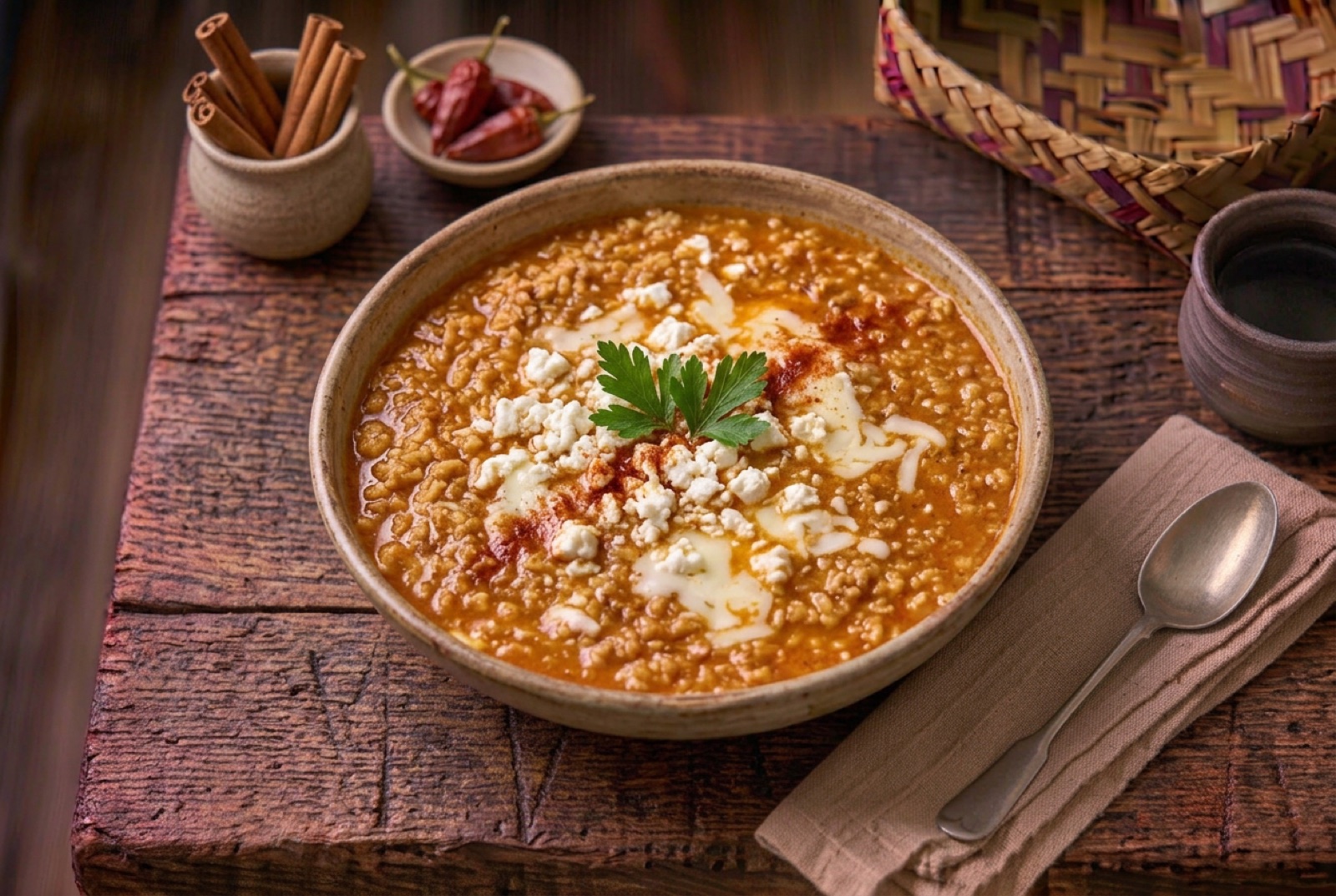
North Macedonia35 min
Tarana Čorba
Macedonian Toasted Crumb Pasta Soup
North Macedonia1 hr 35 min
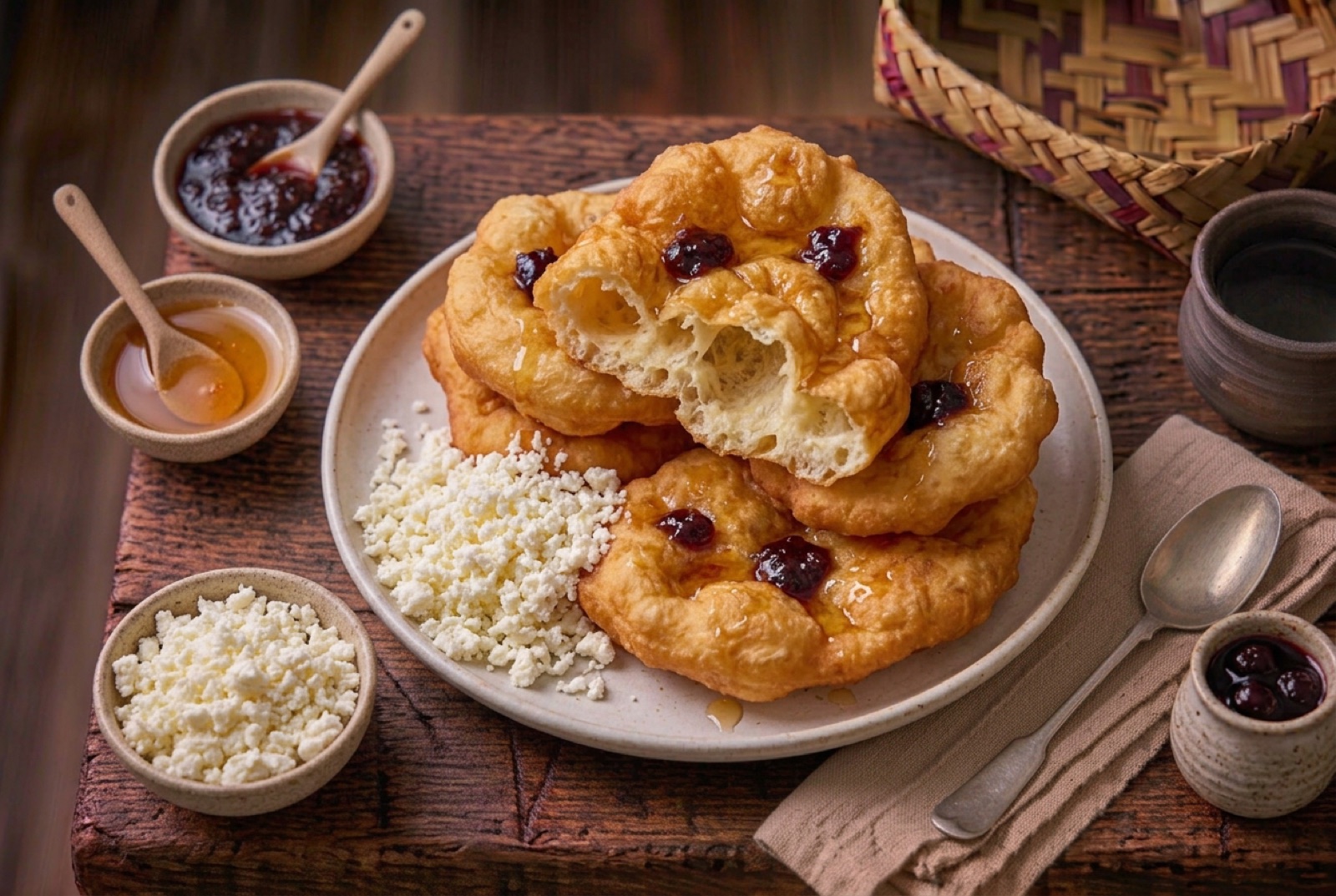
Mekici
Macedonian Fried Breakfast Dough

North Macedonia2 hr 55 min
Pastrmajlija
Macedonian Boat-Shaped Meat Flatbread
North Macedonia3 hr 45 min
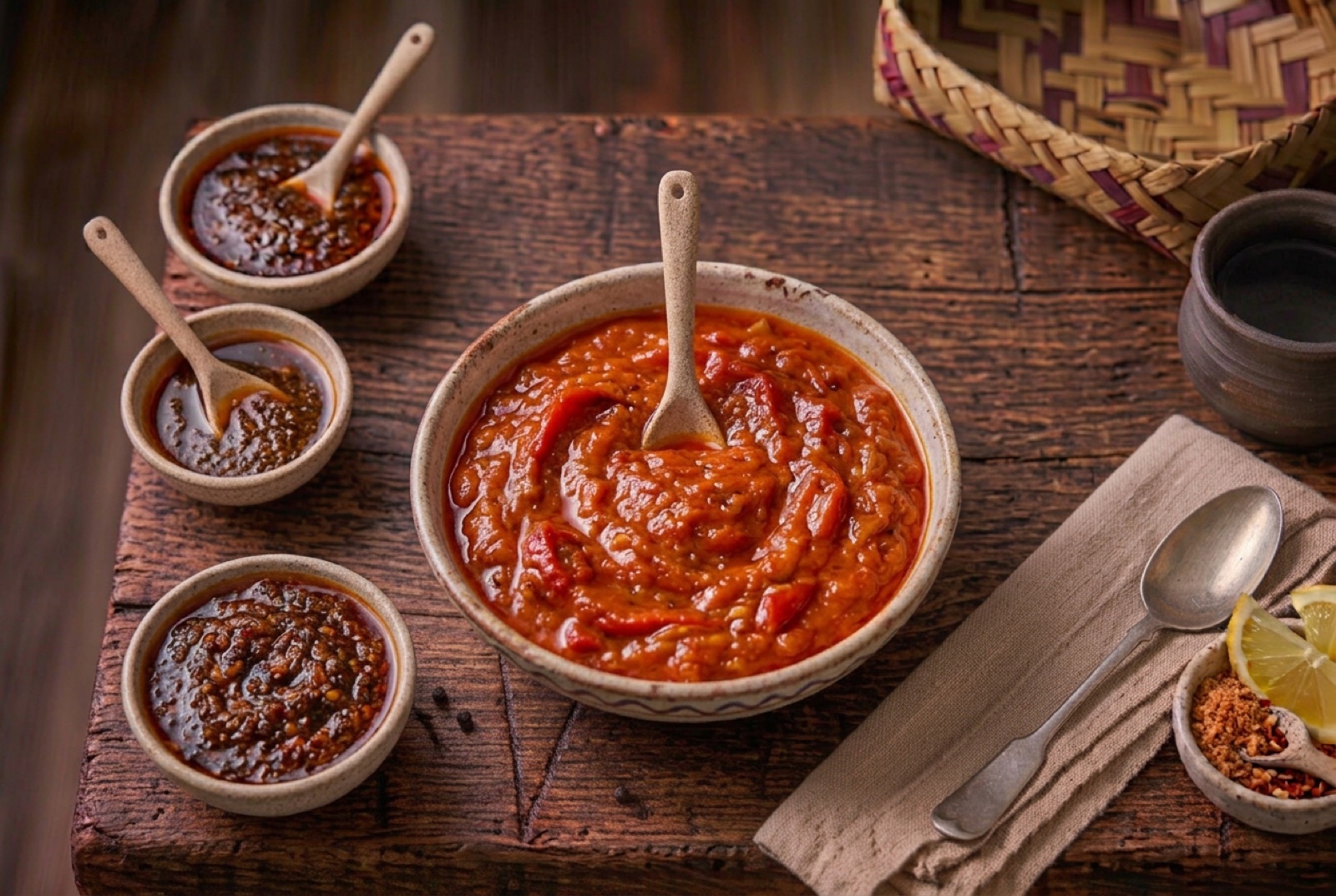
Macedonian Ajvar
Roasted Red Pepper Relish
Keep exploring North Macedonia.
North Macedonia has 9 more dishes in the atlas — Macedonian Ajvar and Mekici, and 7 more.
All North Macedonia recipes Leek recipes Feta recipes Flour recipes appetizerbreakfastvegetariannut freeRecipe by The DishRoute Kitchen · published August 21, 2026 · updated August 21, 2026