Tavče Gravče.
Macedonian Clay-Pot Baked Beans
Тавче гравче · say it: TAV-cheh GRAV-cheh
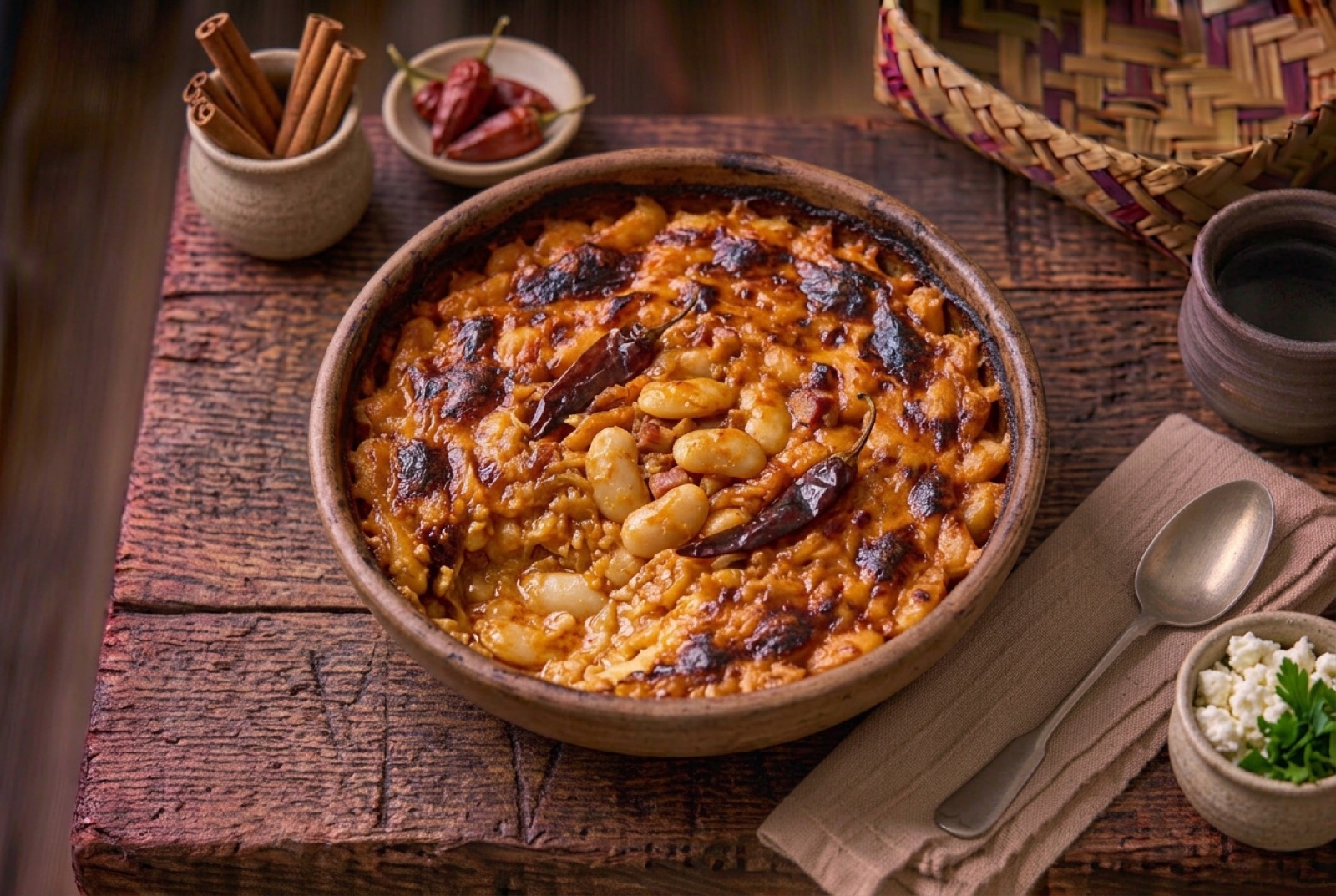
Tavče gravče is baked beans the way North Macedonia understands them — nothing sweet, nothing smoky-barbecue, just large flat white beans cooked until they give way under a spoon, stirred through a deep-red sauce of onion fried in oil with sweet paprika, and finished in a shallow earthenware pan in a hot oven until the top dries into a slightly chewy, orange-brown crust. The flavour is round and savoury with the gentle bitterness paprika develops when it meets hot fat, lifted by dried mint and a whole dried chilli sitting on top. It is cheap, meatless in its basic form, and eaten year-round in homes, canteens and every tavern that considers itself serious.

- Gate
- North MacedoniaTetovo and the Polog valley
- Prep
- 20 min
- Cook
- 2 hr
- Total time
- 10 hr 20 min incl. 8 hr rest
- Serves
- 4
- Status
- Easy
- Nutrition / serving · estimated
- Calories 480 kcal
- Protein 21 g
- Carbs 62 g
- Fat 16 g
- Fiber 17 g
- Sodium 620 mg
Why this recipe works.
- Builds the sauce the traditional way — paprika stirred into the fried onion off the heat, so it turns deep red instead of scorching bitter.
- The bean-cooking method gives creamy interiors with skins still intact, which is the whole point of using flat white beans.
- Fully meat-free as written, with an honest note on the meat versions rather than pretending they do not exist.
- Uses the shallow-pan oven finish that creates the crusted top Macedonians actually judge the dish by.
Ingredients.
12 itemsFor the beans
For the sauce
To finish
Equipment
- Large pot for simmering beans
- Frying pan
- Shallow earthenware or cast-iron oven dish
Instructions.
Soak and first-boil the beans
Drain the soaked beans, cover them with fresh cold water in a large pot and bring to a rolling boil for 10 minutes. Drain again and discard that water — it carries the foam and the compounds that make beans hard on the stomach.
Simmer until creamy
Return the beans to the pot with the bay leaves and enough fresh water to cover by 4 cm. Simmer gently, partly covered, for 60 to 90 minutes until a bean crushes to smooth paste between your fingers but the skins are still whole. Salt in the last 20 minutes. Keep the cooking liquid.
Tip Top up with boiling, not cold, water — a cold shock tightens the skins.
Fry the onions
While the beans cook, heat the oil in a wide frying pan and cook the chopped onion over medium heat for 12 to 15 minutes, stirring, until it is soft, golden and sweet-smelling with no raw bite left. Do not let it go dark brown.
Make the paprika base
Stir the flour into the onions and cook for 1 minute until it smells toasted rather than raw. Pull the pan completely off the heat, wait 15 seconds, then stir in the sweet paprika, the garlic and the hot paprika if using. The oil should turn a deep brick red within seconds.
Tip If the paprika hisses violently the pan is still too hot — it will taste burnt and bitter, and there is no rescuing it.
Combine
Scrape the paprika base into the beans along with about 400 ml of their cooking liquid and stir gently. The mixture should look distinctly soupy — the beans will drink most of it in the oven. Taste and correct the salt now; it should be assertive.
Bake until crusted
Tip everything into a wide shallow earthenware or cast-iron dish, scatter over the crumbled dried mint and lay the whole chillies on top. Bake at 220°C for 30 to 40 minutes, until the surface is dry, freckled orange-brown and slightly wrinkled, with the sauce bubbling thickly at the edges.
Rest and serve
Let the pan stand for 10 minutes so the sauce thickens around the beans instead of running. Scatter with parsley and bring the dish to the table in its pan, with bread and white cheese alongside.
Tips from our kitchen.
- Soak the beans overnight and discard the soaking water — it shortens cooking and makes the finished beans noticeably easier to digest.
- Salt only in the final twenty minutes of simmering. Beans salted from the start stay stubbornly firm no matter how long you cook them.
- Pull the pan off the heat before the paprika goes in. Paprika burns in seconds in hot oil and turns the whole dish acrid.
- The beans should still be swimming when they go into the oven — they drink a surprising amount of liquid while baking and a dry-looking pan comes out dry.
- Use a wide, shallow oven dish rather than a deep casserole. Surface area is what gives you the crust.
- Dried mint, crumbled between your palms right at the end, is not optional in most Macedonian kitchens — it is the note that makes the dish taste Macedonian rather than generally Balkan.
Substitutions.
- Tetovo flat white beans → Dried gigante, corona or large lima beans
- Any large, flat, thin-skinned white bean behaves the same way. Cannellini work but are rounder and firmer, so the texture is less creamy.
- Sweet Macedonian paprika → Hungarian sweet paprika, or half sweet and half smoked Spanish paprika
- Smoked paprika is not traditional and pushes the dish somewhere Iberian, but a small amount is a reasonable stand-in if your paprika is old and faded.
- Sunflower oil → Olive oil or lard
- Sunflower oil is standard in Macedonian homes. Lard is what older cooks used in non-fasting households and gives a richer result.
Variations.
- Tavče gravče со ребра
- Smoked pork ribs or a piece of smoked bacon buried among the beans before baking. The fat renders into the sauce and the dish stops being fasting food.
- With sausage
- Sliced dry sausage arranged across the top for the last fifteen minutes so the edges curl and crisp above the beans.
- Extra-hot version
- Two or three dried chillies crumbled into the sauce rather than laid on top, turning a mild dish into one that genuinely bites.
Storage & reheating.
Tavče gravče keeps 3 to 4 days refrigerated and is widely considered better on the second day, once the paprika sauce has fully soaked into the beans. Reheat covered in a moderate oven with a splash of water, or on the stove over low heat, stirring gently so the beans do not break down into mush. It freezes well for up to 3 months in its sauce, though the crusted top does not survive; if you plan to freeze it, do so before baking and finish the oven stage after thawing.
Serve with
Thick slices of white bread for wiping the pan, a wedge of white brined cheese, and pickled peppers or a raw onion on the side.
The story behind Tavče Gravče.
The dish takes its name from its cookware, which tells you where the emphasis lies: a tavče is the small shallow earthenware pan it is baked and served in, and gravče means beans. The beans themselves carry a reputation of their own. Tetovski grav, grown around Tetovo in the Polog valley under the Šar mountains, are broad, flat and thin-skinned, and Macedonians will argue at length that no other bean cooks to the same silkiness. They are sold dried in every market, and buying the good ones is treated as a matter of judgement rather than shopping.
Beans arrived in the Balkans from the Americas by way of the Ottoman trade routes and settled in as the food that carried households through winter and through the long fasting periods of the Orthodox calendar, when meat, dairy and eggs are all set aside. That is why the plain version — beans, onion, oil, paprika, mint — is the base recipe rather than the compromise: it is a complete meal that observant families could eat on fasting days, and it is good enough that nobody treats it as a sacrifice. Versions with smoked ribs, sausage or bacon exist and are common, but they are the addition, not the original.
Today tavče gravče is the closest thing the country has to an edible flag. It appears on restaurant menus as a matter of course, it is what emigrants cook to feel at home, and it is the standard test of a cook in a family kitchen. The debate is not whether to make it but how: how dark to take the onion, whether the paprika goes in off the heat or on it, whether the beans should be soupy or nearly dry when they go into the oven, and whether the chilli on top is decoration or dinner.
Questions, answered.
Which beans should I buy if I cannot find Tetovo beans?
Look for any large, flat, thin-skinned dried white bean: Greek gigantes, Italian corona or large dried lima beans are the closest matches and cook to the same soft, creamy interior. Avoid small navy beans and tinned beans, which either stay too firm or collapse into paste once baked.
Why did my beans stay hard even after two hours of simmering?
Two usual causes: the beans were old, or they were salted too early. Dried beans more than a year old can refuse to soften no matter how long you cook them, and salt or acidic ingredients such as tomato added at the start firm up the skins. Salt only in the last twenty minutes, and buy beans from a shop with fast turnover.
Is tavče gravče vegetarian?
The classic version is completely meat-free and also dairy-free, because it evolved as food for Orthodox fasting periods when animal products are avoided. Popular variations add smoked ribs, bacon or sausage, so if you are ordering in a restaurant it is worth asking which version the kitchen makes.
Do I need a clay pan to make it properly?
No. The traditional shallow earthenware tavče holds heat evenly and looks right on the table, but any wide, shallow ovenproof dish or a cast-iron skillet produces the same crusted top. What matters is that the beans sit in a shallow layer with plenty of exposed surface rather than deep in a narrow pot.
Can I make it ahead for a dinner?
Yes, and it is one of the better dishes to plan ahead. Cook the beans and the paprika sauce a day early, refrigerate them together, then bake just before serving so the top crusts fresh. Add a little water when it goes into the oven, as the beans will have absorbed liquid overnight.
You might also like.
All recipes →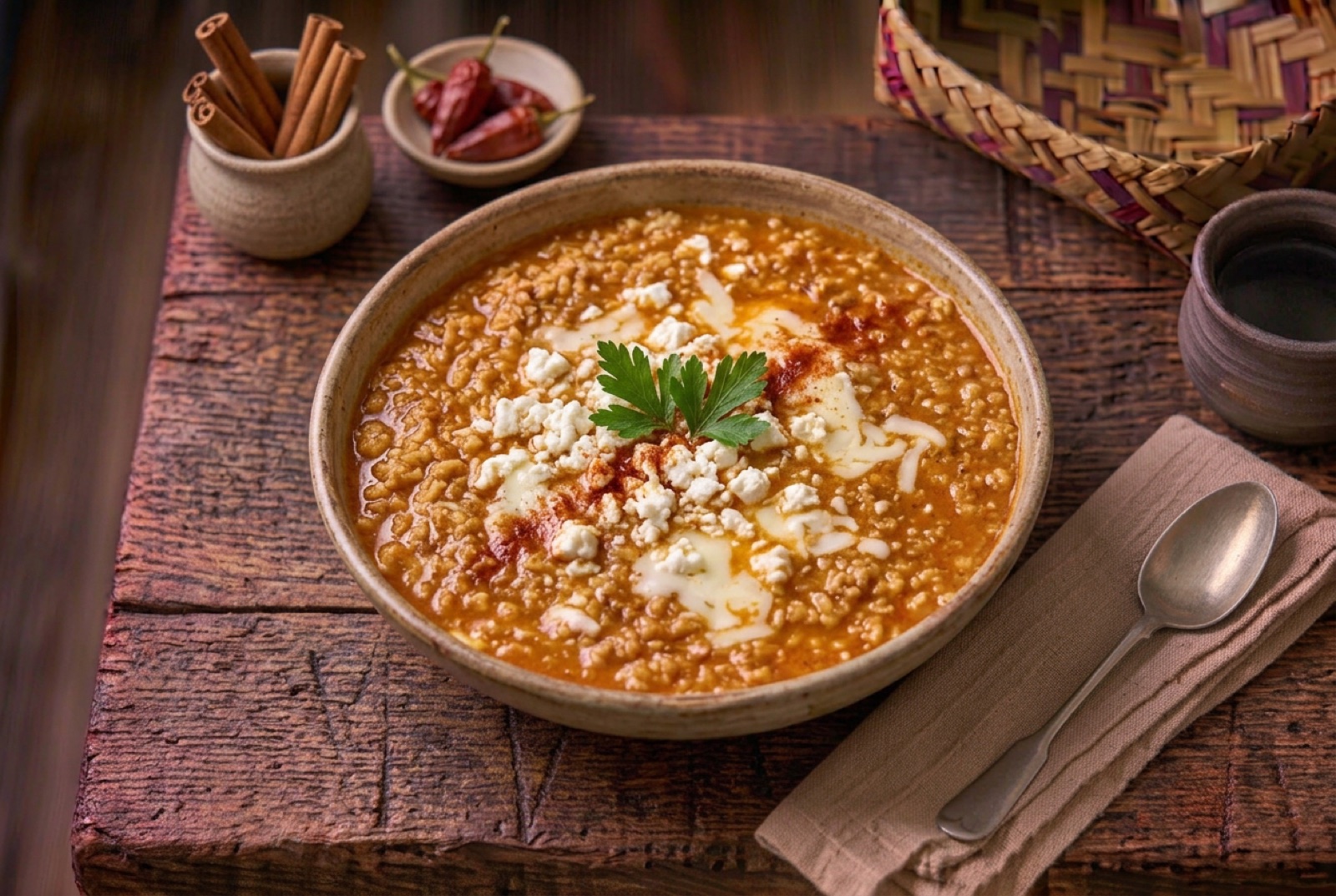
North Macedonia35 min
Tarana Čorba
Macedonian Toasted Crumb Pasta Soup
North Macedonia3 hr 45 min
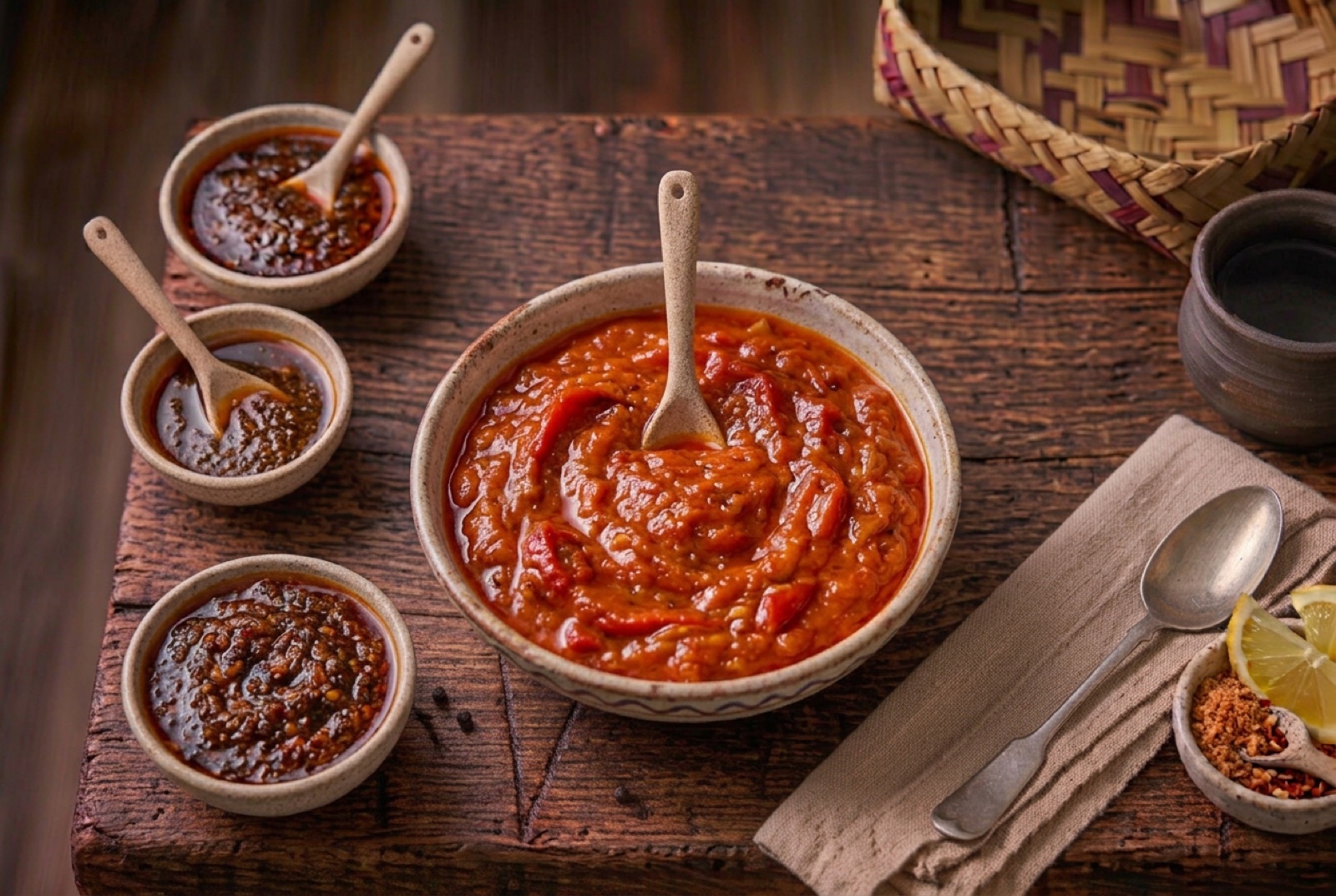
Macedonian Ajvar
Roasted Red Pepper Relish
North Macedonia2 hr 55 min
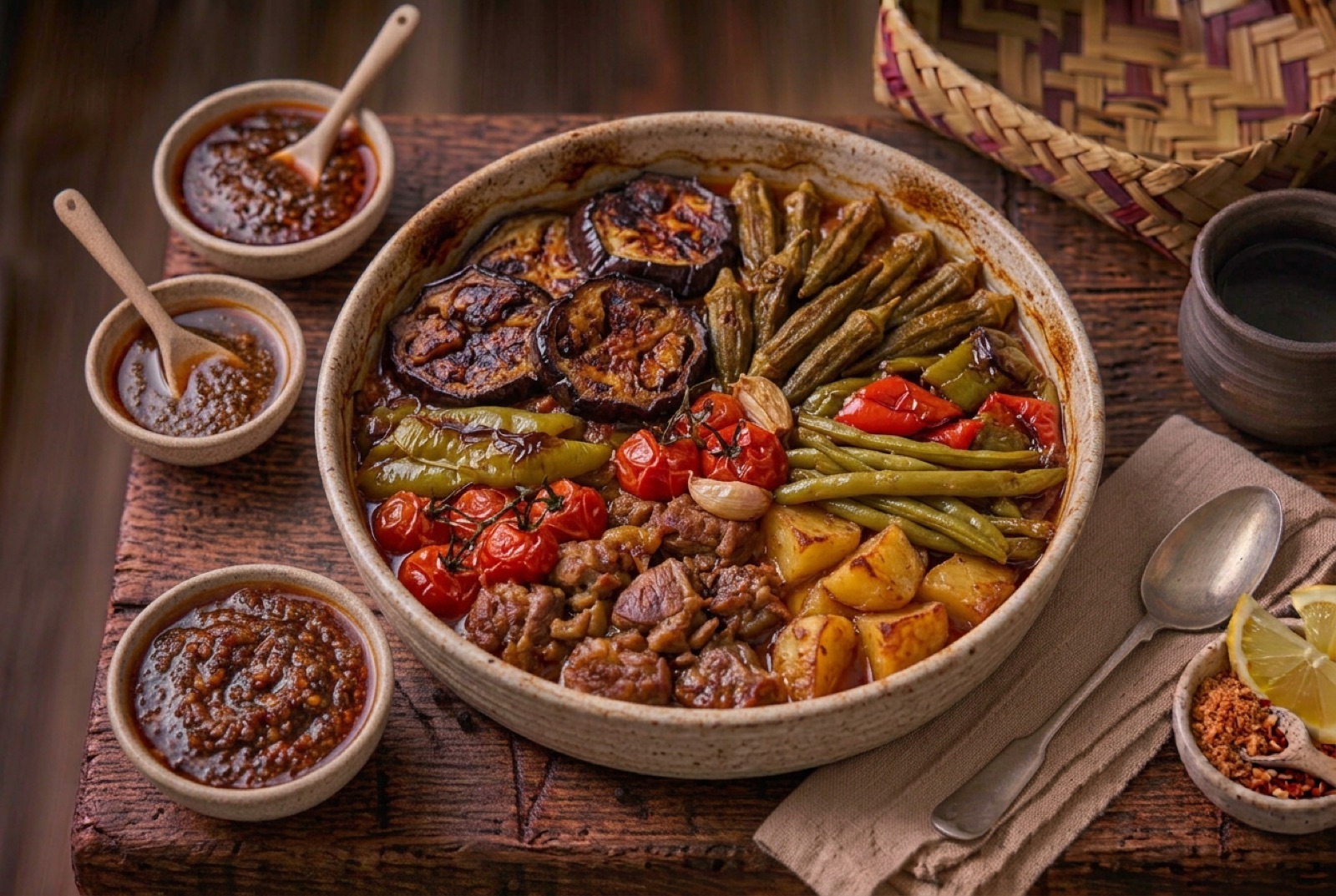
Turli Tava
Macedonian Mixed Vegetable and Meat Bake
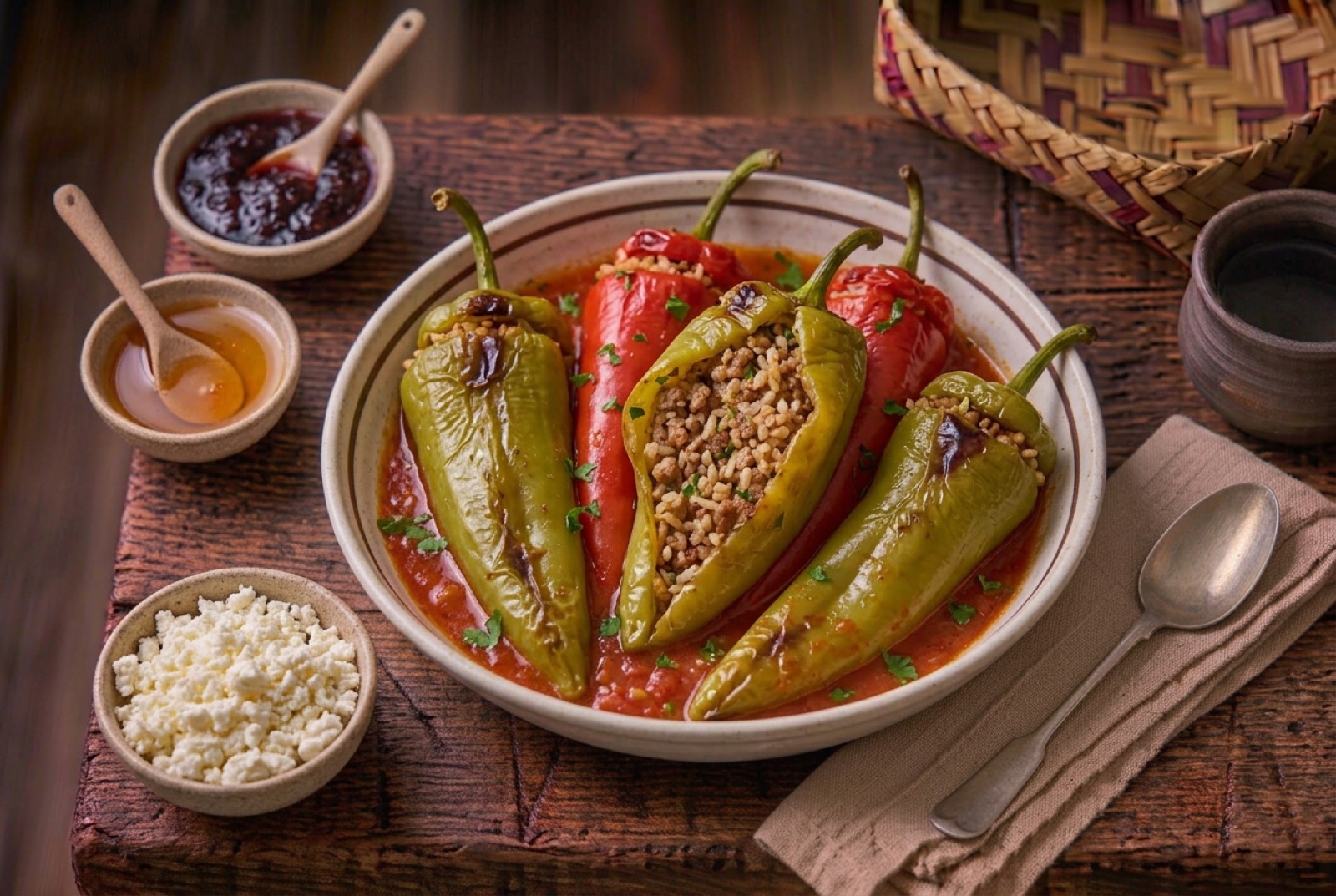
North Macedonia1 hr 30 min
Polneti Piperki
Macedonian Stuffed Peppers in Tomato
Keep exploring North Macedonia.
North Macedonia has 9 more dishes in the atlas — Macedonian Ajvar and Mekici, and 7 more.
All North Macedonia recipes Onion recipes Paprika recipes Mint recipes mainvegetarianvegandairy freenut freeRecipe by The DishRoute Kitchen · published August 20, 2026 · updated August 20, 2026