Turli Tava.
Macedonian Mixed Vegetable and Meat Bake
Турли тава · say it: TOOR-lee TAH-vah
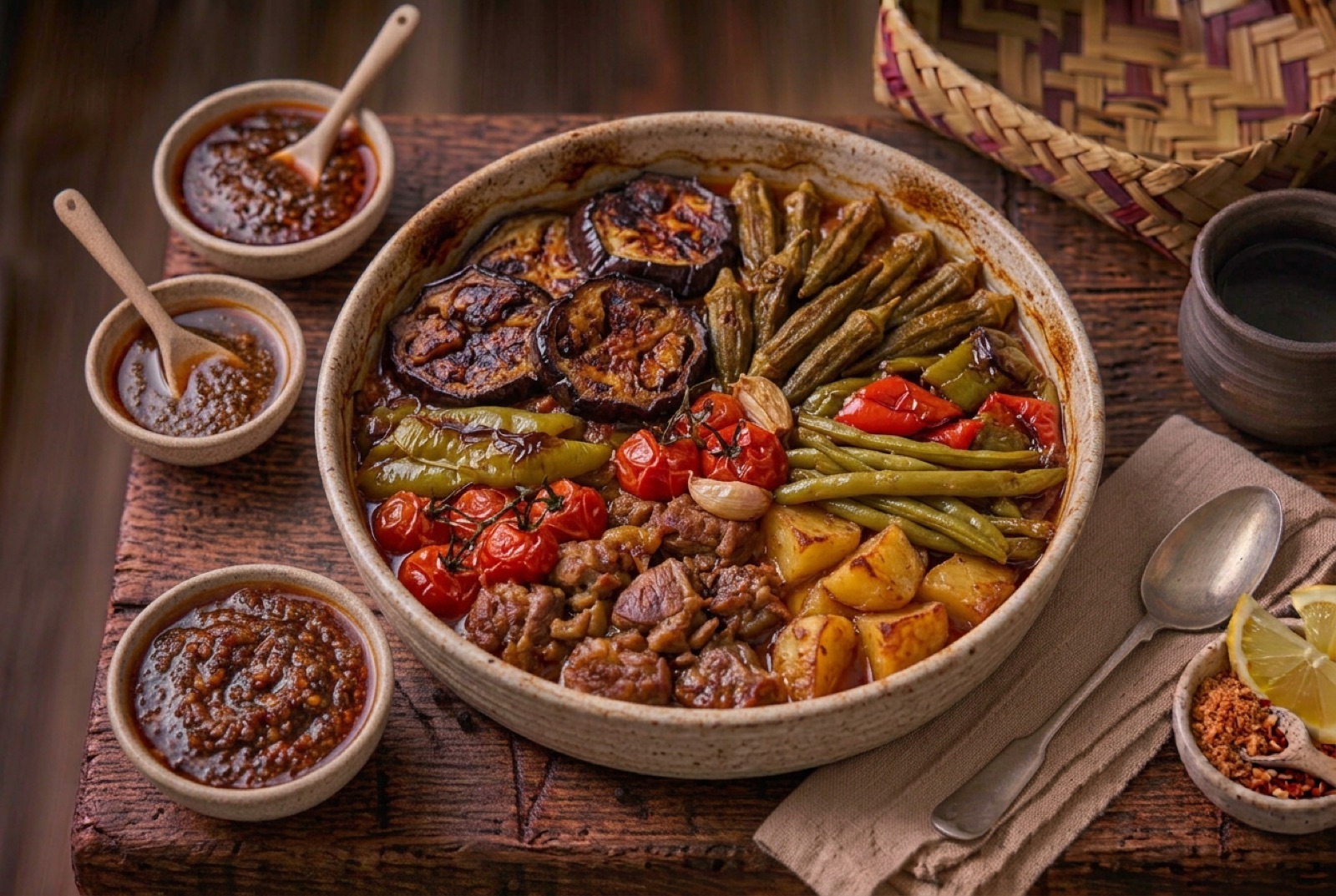
Turli tava is the late-summer bake that empties a Macedonian garden into a single wide pan: aubergine, okra, green beans, peppers, potato, courgette and tomato, arranged over pieces of lamb or veal, dressed with oil and paprika, and left in a moderate oven long enough that no single vegetable stays distinct. What comes out is not a tidy tray of roast vegetables but something closer to a stew that has lost most of its liquid — soft, glossy, deeply savoury, with charred edges where the pan met the heat. Turli comes from the Turkish türlü, meaning assorted, and the recipe is honest about it: what goes in depends on what is ripe.

- Gate
- North MacedoniaCentral and southern North Macedonia
- Prep
- 45 min
- Cook
- 1 hr 40 min
- Total time
- 2 hr 55 min incl. 30 min rest
- Serves
- 6
- Status
- Medium
- Nutrition / serving · estimated
- Calories 540 kcal
- Protein 30 g
- Carbs 34 g
- Fat 31 g
- Fiber 10 g
- Sodium 690 mg
Why this recipe works.
- Salts and pre-fries the aubergine so it turns silky instead of spongy and grey in the finished pan.
- Treats okra properly with a vinegar soak, the standard Balkan trick for keeping it from turning slimy.
- Gives the meat a head start in the oven so it is genuinely tender by the time the vegetables have collapsed.
- Works as a full main course or, at room temperature the next day, as one of the better meze on the table.
Ingredients.
17 itemsFor the meat
For the pan
For the vegetables
For the seasoning
Equipment
- Wide shallow roasting pan or earthenware tava
- Large frying pan
- Colander
Instructions.
Prepare aubergine and okra
Toss the aubergine cubes with a tablespoon of salt in a colander and leave for 30 minutes, then rinse and squeeze dry in a towel. Meanwhile soak the okra in cold water with the vinegar for 20 minutes, drain and dry thoroughly.
Tip The aubergine should feel noticeably heavier and darker after salting — that is water you no longer have to bake out.
Start the meat
Brown the meat in 2 tablespoons of oil in a hot pan, in batches, until well coloured on several sides. Transfer it to the roasting pan with the chopped onion, pour over the stock, cover with foil and bake at 180°C for 40 minutes.
Fry the aubergine
While the meat bakes, fry the dried aubergine in 3 tablespoons of oil over medium-high heat for 6 to 8 minutes, until the cubes are collapsed, glossy and browned at the corners rather than pale and spongy. Drain on kitchen paper.
Season the vegetables
In a large bowl combine the okra, green beans, peppers, potatoes, courgette, tomatoes, garlic, paprika, black pepper, half the parsley, the last tablespoon of oil and a generous teaspoon of salt. Fold in the fried aubergine last so it does not break up.
Layer and bake covered
Uncover the meat, spread the vegetables over it in an even layer no more than two vegetables deep, and press down gently. Cover with foil and bake at 180°C for 45 minutes, until the potatoes yield easily to a knife tip.
Finish uncovered
Remove the foil and bake for another 15 to 20 minutes, until the surface has dried, the pepper edges are blackening in places and the juices have reduced to a thick glaze at the sides of the pan.
Rest before cutting
Let the pan stand for at least 20 minutes. The vegetables set slightly as they cool, so a rested tava can be cut into squares and lifted out whole instead of sliding apart. Scatter over the remaining parsley.
Tips from our kitchen.
- Salt the diced aubergine for 30 minutes and blot it dry. It draws out water, seasons the flesh through, and stops it soaking up every drop of oil in the pan.
- Soak whole small okra in vinegared water for 20 minutes, then dry it thoroughly and leave the caps intact. Cutting into the pods is what releases the sticky texture people complain about.
- Cut everything to roughly the same size, around 3 cm, so the vegetables finish together rather than some turning to purée while others stay raw.
- Use a wide pan and no more than two layers deep. This is a bake, not a casserole, and crowding turns it into a boil.
- Do not stir during baking. Turli tava is meant to hold its arrangement until you cut into it.
- Finish uncovered for the last 20 minutes so the surface dries and browns — that contrast against the soft interior is the whole appeal.
Substitutions.
- Fresh okra → Frozen whole okra, or extra green beans
- Frozen okra goes into the pan straight from the freezer, no soaking needed. If you skip it entirely the dish still works, but you lose a texture that has no real replacement.
- Lamb shoulder → Veal shoulder, pork shoulder, or nothing at all
- The meatless version is genuinely traditional fasting food rather than a modern adaptation. Increase the vegetables by about a third and add an extra tablespoon of oil.
- Fresh tomatoes → Tinned chopped tomatoes, drained of most of their juice
- Outside tomato season this is the better choice. Drain them well — extra liquid is the main enemy of a good turli tava.
Variations.
- Posna turli tava
- The fasting version: no meat, no dairy, more aubergine and beans, and a heavier hand with the oil and paprika to make up the richness.
- With rice
- A handful of rice scattered between the layers, which swells and binds the vegetables into something closer to a baked pilaf.
- Cheese-topped
- Crumbled white brined cheese over the top for the final 15 minutes, so it softens and browns in patches. Not classic, but common in home kitchens.
Storage & reheating.
Keeps 4 days refrigerated and is widely considered better cold on day two, cut into squares and eaten as meze with bread. Reheat covered at 170°C for 25 minutes, or simply let it come to room temperature. It freezes for up to 3 months but the aubergine and courgette soften further, so the thawed dish is best treated as a spread-like side rather than a plated main. Do not reheat repeatedly; the okra breaks down completely after a second round.
Serve with
Warm bread, a bowl of thick yogurt, and pickled green peppers or a raw onion to cut through the richness.
The story behind Turli Tava.
The dish sits at the meeting point of two Balkan habits — the Ottoman türlü tradition of mixed vegetable stews, and the local practice of taking a wide shallow pan to the neighbourhood bakery. Until well into the twentieth century, most village households did not have an oven of their own. Bread ovens were communal, fired once and then left to coast down through hours of falling heat, and a covered tava of vegetables and meat could be left in that residual warmth all afternoon. That long, slow, unattended bake is exactly what turli tava is built for, and it explains the texture: vegetables cooked past the point any modern roasting recipe would recommend, until they are creamy rather than firm.
It is also an August dish by nature. Aubergines, peppers, okra, beans and tomatoes all peak at the same time across the Vardar valley and the Pelagonia plain, and every household ends up with more than it can eat fresh. Turli tava is one of the three main answers to that surplus, alongside ajvar and pickling. The proportions shift year to year and cook to cook; the only structural rules are that there should be at least four different vegetables, that okra and aubergine should be among them, and that the pan should be wide rather than deep.
Meat is common but not compulsory. Lamb is the older choice, veal the restaurant one, and a great many families make it entirely without meat during fasting periods, when the vegetables and a generous hand with the oil carry the dish alone. Served hot it is a main course; served at room temperature the next day, cut into squares, it becomes meze, and most Macedonians will tell you that is when it tastes best.
Questions, answered.
What does turli tava mean?
Turli comes from the Turkish türlü, meaning assorted or mixed, and tava is the wide shallow pan the dish is baked and served in. Together the name simply describes the method: an assortment of vegetables baked in one pan. There is no fixed ingredient list, which is why every family version differs.
How do I stop okra from going slimy?
Buy small, firm pods, leave the caps on and do not slice them open. Soak them whole in water with a splash of vinegar for about 20 minutes, then dry them thoroughly before they go into the pan. The mucilage is released when the seeds are exposed to moisture, so intact dry pods stay pleasant.
Can I make turli tava without meat?
Yes, and the meatless version is a standard dish in its own right rather than a substitution. Orthodox fasting periods rule out meat and dairy for weeks at a time, so most Macedonian households make it both ways depending on the calendar. Add more aubergine and beans and be generous with the oil.
Why did my bake come out watery?
Usually too much tomato or courgette, or a pan that was too small and deep so the steam had nowhere to go. Drain tinned tomatoes well, use a wide pan with the vegetables no more than two layers deep, and always finish uncovered so the surface can dry out and the liquid reduces.
Do I have to pre-fry the vegetables?
Only the aubergine really benefits, and even that step can be replaced by salting and a hot oven roast on a separate tray. Frying gives the silkiest result and the deepest flavour; if you skip it entirely the dish is lighter but the aubergine tends toward a spongy texture.
You might also like.
All recipes →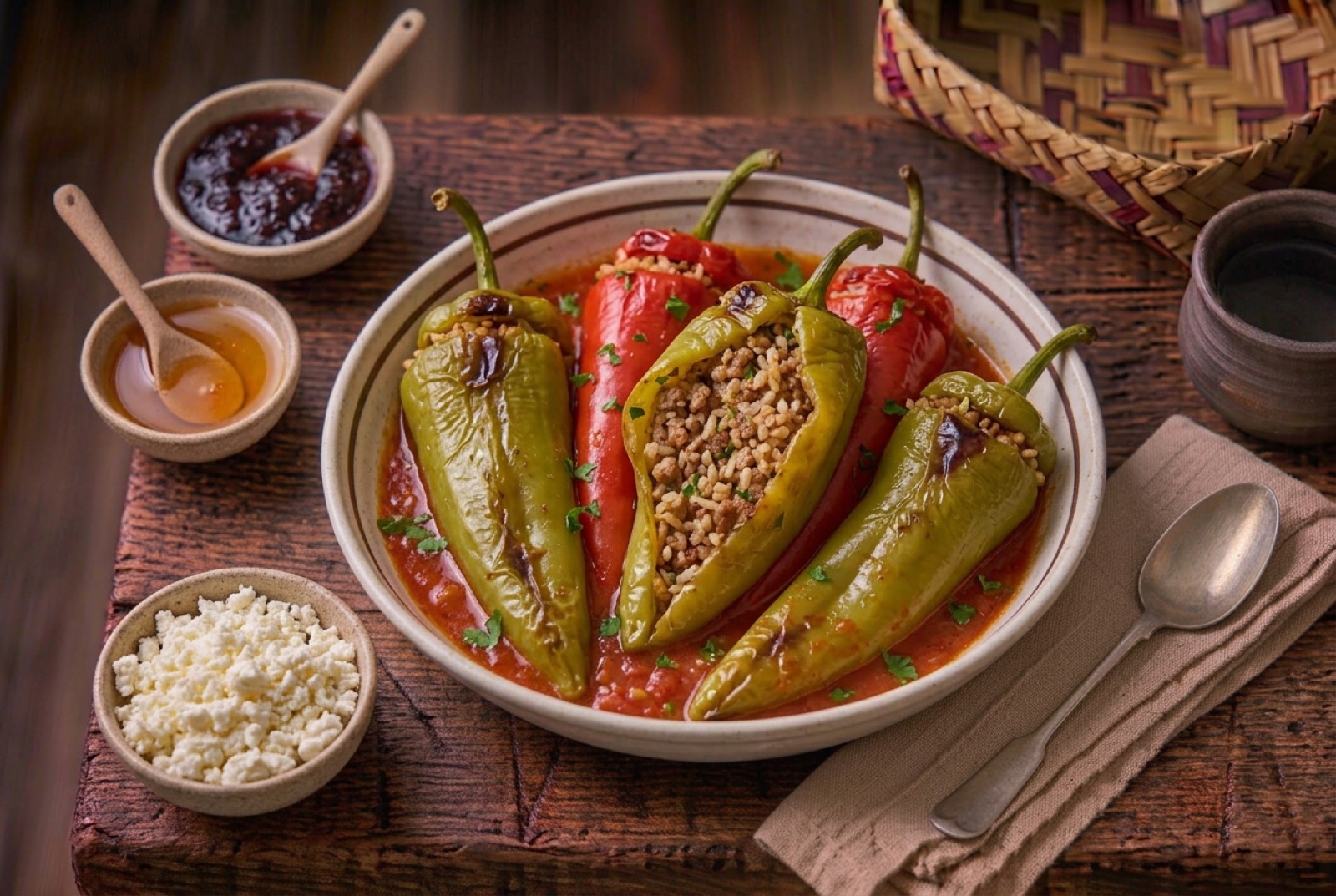
North Macedonia1 hr 30 min
Polneti Piperki
Macedonian Stuffed Peppers in Tomato
North Macedonia3 hr 45 min
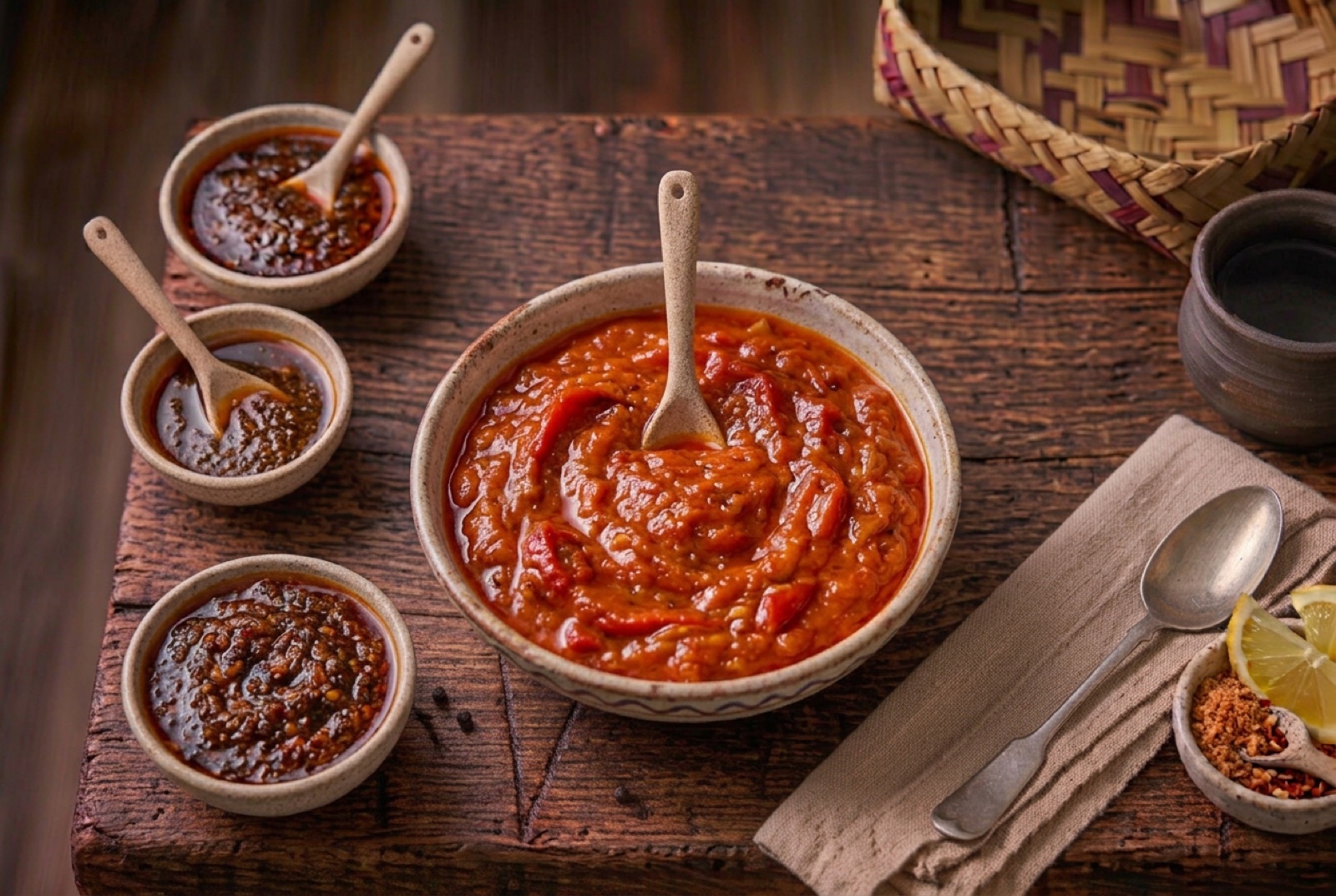
Macedonian Ajvar
Roasted Red Pepper Relish
North Macedonia1 hr 55 min
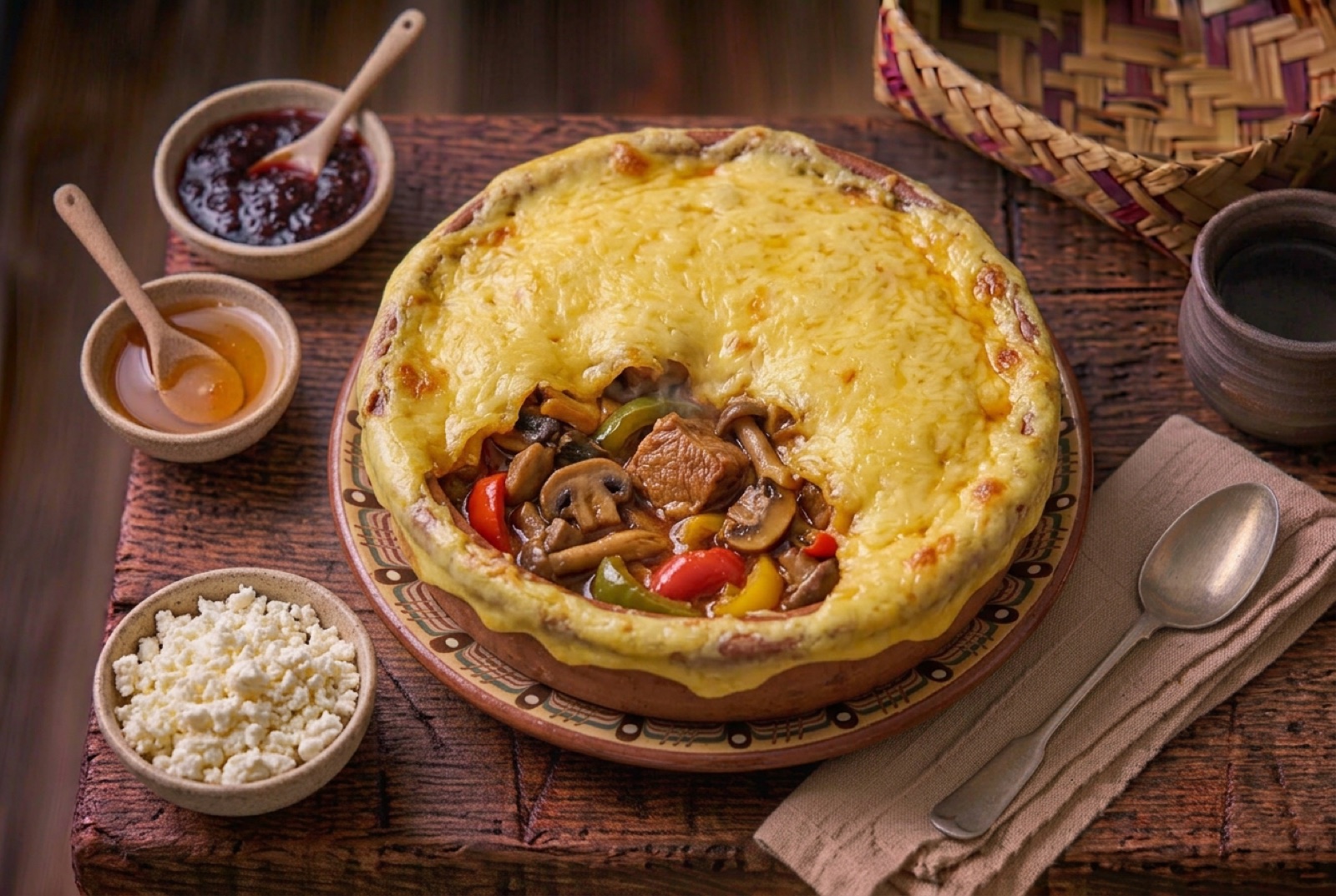
Selsko Meso
Macedonian Village Pork and Mushroom Pot
North Macedonia10 hr 20 min
Tavče Gravče
Macedonian Clay-Pot Baked Beans
Keep exploring North Macedonia.
North Macedonia has 9 more dishes in the atlas — Macedonian Ajvar and Mekici, and 7 more.
All North Macedonia recipes Eggplant recipes Okra recipes Bell pepper recipes maingluten freedairy freenut freeRecipe by The DishRoute Kitchen · published August 20, 2026 · updated August 20, 2026