Sheftalia.
Cypriot Caul-Wrapped Grilled Meat Rolls
Σεφταλιά / Şeftali kebabı · say it: shef-tah-LYAH
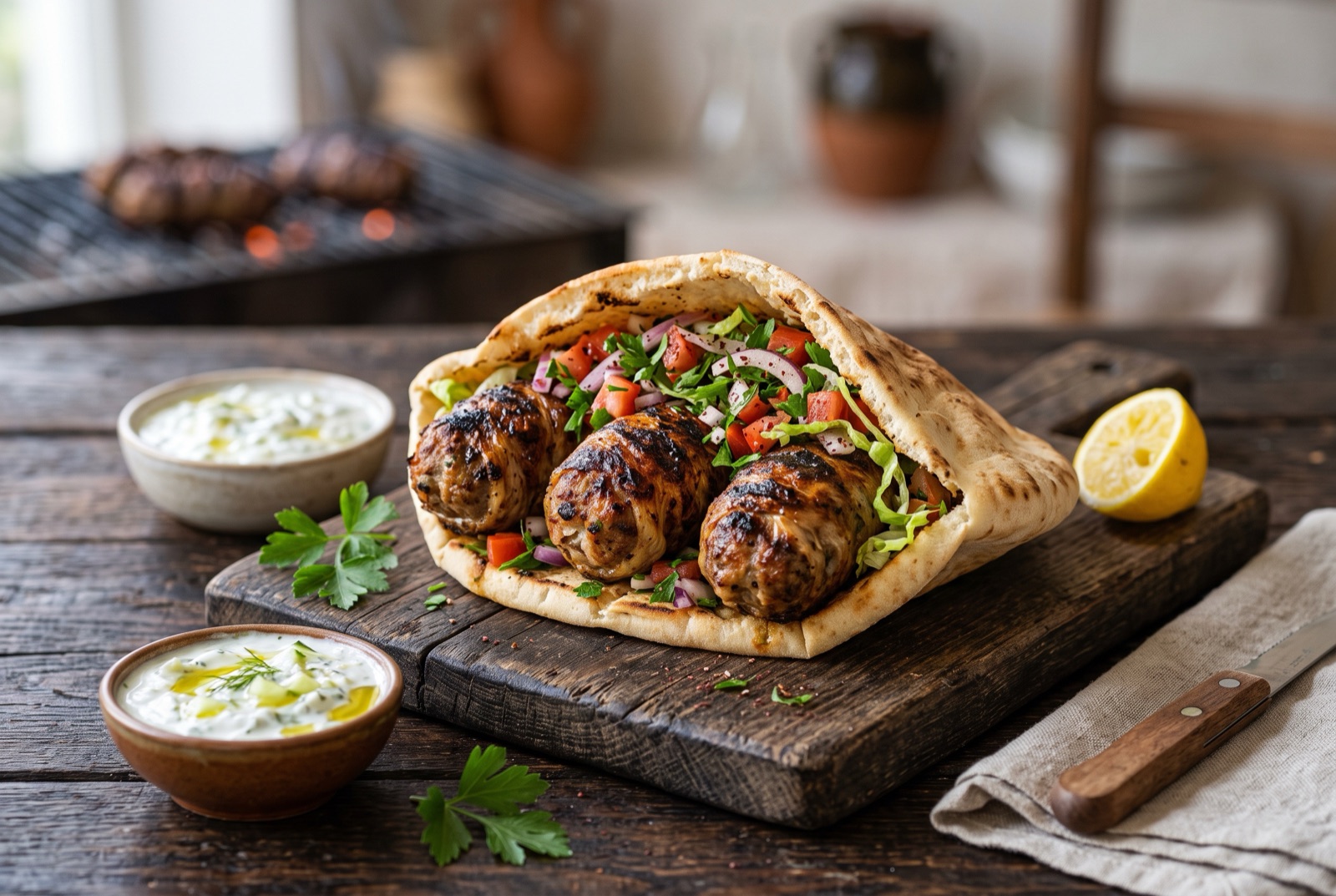
Sheftalia are small sausage-shaped parcels of coarsely minced pork and lamb, mixed with a lot of grated onion and parsley and wrapped — not in a casing — in caul fat, the lacy membrane from around a pig's stomach. On the grill that lace melts away almost entirely, and while it does it bastes the meat continuously, which is why sheftalia stay juicy where a plain meat patty of the same size would dry out. What is left is a thin, crisp, faintly savoury skin over soft, onion-sweet meat. Cypriots eat them straight off the coals in pita with tomato, cucumber, parsley and a squeeze of lemon, and they are the island's definitive late-night food.

- Gate
- Cyprus
- Prep
- 35 min
- Cook
- 18 min
- Total time
- 1 hr 53 min incl. 1 hr rest
- Serves
- 4
- Status
- Medium
- Nutrition / serving · estimated
- Calories 640 kcal
- Protein 38 g
- Carbs 34 g
- Fat 38 g
- Fiber 3 g
Why this recipe works.
- Uses the correct onion-heavy ratio, which is what keeps the meat soft without any breadcrumb or egg binder.
- Explains how to handle, soak and cut caul fat, the step that puts most people off making these at home.
- Chills the rolls before grilling so they hold together instead of unwrapping over the coals.
- Covers both charcoal and oven-plus-grill routes and is clear about what indoors costs you.
Ingredients.
13 itemsFor the rolls
To serve
Equipment
- Charcoal grill with a flat grate
- Box grater
- Clean cloth or muslin for squeezing onion
- Tongs
Instructions.
Prepare the caul fat
Put the caul fat in a bowl of warm water with the vinegar and leave for 15 minutes. It will loosen from a stiff clump into a soft translucent web. Lift it out, spread it gently on a board without tearing, and cut it into squares of roughly 12 cm.
Tip Work with it wet. Caul dries out quickly and becomes brittle and impossible to fold once it does.
Squeeze the onion
Grate the onions on the coarse side of a box grater, then wrap them in a clean cloth and wring hard over the sink until no more liquid comes out. You should be left with a damp pulp roughly half the volume you started with.
Mix the filling
Combine both minces with the squeezed onion, parsley, salt, pepper and cinnamon and mix with your hands for about a minute — enough to distribute everything evenly, but stop before the mixture turns sticky and paste-like. It should still look coarse and loose.
Tip Fry a teaspoon of the mix to taste it before rolling. Under-salted sheftalia are impossible to fix later.
Roll and wrap
Shape a heaped tablespoon of mixture into a short sausage about 7 cm long. Lay it on the edge of a caul square, fold the sides in and roll it up once so the meat is fully covered, then trim any excess. Repeat until you have around 16 rolls.
Chill the rolls
Lay the sheftalia seam-side down on a tray and refrigerate for at least an hour. The caul fat firms up and grips the meat, which is what stops them unravelling in the first minutes on the grate.
Grill over medium coals
Grill seam-side down first over medium coals, undisturbed for two minutes, then turn every couple of minutes for 15 to 18 minutes total. They are ready when the lacy pattern has almost disappeared, the surface is crisp and mottled brown, and they feel firm under the tongs.
Tip Move them to a cooler corner of the grill if fat flares up — flames blacken the wrapper before the middle is done.
Build the pita
Warm the pitas briefly on the grill until they puff and soften. Split them, lay in three or four sheftalia, add tomato, cucumber, extra parsley and onion, and squeeze lemon over generously before folding. Eat immediately, over a plate.
Tips from our kitchen.
- Squeeze the grated onion hard in a cloth before mixing. You want its flavour, not its water, or the mixture will be too loose to roll.
- Ask the butcher to mince the meat coarsely, or pulse it yourself. Fine supermarket mince gives a dense, springy texture more like a burger than a sheftalia.
- Soak the caul fat in warm water with a splash of vinegar for 15 minutes. It relaxes from a stiff clump into a workable sheet and loses its faint smell.
- Wrap once, twice at most. A thick bundle of caul will not fully render and leaves an unpleasant chewy layer.
- Chill the rolled sheftalia for an hour before grilling. Cold fat holds the seam shut for the first crucial minutes on the grate.
- Grill over medium coals and turn every couple of minutes. High heat splits the wrapper and the fat flares before the middle is cooked.
Substitutions.
- Caul fat → A thin sheet of pork back fat, or shape the mixture around flat skewers as kebabs
- Neither self-bastes the same way. If you go without caul, add 15 percent more fat to the mince and expect a drier result — this is the one component that is genuinely hard to replace.
- Pork and lamb mince → All lamb, or beef and lamb
- All-lamb sheftalia are made in Turkish Cypriot kitchens and by anyone avoiding pork. Beef alone is too lean and needs added lamb fat.
- Charcoal grill → Oven at 200°C on a rack for 20 minutes, then 3 minutes under a hot grill
- Works properly and keeps the kitchen liveable, but you lose the smoke that defines the dish. Put a tray underneath to catch the rendering fat.
Variations.
- Turkish Cypriot şeftali kebabı
- The same rolls made with lamb and beef instead of pork, often with cumin alongside the parsley and onion, served with grilled peppers and sumac onions.
- Sheftalia with halloumi
- A small cube of halloumi pressed into the centre of each roll before wrapping. It softens rather than melts and gives a salty core.
- Mixed grill plate
- Sheftalia grilled alongside pork chops, lountza and halloumi as a taverna mixed grill, served with pourgouri and pickled vegetables instead of pita.
Storage & reheating.
Raw rolled sheftalia keep 2 days refrigerated and freeze extremely well for 3 months — freeze them on a tray first so they do not fuse, then bag them, and grill from frozen with an extra five minutes. Cooked sheftalia keep 3 days in the fridge; reheat them in a hot oven rather than a pan so the rendered skin re-crisps instead of turning greasy. They are also good cold, chopped into a salad with tomato and yoghurt the day after.
Serve with
Warm pita, chopped tomato and cucumber, flat-leaf parsley, sliced onion tossed with lemon, and a spoon of thick yoghurt or tahini.
The story behind Sheftalia.
Sheftalia are common ground across the island's divide. Greek Cypriots call them sheftalia, Turkish Cypriots şeftali kebabı, and both make them the same way with the same wrapper — a rare piece of shared culinary vocabulary in a place where a lot else has been contested since 1974. The Turkish name is a small linguistic joke that keeps confusing visitors: şeftali means peach, and there is no peach involved anywhere. The most plausible explanation is a corruption of a word for the caul or the wrapping itself rather than any fruit connection, but nobody has settled it, and Cypriot cooks generally shrug at the question.
The wrapper is the whole technique. Caul fat — bolia in Cypriot Greek — is a translucent web of fat that surrounds the internal organs of a pig or sheep. It has almost no structure when raw and looks alarming to anyone who has not met it, but it is one of the most useful things in a butcher's cold room: laid over anything lean, it holds the shape while the fat renders, self-bastes as it goes, and vanishes into a thin crackled skin. Cooking that relies on caul appears from France to China; Cyprus just does it more often than most places.
The meat mixture matters too. Traditional sheftalia use pork, often with some lamb, minced coarsely rather than to a paste, and carry an unusually high proportion of onion — enough that the mixture looks under-meated in the bowl. That onion releases water during cooking and keeps the interior soft, which is why properly made sheftalia are moist despite containing no binder, egg or breadcrumb. Cinnamon is common; cumin appears in some Turkish Cypriot versions.
They are grill food in the strict sense, cooked over charcoal on a flat grate rather than a rotisserie, and turned constantly because the rendering fat flares. In Cyprus, a sheftalia pita from a corner grill house after midnight occupies roughly the cultural position that a kebab shop does in Britain or a taco stand does in Mexico City, and everyone has a preferred grill they will argue for.
Questions, answered.
What is caul fat and where do I buy it?
Caul fat is the lacy membrane of fat that surrounds the stomach and intestines of a pig or sheep. It renders almost completely during cooking, basting whatever it wraps and leaving a thin crisp skin. Any traditional butcher can order it, usually cheaply; it is also sold frozen at Greek, Turkish, Middle Eastern and Chinese grocers.
Can I make sheftalia without caul fat?
You can shape the mixture around flat skewers like kebabs, but be aware you are making something different. Caul is what keeps the meat moist and gives the crisp exterior, so without it add extra fat to the mince, cook faster and hotter, and accept a drier, more crumbly result.
Why do my sheftalia fall apart on the grill?
Usually because they went on warm and loosely wrapped. Chill the rolls for at least an hour so the caul fat stiffens and grips, place them seam-side down first, and leave them undisturbed for the first two minutes so the wrapper sets. Wet mince from unsqueezed onion is the other common cause.
Do I need to soak the caul fat first?
Yes. Straight from the butcher it is stiff, clumped and slightly strong-smelling. Soaking in warm water with a splash of vinegar or lemon juice for about 15 minutes relaxes it into a sheet you can spread flat, cut into squares and work with, and removes most of the odour.
How do I know when sheftalia are cooked through?
The wrapper should be crisp and mottled brown with the lacy pattern almost gone, and the roll should feel firm rather than squashy under tongs. Cut one open at the thickest point — the meat should be uniformly grey-brown with clear juices. They take roughly 15 to 18 minutes over medium coals with frequent turning.
You might also like.
All recipes →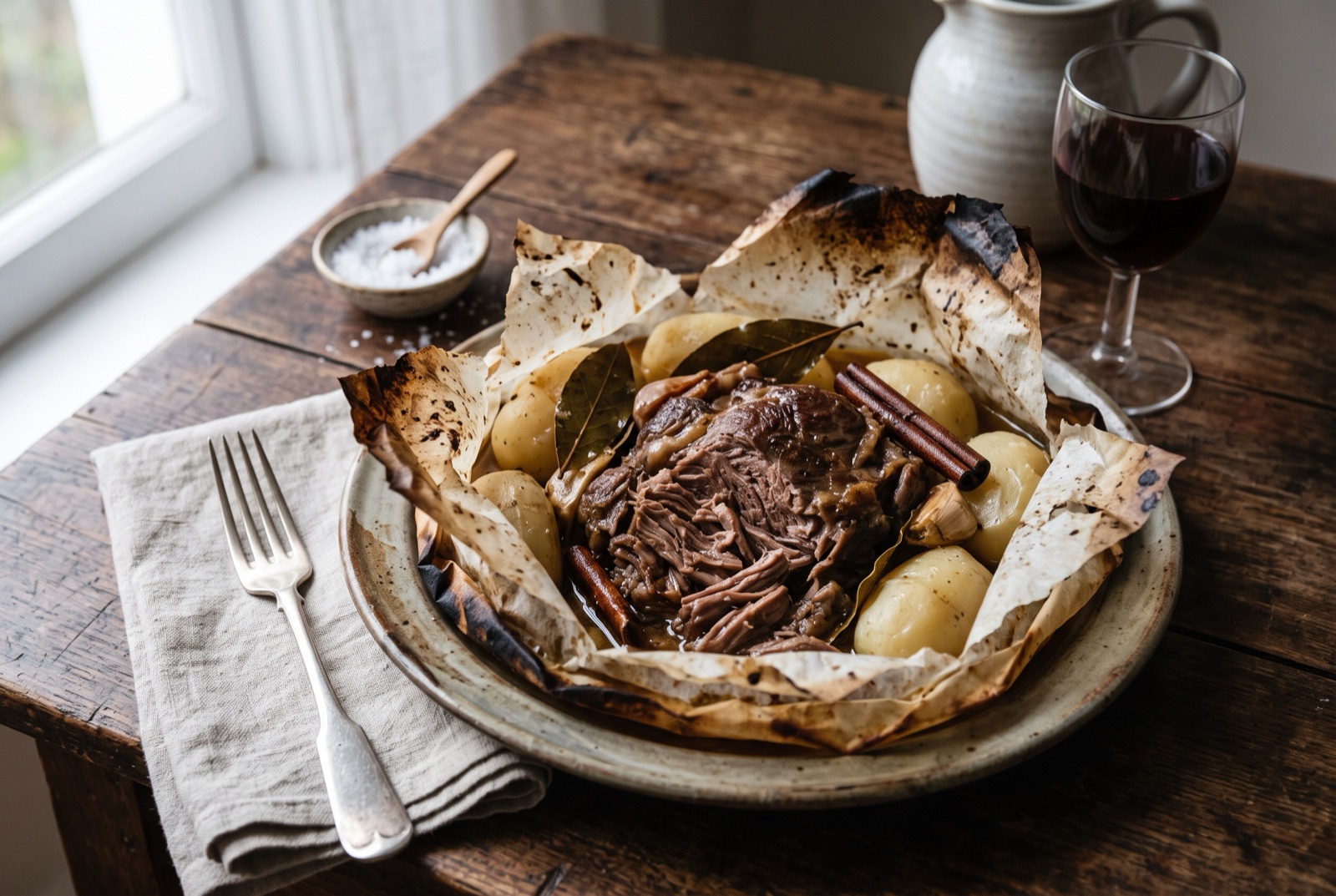
Cyprus5 hr 45 min
Kleftiko
Cypriot Lamb Slow-Baked in a Sealed Parcel
Cyprus2 hr 20 min
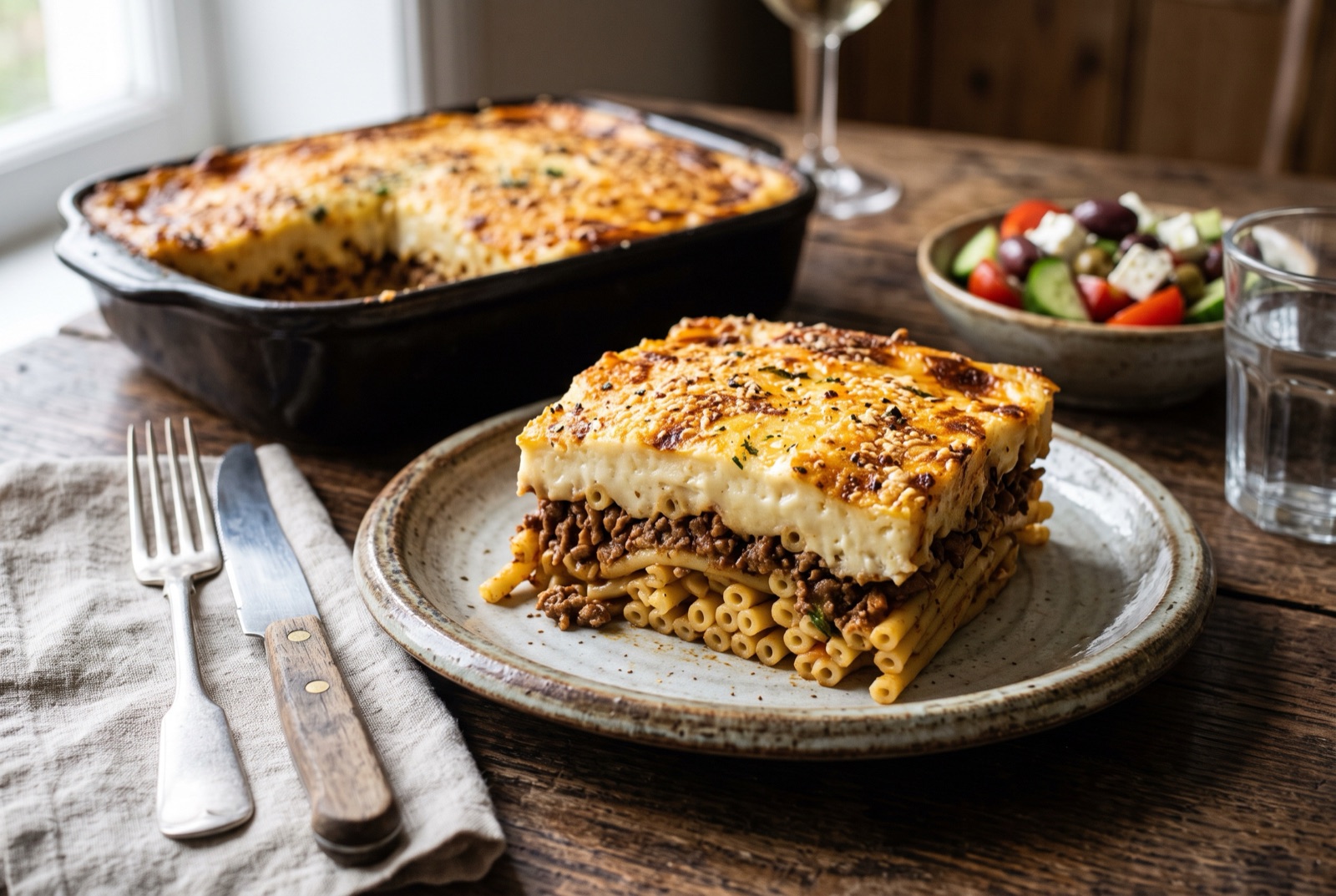
Makaronia tou Fournou
Cypriot Baked Pasta with Halloumi Béchamel
Cyprus3 hr 40 min
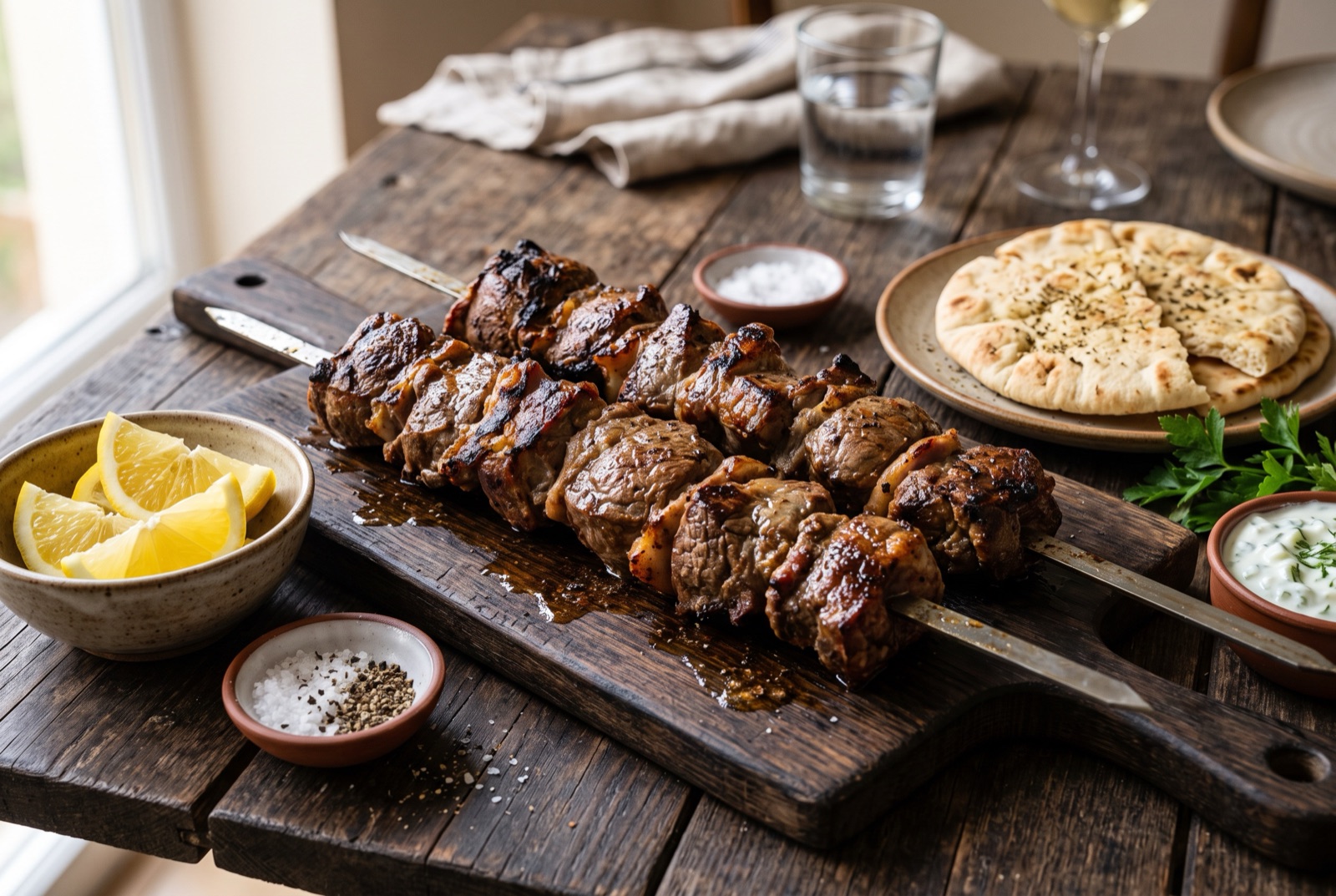
Souvla
Cypriot Slow-Grilled Lamb on the Rotisserie
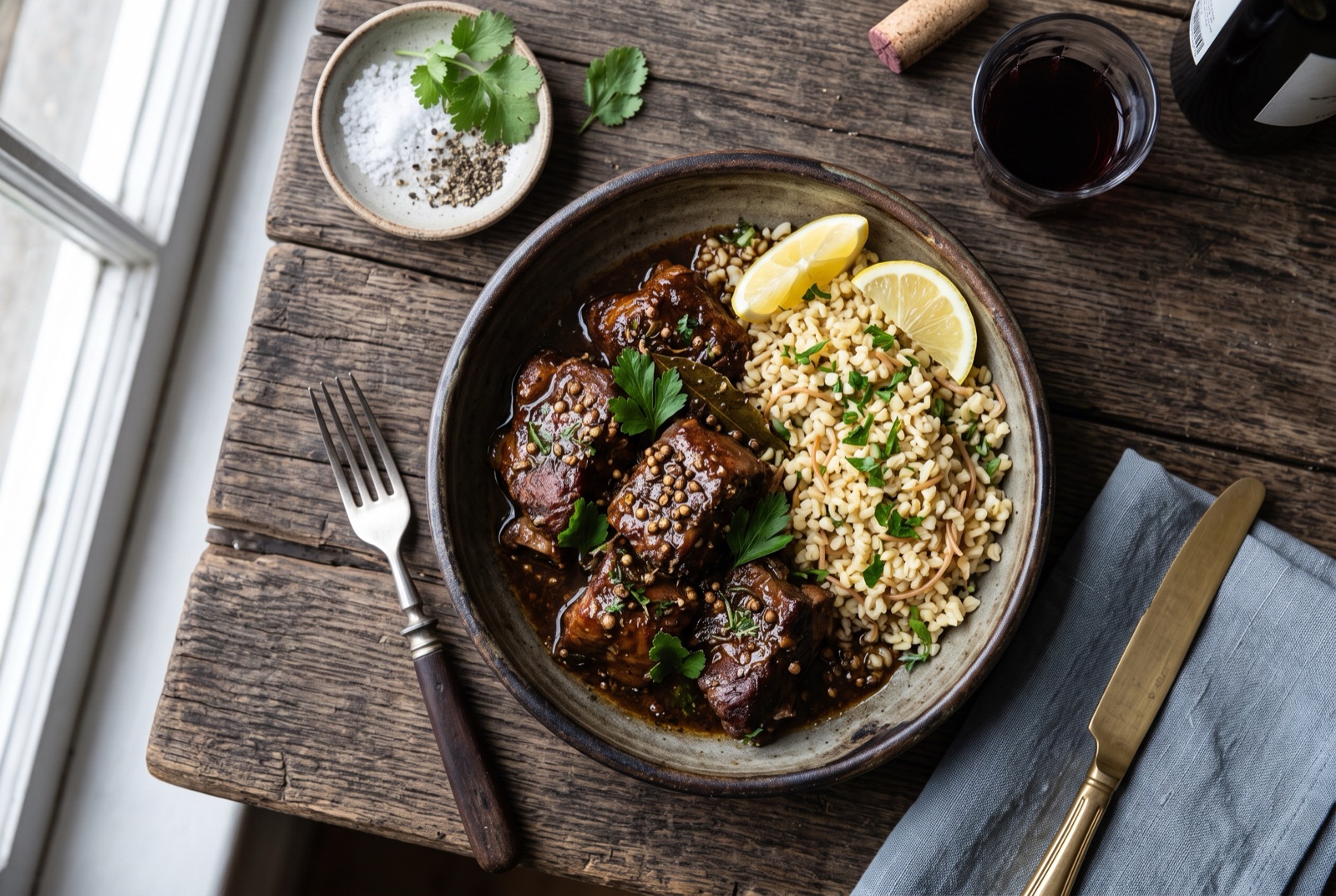
Cyprus9 hr 15 min
Afelia
Cypriot Pork Braised in Red Wine and Coriander
Keep exploring Cyprus.
Cyprus has 9 more dishes in the atlas — Afelia and Daktyla, and 7 more.
Recipe by The DishRoute Kitchen · published August 20, 2026 · updated August 20, 2026