Suutei Tsai.
Mongolian Salted Milk Tea
Сүүтэй цай · say it: SOO-tay TSAI
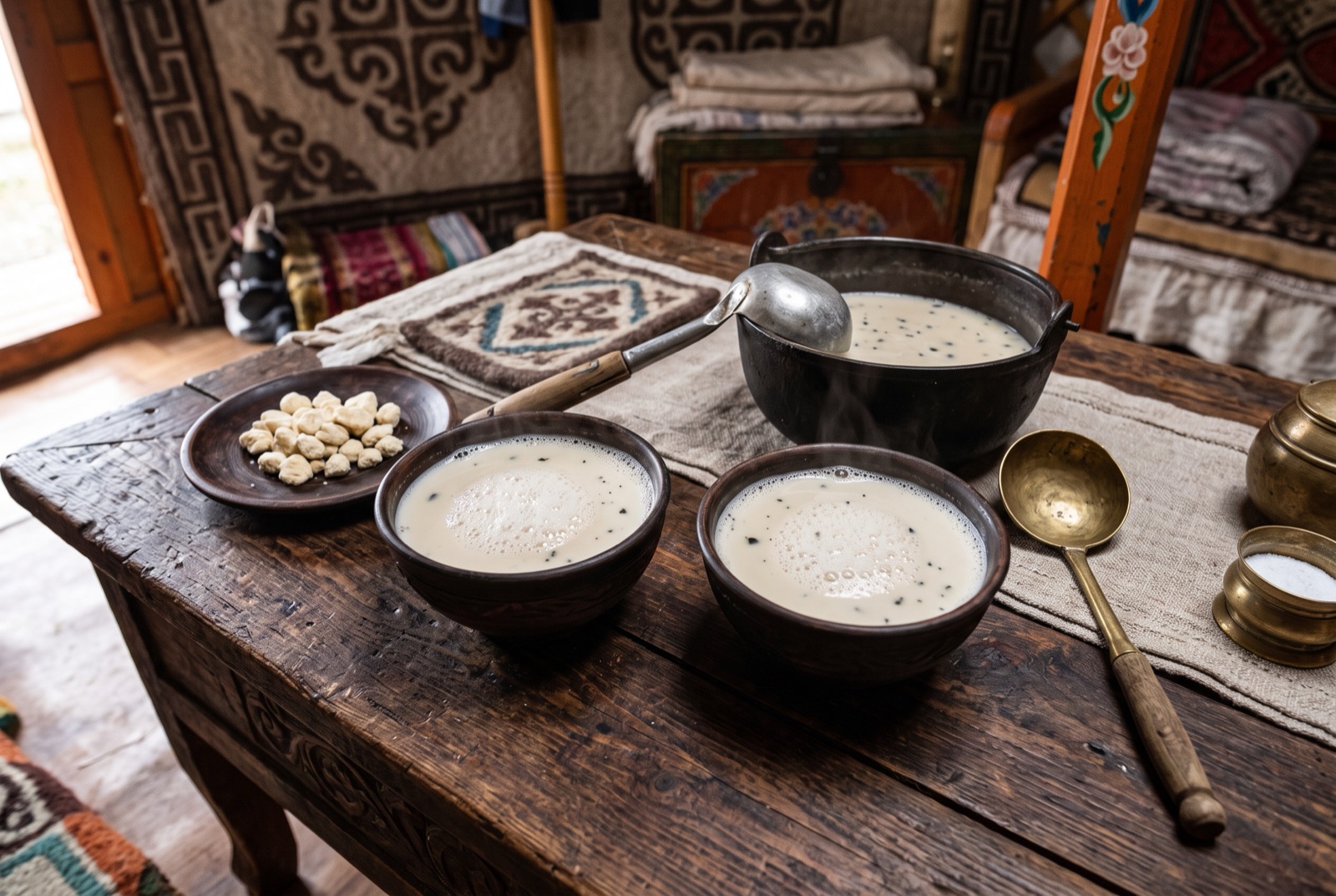
Suutei tsai is tea made the way a herding culture makes it: leaves boiled rather than steeped, milk in roughly equal measure to water, and salt instead of sugar. The taste surprises almost everyone the first time — savoury, faintly grassy from the green brick tea, with the salt reading as seasoning rather than error. It is drunk all day, from breakfast onward, and it is the first thing put in front of a guest. Refusing it is not really an option, and after a bowl or two in a cold climate the logic of a hot salted milk drink becomes obvious.

- Gate
- Mongolia
- Prep
- 5 min
- Cook
- 20 min
- Total time
- 25 min
- Serves
- 4
- Status
- Easy
- Nutrition / serving · estimated
- Calories 120 kcal
- Protein 6 g
- Carbs 9 g
- Fat 6 g
- Sugar 8 g
- Sodium 620 mg
Why this recipe works.
- Uses the boiling method rather than steeping, which is what makes this milk tea and not tea with milk.
- Includes the ladling step and explains what it actually does to the drink.
- Gives a salt range so you can start cautious and work up to the real thing.
- Covers brick tea and the loose-leaf substitute honestly, including what changes.
Ingredients.
6 itemsEquipment
- Wide saucepan
- Ladle
- Fine strainer
Instructions.
Boil the tea in water
Bring the water to a boil in a wide pan, add the shaved brick tea and boil for 8 minutes, until the liquid is a deep amber-brown and smells clearly of tea rather than hot water. Loose green tea needs only 5 minutes.
Add the milk and salt
Pour in the milk and add half the salt, then bring the pan back to the point where the surface just trembles. Hold it there — do not let it come to a rolling boil, which scorches the milk and leaves a burnt edge in the flavour.
Ladle to aerate
Dip a ladleful and pour it back into the pan from as high as you can manage without splashing, so it falls in a thin stream. Repeat at least twenty times, until a pale foam builds on the surface and the colour lightens and evens out.
Tip This is the step people skip and then wonder why their milk tea tastes thin.
Simmer briefly
Let the tea sit at a bare tremble for 5 more minutes so the milk and tea marry, ladling a few more times as it goes. The colour should settle to a warm beige with a faint grey cast.
Season and strain
Taste and add the rest of the salt in small pinches until it tastes savoury and rounded rather than flat or briny. Strain through a fine sieve into a serving pot, pressing the leaves lightly.
Serve
Pour into bowls rather than cups and add butter or toasted millet if you want them, letting the butter melt across the surface. Offer and receive the bowl with the right hand, and serve it hot enough to steam.
Tips from our kitchen.
- Shave brick tea rather than breaking off chunks — an even shave extracts evenly, while a lump gives you weak tea and a bitter core.
- Boil the tea in water alone first. Adding milk before the leaves have given up their colour leaves you with a pale, flat brew.
- Ladle the tea high, at least twenty times. The stream should be thin and audible, and the surface should build a light foam.
- Start with half a teaspoon of salt per litre and taste. Mongolian levels are higher, but working up is easier than fixing an oversalted pot.
- Do not let it boil hard after the milk goes in — a rolling boil scorches the milk solids and gives a burnt aftertaste.
- Strain into the serving pot, not the bowls, so the last cup is as clean as the first.
Substitutions.
- Green brick tea → Loose green tea, or a strong plain black tea
- Brick tea is coarser and more tolerant of boiling. Loose green tea boiled the same way goes bitter faster, so cut the boiling time to 5 minutes. Black tea gives a darker, less grassy drink that is closer to Tibetan style.
- Cow milk → Goat, sheep or camel milk
- All are traditional and all taste noticeably different — sheep and camel milk are richer and more savoury, which suits the salt.
- Salt → Less salt, or none
- A tea without salt is not suutei tsai, but it is a reasonable landing point if the savoury version is too much on first try. Sugar is the one thing Mongolians would find genuinely odd.
Variations.
- Buttered tea
- A spoonful of butter or rendered fat stirred into each bowl, closer to Tibetan po cha and standard in cold weather.
- Millet tea
- Toasted millet stirred into the bowl, which softens as it sits and turns the drink into a light meal.
- Tea with boortsog
- Pieces of fried dough dropped into the tea to soak, the standard countryside breakfast.
Storage & reheating.
Suutei tsai is best fresh but is genuinely kept warm on the stove all day in Mongolian households, topped up with more milk and water. Refrigerated it keeps 2 days; reheat gently without boiling and expect to re-ladle it, since the fat separates and sits on top when cold. Do not freeze it — the milk proteins break and the thawed tea is grainy and unpleasant.
Serve with
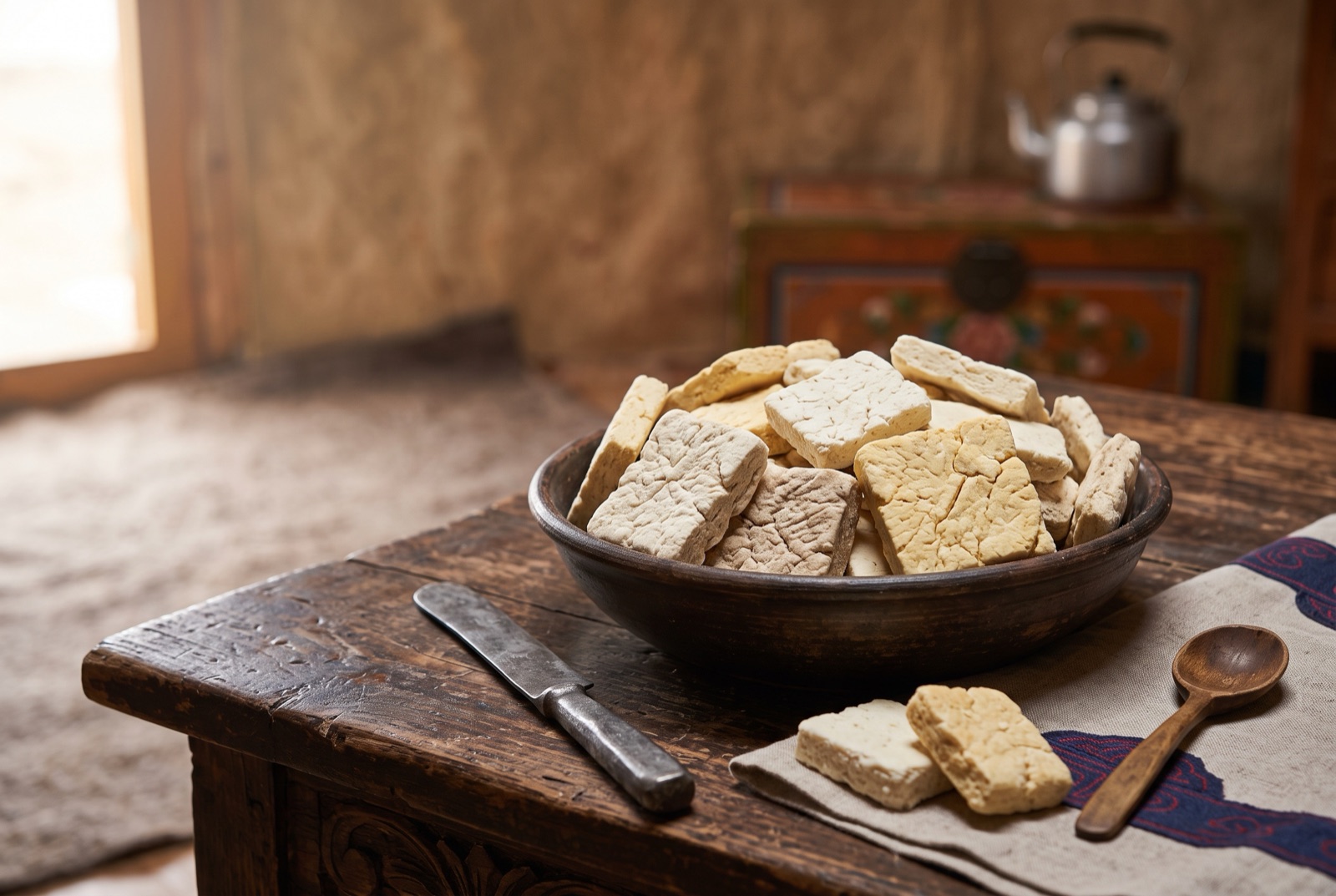
Boortsog, aaruul, or a piece of fried dough dropped straight into the bowl to soften.
The story behind Suutei Tsai.
Milk tea of this kind spans the Mongolian plateau, Tibet and Central Asia, everywhere pastoralists and brick tea met along the trade routes that carried compressed tea north and west out of China. Brick tea was ideal cargo: pressed into hard slabs, it survived months on a camel, and a piece could be shaved off as needed. In Mongolia it met an abundance of milk from sheep, goats, cows, camels and horses, and the two became a single daily drink rather than two separate ones.
The salt is not a garnish. In a diet historically built on meat and dairy with very little else, and in a climate where you sweat under heavy clothing in summer and lose fluid in dry winter air, a warm salted milk drink taken continuously is a sensible way to keep both hydration and electrolytes up. Sugar simply was not part of the picture; it arrived far later and even now most Mongolians take their milk tea salted.
Hospitality is where the drink really lives. A bowl of suutei tsai is offered to anyone who enters a ger, immediately and without asking, and the bowl is passed and received with the right hand, often supported at the elbow by the left as a gesture of respect. A guest is expected to at least take a sip. The pot sits on the stove more or less permanently, topped up through the day.
Cooks aerate the tea by lifting ladlefuls high and pouring them back into the pot, sometimes dozens of times. This is not showmanship — it cools the brew slightly, mixes the fat back through, and produces a rounder, less flat drink. Additions vary by region and household: a knob of butter, a spoonful of toasted millet, a scrap of fried dough, or in the countryside a little rendered fat.
Questions, answered.
Why is the tea salted instead of sweetened?
It reflects a diet built on meat and dairy in a harsh climate, where a warm salted drink taken through the day helps maintain hydration and salt balance. Sugar reached Mongolia relatively late and never displaced the habit. Salted milk tea is savoury rather than sweet by design, and drunk more like a light broth than a dessert drink.
What is brick tea and can I use ordinary tea?
Brick tea is coarse tea leaves and stems compressed into a hard slab, historically the trade format carried north into Mongolia. You can substitute loose green tea, but it is finer and goes bitter faster under boiling, so shorten the boil to about 5 minutes and taste as you go.
Why do Mongolians pour the tea back and forth with a ladle?
Aeration. Lifting ladlefuls high and pouring them back cools the tea slightly, mixes the milk fat evenly through it, and builds a light foam that makes the drink taste rounder and less flat. Twenty or more pours is normal, and you can taste the difference against an unaerated pot.
How much salt should I use?
Mongolian households commonly use around a teaspoon per litre, sometimes more. If you have never drunk salted milk tea, start at half a teaspoon per litre, taste, and add in small increments. The salt should read as seasoning that rounds the milk out, not as seawater.
Can I make it with plant milk?
Oat milk works best because it has enough body to stand up to the salt and the boiling. Almond and rice milks are too thin and the tea ends up watery. It will not taste like the original, which depends heavily on animal milk fat, but it is drinkable and holds the same savoury logic.
You might also like.
All recipes →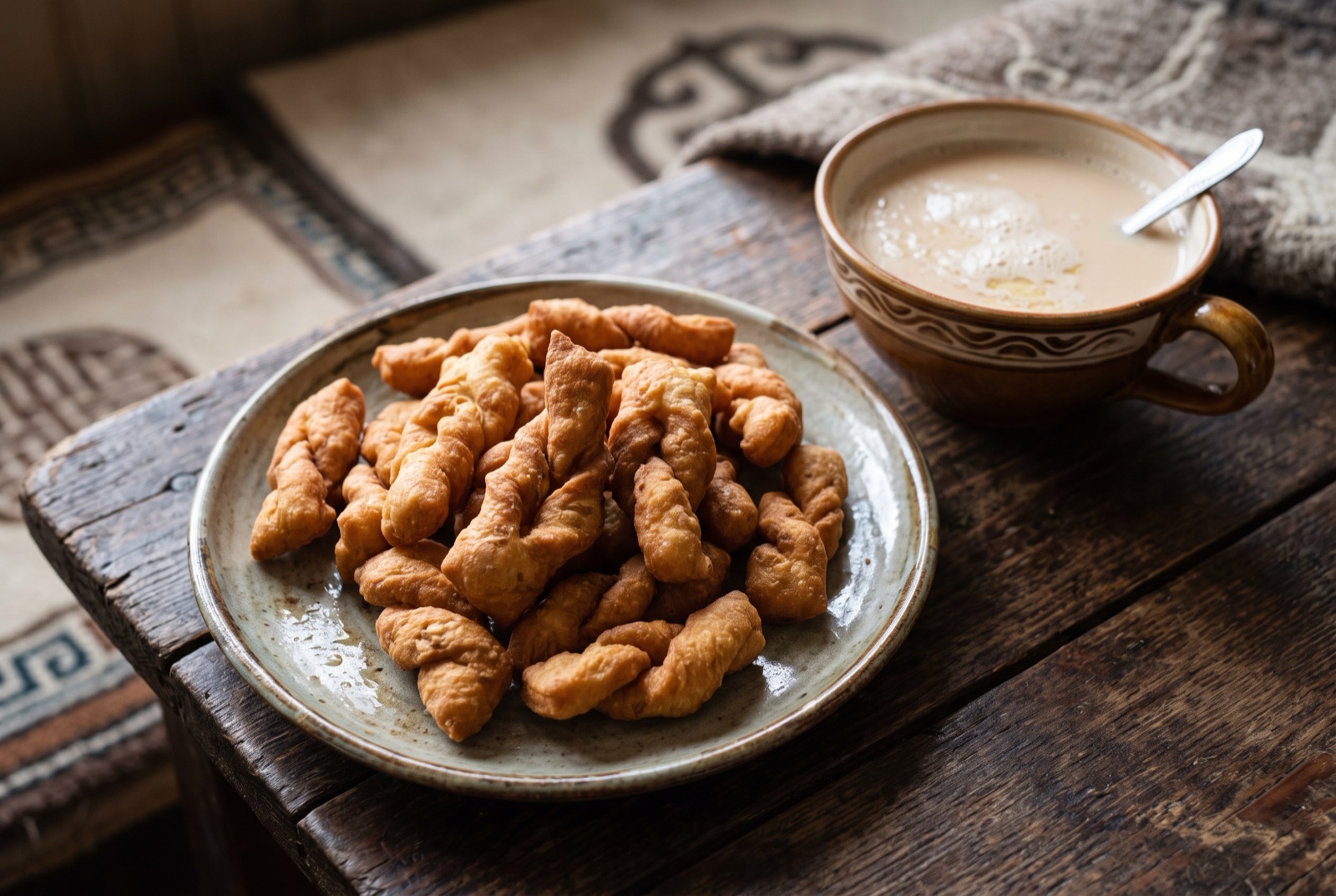
Keep exploring Mongolia.
Mongolia has 9 more dishes in the atlas — Aaruul and Bantan, and 7 more.
Recipe by The DishRoute Kitchen · published August 20, 2026 · updated August 20, 2026