Svíčková na Smetaně.
Beef in Root Vegetable Cream Sauce
Svíčková na smetaně · say it: SVEECH-koh-vah nah SMEH-tah-nyeh
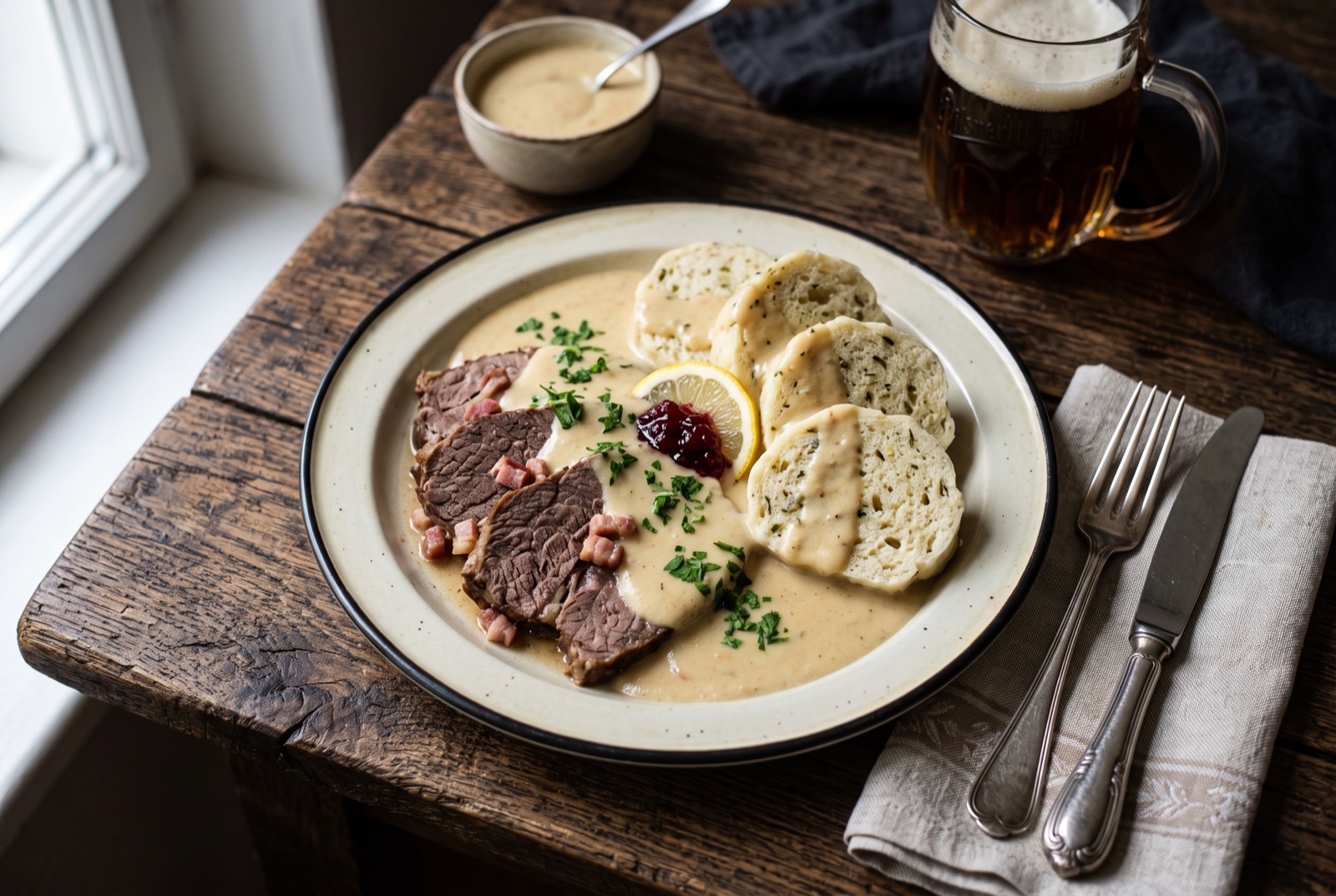
Svíčková na smetaně is a joint of beef braised slowly on a bed of grated carrot, parsley root and celeriac, after which the vegetables are blended with cream into a thick, pale-orange sauce and poured over sliced meat and bread dumplings. The taste is unusual for a beef dish: sweet from the root vegetables, sour from vinegar and lemon, rounded by cream, and perfumed with bay, allspice and thyme rather than anything hot. It arrives with a swirl of whipped cream, a spoon of cranberry compote and a lemon slice on top, which sounds like too much until you eat it and understand that the sauce needs the sharp and the sweet pulling at it from both sides. Every Czech family has a version and none of them agree.

- Gate
- CzechiaBohemia
- Prep
- 35 min
- Cook
- 3 hr
- Total time
- 3 hr 55 min incl. 20 min rest
- Serves
- 6
- Status
- Takes skill
- Nutrition / serving · estimated
- Calories 690 kcal
- Protein 45 g
- Carbs 26 g
- Fat 44 g
- Fiber 4 g
- Sugar 14 g
- Sodium 980 mg
Why this recipe works.
- Larding the beef with bacon strips keeps a lean braising cut juicy through three hours in the oven.
- The vegetables are grated rather than chunked, so they collapse completely and blend into a genuinely smooth sauce without cornflour.
- Clear guidance on the final sweet-sour correction, the step that separates a good svíčková from a bland cream sauce.
- Honest about the cut: tenderloin gives the dish its name but the wrong result, and this recipe explains what to buy instead.
Ingredients.
20 itemsFor the beef
For the sauce base
To finish
Equipment
- Heavy lidded casserole or Dutch oven
- Box grater
- Stick blender or upright blender
- Fine sieve
Instructions.
Lard and season the beef
Pierce the joint lengthways in six or eight places with a thin knife and push a strip of bacon deep into each hole. Rub the meat all over with the salt and pepper and leave it at room temperature while you prepare the vegetables.
Brown the joint hard
Melt the butter in a heavy casserole over medium-high heat and brown the beef on every side, about 10 minutes in total, until the surface is properly dark brown rather than grey. Lift it out onto a plate and keep the fat in the pan.
Tip Do not crowd or move the meat too soon — it releases from the pan by itself once a crust has formed.
Sweat the grated vegetables
Tip the onion into the same fat and cook until soft and pale gold, then add the grated carrot, celeriac and parsley root with the bay, allspice, thyme and peppercorns. Cook for 12–15 minutes, stirring, until the pile has slumped by half and smells sweet rather than raw.
Braise low and slow
Return the beef and any resting juices, pour in the stock so it comes about halfway up the joint, and bring to a bare simmer. Cover and cook in a 150°C oven for 2.5 to 3 hours, turning the meat once an hour, until a skewer slides in with almost no resistance.
Tip If the pan looks dry at any point, add a splash of water — the vegetables must stay wet enough to collapse.
Rest the meat, blend the sauce
Lift the beef out, cover it loosely with foil and let it rest for 20 minutes. Fish out the bay leaves and as many whole spices as you can find, then blend the vegetables and liquid until completely smooth and pass the sauce through a sieve for a glassy finish.
Balance sweet against sour
Return the sauce to a low simmer and stir in the vinegar, sugar and the juice of half a lemon. Taste and keep adjusting a teaspoon at a time until it tastes clearly sweet-sour, a little sharper than seems comfortable — the cream is about to soften it.
Add the cream off the boil
Pull the pan off the heat, wait until the surface stops bubbling, then stir in the double cream. The sauce should turn pale apricot and thickly coat a spoon; if it is too thick, loosen it with a little stock rather than water.
Tip Never boil the sauce after the cream goes in — that is when it splits.
Slice and plate
Carve the rested beef across the grain into finger-thick slices and lay them over sliced bread dumplings. Ladle the sauce generously across the meat, add a spoon of whipped cream and a spoon of cranberry compote to the side, and finish each plate with a slice of lemon.
Tips from our kitchen.
- Grate the root vegetables on the coarse side of a box grater. Chunks will not break down enough to blend into a silky sauce, no matter how long you cook them.
- Lard the beef by piercing it lengthways with a thin knife and pushing in strips of bacon. If that feels fiddly, tie the bacon around the outside instead — it still bastes the meat.
- Do not add the cream until the sauce is blended and off a hard boil. Boiling cream into an acidic sauce is the usual reason it curdles.
- Taste for the sweet-sour balance at the very end, adding vinegar a teaspoon at a time and sugar a pinch at a time. The sauce should make you want the next bite, not sit flat.
- The meat slices far more neatly after resting, and even better the next day cold. Slice across the grain, no thicker than a finger.
- If the sauce is thinner than you want, simmer it uncovered before the cream goes in rather than adding flour at the end.
Substitutions.
- Parsley root → An extra half of a celeriac plus a small parsnip
- Parsley root is standard in Czech and Polish shops but rare elsewhere. Parsnip is sweeter, so pull back slightly on the sugar at the end.
- Lingonberry or cranberry compote → Redcurrant jelly loosened with a little water, or a tart cranberry sauce
- You want something sharp and fruity, not a sweet jam. The compote exists to cut the cream.
- Bacon for larding → Strips of fatty pancetta, or skip the larding and lay bacon rashers over the top of the joint
- The bacon is there for fat, not smoke, so an unsmoked cut works well if you prefer a cleaner flavour.
Variations.
- Svíčková with mustard and lemon zest
- Many Bohemian cooks whisk a spoon of Dijon and a strip of lemon zest into the sauce before blending, pushing the whole dish further towards sharp.
- Pressure-cooker svíčková
- The same build, then 45 minutes under pressure instead of three hours in the oven. The sauce is very nearly as good; the meat is slightly less silky.
- Venison svíčková
- Larded venison haunch in place of beef, with juniper added to the spices. A traditional autumn version in the forested south and west.
Storage & reheating.
Svíčková improves overnight. Keep the sliced beef submerged in the sauce, refrigerated, for up to 3 days, and reheat gently in a covered pan over low heat — a hard boil after the cream has gone in can split the sauce. The sauce freezes for 3 months if you freeze it before adding the cream and stir the cream in on reheating; frozen with the cream already in, it tends to go grainy. Bread dumplings are best sliced and pan-fried in butter the next day rather than reheated whole.
Serve with
Sliced bread dumplings, lingonberry compote, a spoon of whipped cream and a slice of lemon — the full plate, none of it optional.
The story behind Svíčková na Smetaně.
Svíčková belongs to the nineteenth-century Bohemian kitchen, the era when Czech cooking absorbed Austrian technique and turned it towards its own tastes. The name comes from svíčková pečeně, the beef tenderloin cut, though almost nobody uses tenderloin any more — it is too lean to survive hours of braising, and the sauce, not the meat, is what people came for. Modern cooks use sirloin, top round or rump, and the argument over which cut is correct is a stable feature of Czech food forums.
What makes the dish distinctly Czech is what happens to the vegetables. In an Austrian braise the root vegetables would be strained out and discarded, having done their job. Here they are the sauce itself: grated fine, cooked to collapse, then blended and let down with cream until the mixture is thick enough to hold the ridges of a fork. That decision turns a braise into something closer to a velvety purée, and it explains why the dish is so bound to knedlíky — bread dumplings are the only starch porous enough to carry that much sauce per bite.
The garnishes are not decoration. Brusinky, a compote of lingonberry or cranberry, supplies the sharp fruit note; a spoon of lightly whipped cream cuts the acidity back; a slice of lemon says the sauce should taste bright, not heavy. Serving svíčková without them, in most Czech households, counts as serving it wrong. It is the food of Sunday lunches, christenings and wedding receptions, and the standard by which a Czech cook is quietly judged — a good svíčková takes half a day and cannot be faked, which is exactly why making it is a statement.
Questions, answered.
Which cut of beef should I actually use?
Despite the name meaning tenderloin, use a cut with connective tissue that rewards long cooking: sirloin cap, top round, rump or a well-trimmed chuck joint. Tenderloin dries out and shreds after three hours of braising. A joint of about 1.2 kg in one piece gives you neat slices and enough surface to lard.
Why did my sauce curdle?
Almost always because the cream met a boiling, acidic sauce. Blend the vegetables first, let the sauce drop below a simmer, then stir the cream in off the heat. Using full-fat cream rather than a low-fat version also helps, as does adding the vinegar before the cream instead of after.
Can I make svíčková ahead for a party?
Yes, and you should. Braise the meat and vegetables a day or two in advance, blend the sauce and refrigerate the two separately. On the day, slice the cold beef, warm it through in the sauce over low heat, and stir in the cream at the last moment. It genuinely tastes better than the same dish cooked and eaten the same afternoon.
Do I have to serve it with whipped cream and cranberries?
Nothing will explode if you skip them, but the dish is built around that contrast. The sauce is rich and slightly sweet, so the tart fruit and the cold, unsweetened cream give each mouthful somewhere to go. If you only add one, make it the cranberry or lingonberry compote.
What can I use instead of bread dumplings?
Boiled potatoes or wide egg noodles both work, and plain white bread is what Czech cooks reach for when there are no dumplings in the house. The point is a mild, absorbent starch — anything strongly flavoured competes with the sauce rather than carrying it.
You might also like.
All recipes →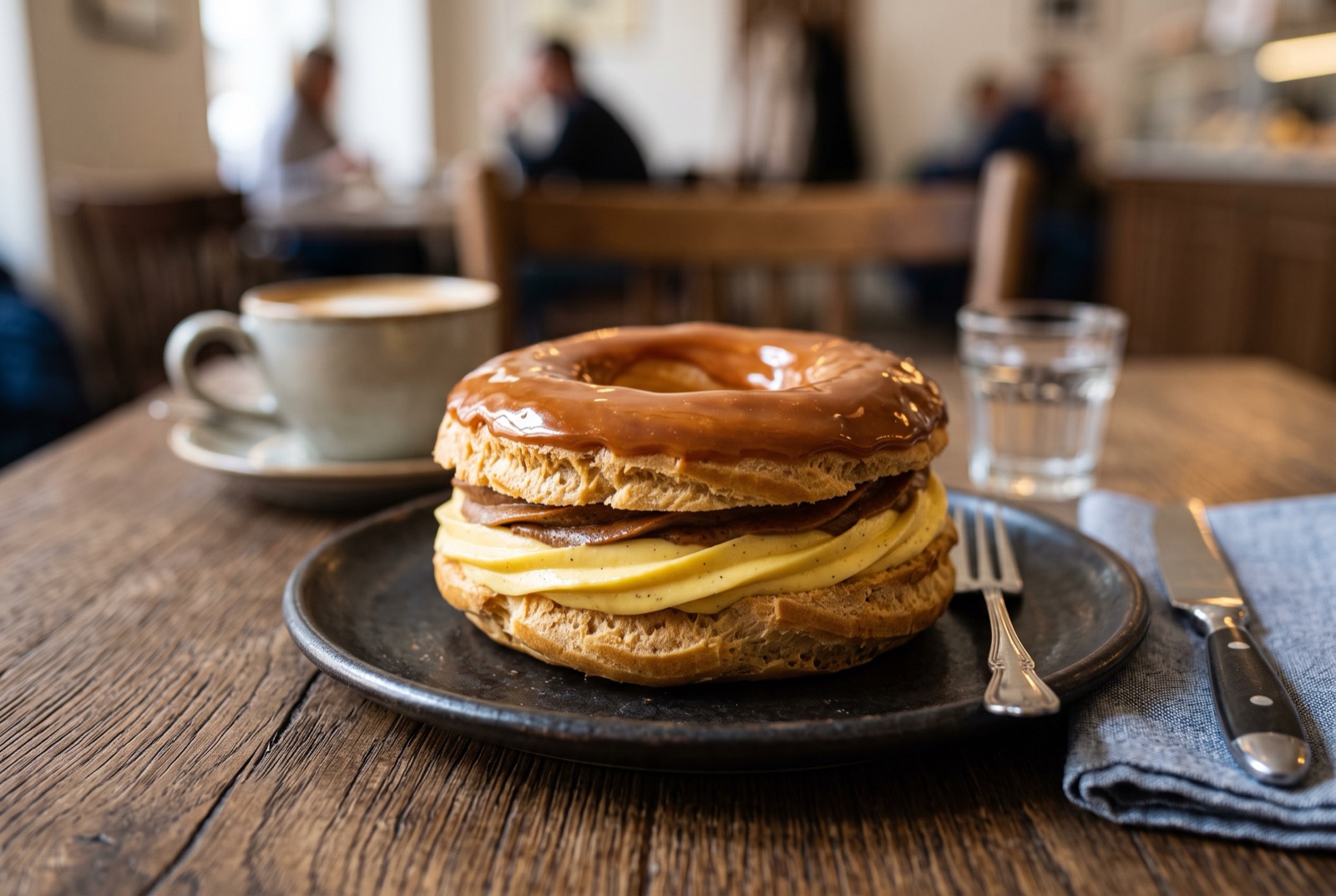
Czechia3 hr 25 min
Větrník
Czech Caramel Choux Pastry Wheel
Czechia2 hr 55 min
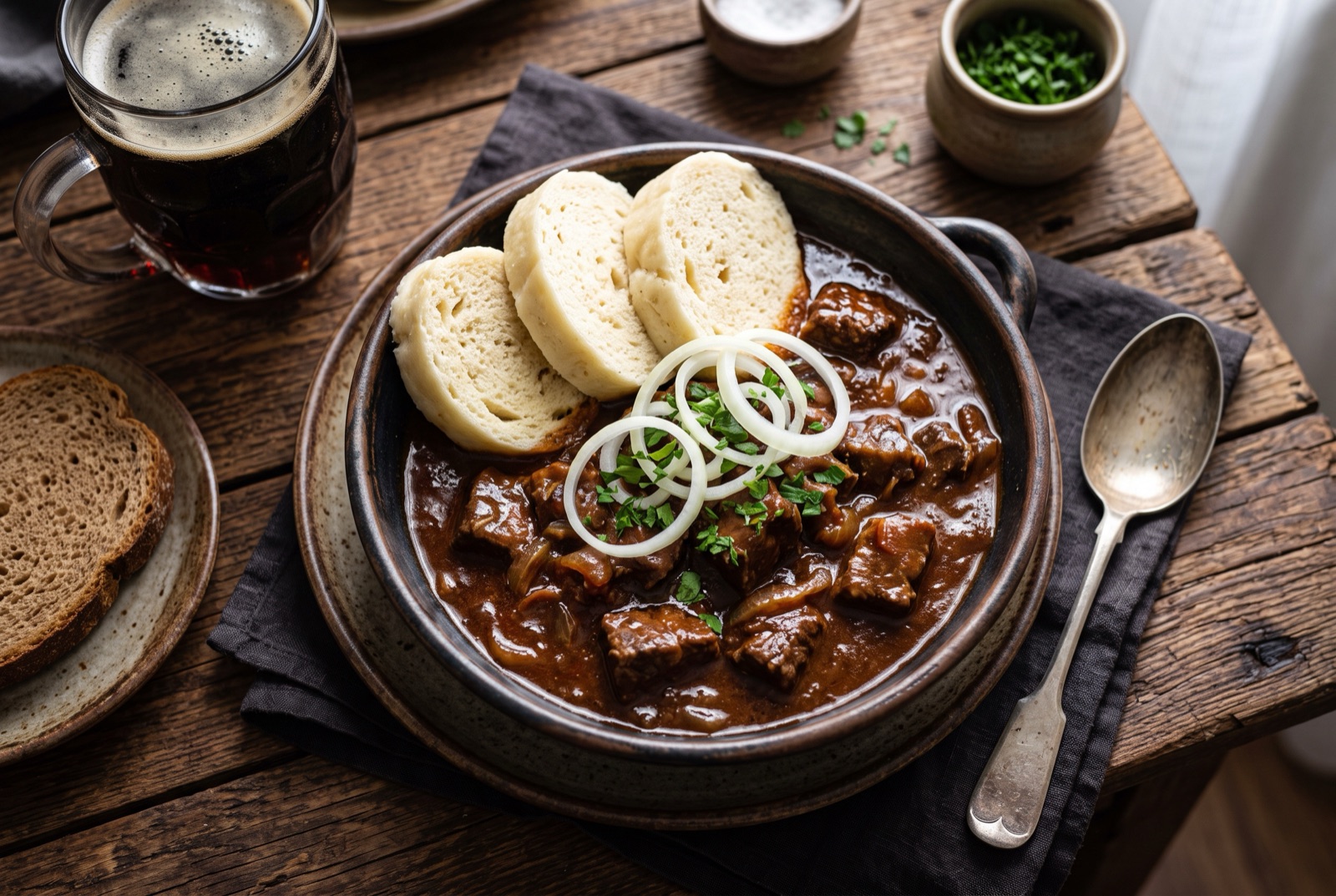
Hovězí Guláš
Czech Beef Goulash with Bread Dumplings
Czechia4 hr 55 min
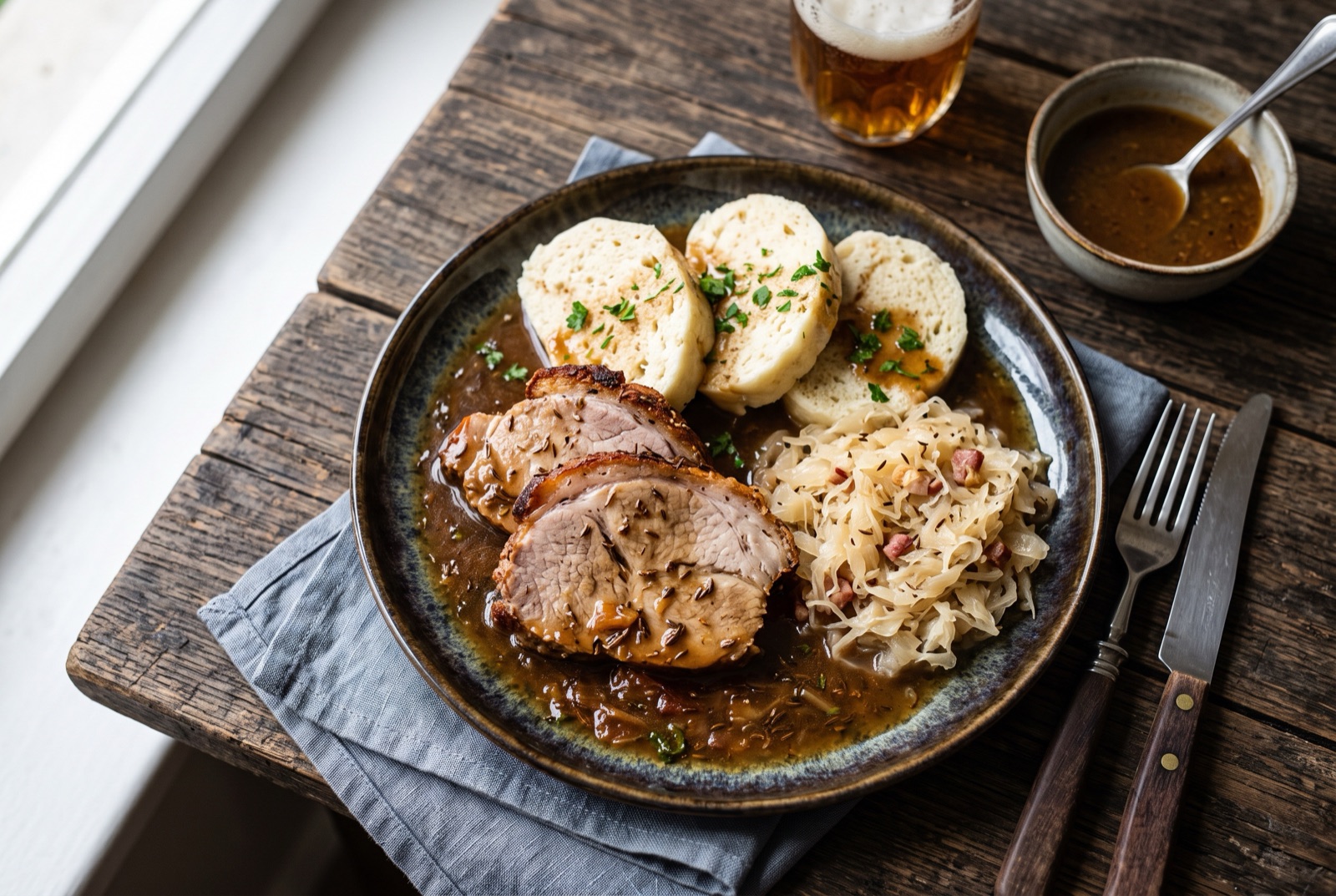
Vepřo Knedlo Zelo
Roast Pork with Dumplings and Sauerkraut
Czechia1 hr 20 min
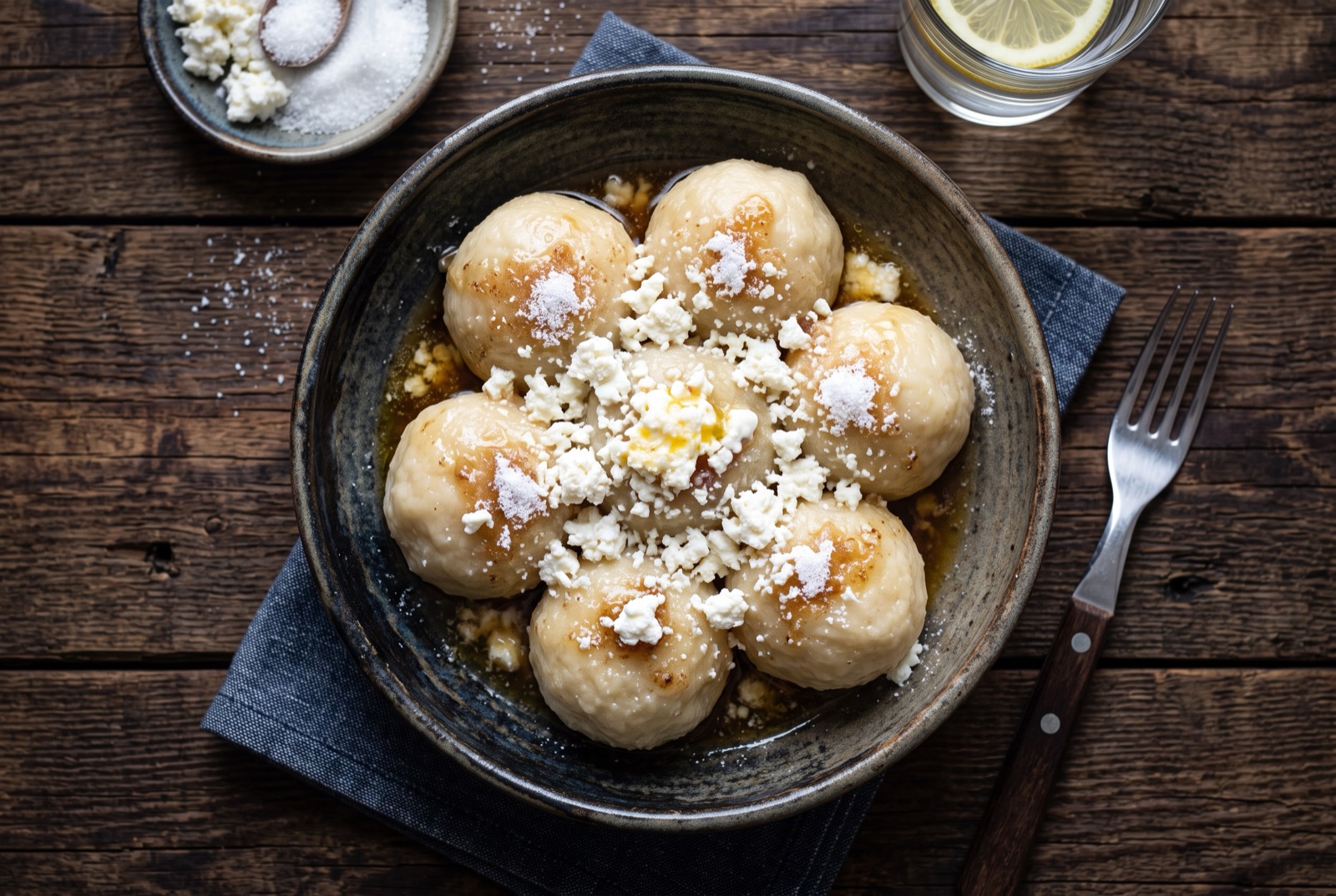
Ovocné Knedlíky
Czech Fruit-Filled Quark Dumplings
Keep exploring Czechia.
Czechia has 9 more dishes in the atlas — Bramborák and Hovězí Guláš, and 7 more.
Recipe by The DishRoute Kitchen · published August 20, 2026 · updated August 20, 2026