Ta'ameya.
Egyptian Fava Bean Falafel
طعمية · Ṭaʿmiyya · say it: ta-AA-mee-ya
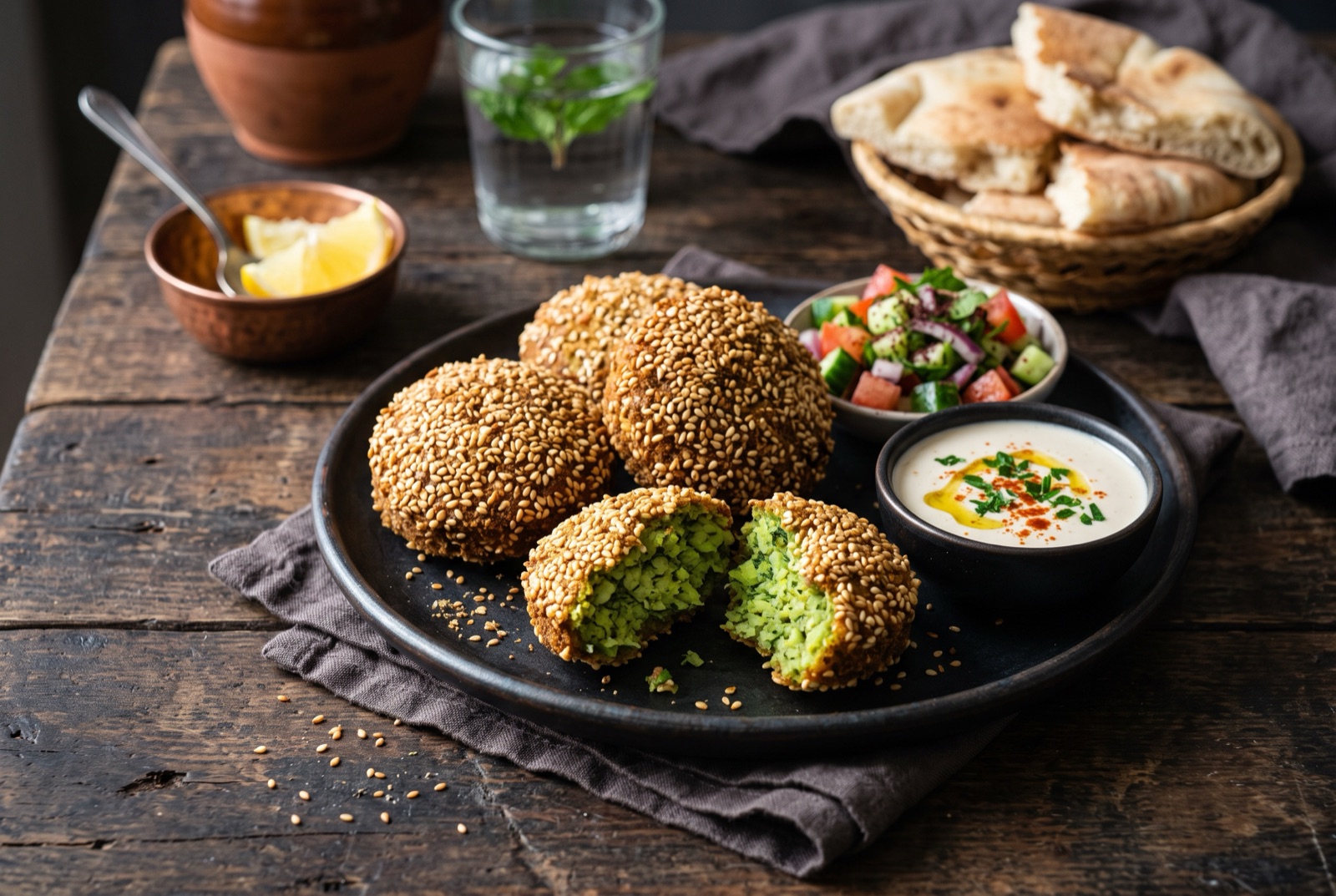
Ta'ameya is falafel as Egypt makes it: raw split fava beans soaked overnight, ground with a fistful of herbs until the paste is properly green, then shaped into flat discs, dipped in sesame seeds and dropped into hot oil. The inside stays soft and almost fluffy rather than dense, the outside shatters, and the colour when you break one open is closer to spring than to sand. Bought from a cart it comes wrapped in paper with bread, tahini and pickles; made at home it is the cheapest impressive thing you can put on a table. The one rule that cannot be broken is that the beans are never cooked before frying — only soaked.

- Gate
- Egypt
- Prep
- 25 min
- Cook
- 20 min
- Total time
- 1 hr 45 min incl. 1 hr rest
- Serves
- 4
- Status
- Easy
- Nutrition / serving · estimated
- Calories 340 kcal
- Protein 17 g
- Carbs 34 g
- Fat 15 g
- Fiber 12 g
- Sugar 4 g
- Sodium 760 mg
Why this recipe works.
- Uses split skinless fava beans soaked, never boiled, which is the only way to get the light interior instead of a dense paste.
- Herb quantities are Egyptian rather than timid — that is where the green colour and the smell come from.
- Includes the resting-and-chilling step that stops the discs breaking apart in the oil, which is the usual home failure.
- Shapes flat discs rather than balls, so the inside cooks through in the time the crust takes to form.
Ingredients.
13 itemsThe paste
To fry
Equipment
- Food processor or meat grinder
- Deep pan or fryer
- Slotted spoon
- Thermometer (helpful)
Instructions.
Grind the beans and herbs
Drain the soaked beans thoroughly and pat them dry. Grind them with the onion, leek, dill, coriander, parsley and garlic in batches until the mixture is fine and damp but still slightly grainy — stop before it becomes a smooth purée.
Tip Pulse rather than run the processor. A continuous grind heats the paste and makes it sticky.
Season and chill
Stir the ground coriander, cumin and salt through the paste. Cover and refrigerate for at least an hour; the paste firms up and the herbs perfume the whole mixture.
Heat the oil
Pour the oil into a deep pan to a depth of 5 cm and heat to 170°C. A pinch of the paste dropped in should rise within two seconds surrounded by fine bubbles.
Shape and coat
Stir the bicarbonate of soda through the cold paste. Take a heaped tablespoon at a time, press it into a flat disc about 6 cm across and 1.5 cm thick, then press both sides into the sesame seeds.
Tip Shape only as many as go into one batch — the soda starts working the moment it is in.
Fry in batches
Slide 5 or 6 discs into the oil without crowding and fry for 3–4 minutes, turning once, until they are deep golden brown and the bubbling around them has slowed to a lazy fizz. Lift onto kitchen paper.
Tip Break the first one open before frying the rest: it should be light green and steaming, not dense or raw-tasting.
Serve straight away
Eat within minutes, while the crust is still loud, with warm bread, tahini and pickles. Salt them lightly the moment they come out of the oil.
Tips from our kitchen.
- Buy split skinless fava beans (ful mudashsha). Whole brown favas with skins on will not grind smooth and the texture stays coarse.
- Drain the soaked beans very well and pat them dry. Wet beans make a slack paste that disintegrates in the oil.
- Grind, do not purée. The mixture should look like coarse damp sand with visible herb flecks, not like hummus.
- Chill the paste at least an hour before shaping. Cold paste holds together; room-temperature paste spreads.
- Fry at 170–175°C. Too hot and the outside darkens before the middle sets; too cool and they drink oil.
- Add the baking soda only at the moment of shaping — it starts working immediately and its lift fades if the paste sits.
Substitutions.
- Split skinless fava beans → Dried chickpeas, soaked the same way
- That gives you Levantine falafel rather than ta'ameya — nuttier, denser, less green. Still very good, just a different dish.
- Leek → A bunch of spring onions
- Slightly sharper but close. Egyptian recipes use whichever allium is on the counter.
- Deep frying → Shallow frying in 1.5 cm of oil, turning once
- Works well for flat discs and uses far less oil. Air fryers produce something dry and cracked rather than crisp — this is a dish that needs fat.
Variations.
- Ta'ameya with egg
- A common cart order: split a hot disc and tuck it into bread with a fried egg and tahini for the substantial version of an Egyptian breakfast.
- Stuffed ta'ameya
- Press a spoonful of the paste flat, add a pinch of fried onion or a little cheese, seal another layer over it and fry — a street-cart trick for a richer bite.
- Ta'ameya balls
- Shaped as small spheres rather than discs, as some shops in Alexandria do. Fry them a minute longer and keep them small or the middle stays raw.
Storage & reheating.
The raw paste keeps 2 days refrigerated and freezes well for a month — shape the discs, freeze them on a tray, then bag them and fry from frozen with an extra minute. Fried ta'ameya is at its best within twenty minutes and is genuinely worse the next day; if you must, refresh them in a hot oven for 6 minutes rather than a microwave, which turns the crust to leather.
Serve with
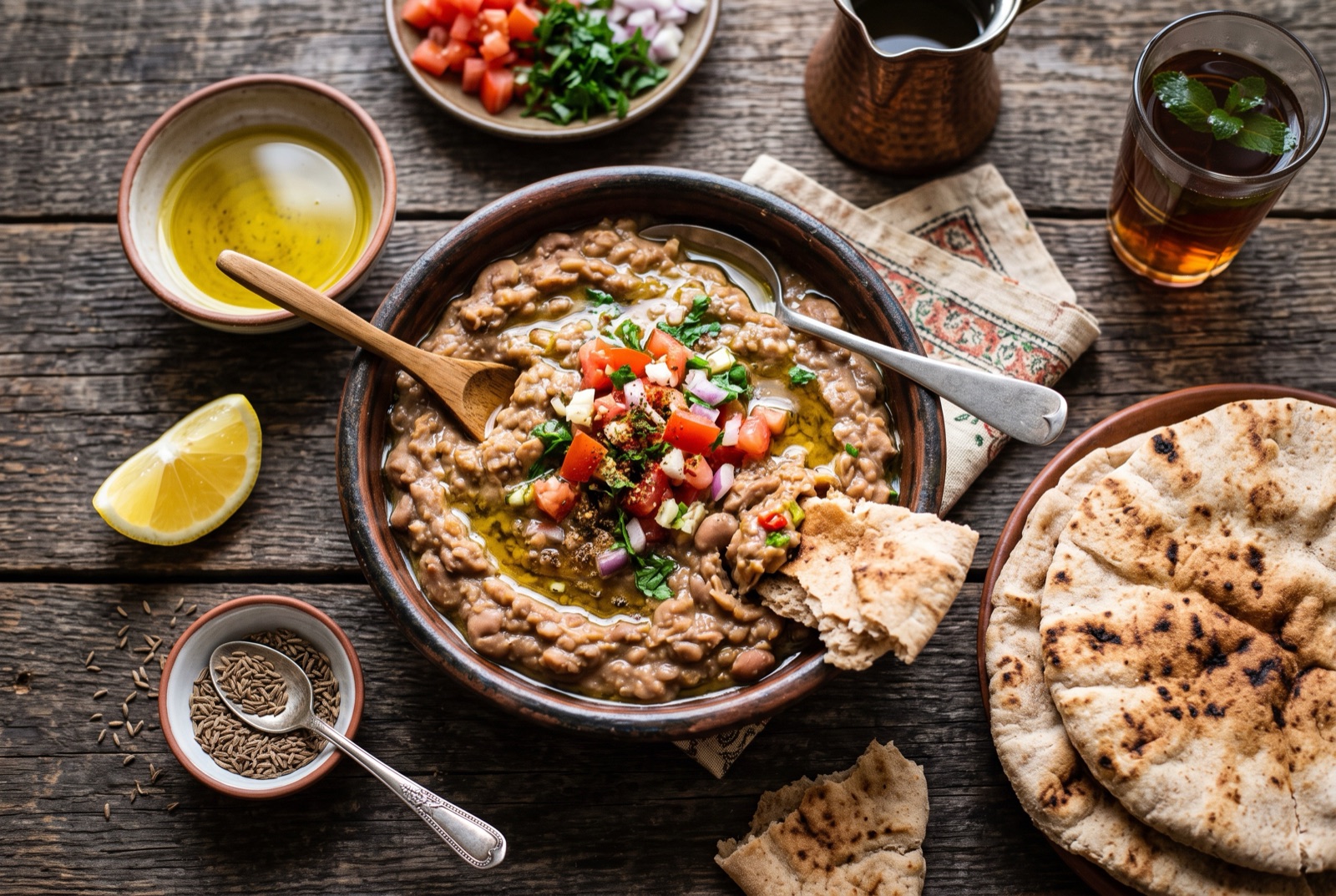
Warm baladi bread, tahini thinned with lemon, sliced tomato and cucumber, and a bowl of ful medames if you want the full breakfast.
The story behind Ta'ameya.
Chickpea falafel is the version most of the world knows, but the Egyptian claim to the older recipe is a serious one. Ta'ameya is made in the Nile valley with fava beans, a crop the region has grown since antiquity, and the association with Coptic Christian fasting — long periods each year when animal products are avoided — gave it a permanent place in the calendar rather than a novelty status. The chickpea version spread north and became the default abroad; in Egypt asking for falafel will usually get you ta'ameya anyway.
The herbs are not a garnish or a modern flourish. Dill, coriander, parsley and leek go into the grinder in quantities that would look excessive if you had only met the beige version, and they are what give ta'ameya its colour and its unmistakably fresh smell as it fries. Cairo carts grind the paste in the morning, keep it cold, and shape each batch to order, because a paste that sits gets wet and the discs fall apart in the oil.
Breakfast in Egypt is often ta'ameya and ful together, sold from the same window, eaten from the same paper, at an hour when the streets are still cool. That pairing — fried, herby, crisp discs with a bowl of soft, oily beans — is close to a national breakfast, and every neighbourhood has an opinion about which shop fries theirs best.
Questions, answered.
Can I use tinned or cooked beans?
No — this is the one rule of ta'ameya. Cooked beans have absorbed water and their starch has already set, so the paste turns to mush and the discs disintegrate in the oil. The beans must be dried, soaked raw for at least 12 hours, and ground while still raw.
Why do my ta'ameya fall apart when frying?
Usually too much moisture or too little rest. Drain and dry the soaked beans thoroughly, avoid adding water while grinding, and chill the paste for at least an hour before shaping. If a test disc still breaks up, work in a tablespoon of chickpea flour to bind it.
What is the difference between ta'ameya and falafel?
The bean. Ta'ameya is Egyptian and made from fava beans with a heavy load of dill, coriander, parsley and leek, which makes it green inside and lighter in texture. Falafel elsewhere in the Middle East is usually chickpea-based, denser and beige. Egypt makes both but ta'ameya is the home version.
How do I get the sesame crust to stick?
Press each shaped disc into a plate of sesame seeds on both sides just before it goes into the oil, and press firmly enough to embed them. If the paste is properly chilled the seeds hold; if it is wet and slack they slide off and burn in the oil instead.
You might also like.
All recipes →
Keep exploring Egypt.
Egypt has 9 more dishes in the atlas — Aish Baladi and Fattah, and 7 more.
All Egypt recipes Dill recipes Cilantro recipes Parsley recipes street foodappetizerbreakfastvegetarianvegandairy freenut freeRecipe by The DishRoute Kitchen · published August 20, 2026 · updated August 20, 2026