Wiener Schnitzel.
Viennese Breaded Veal Cutlet
Wiener Schnitzel · say it: VEE-ner SHNIT-sel
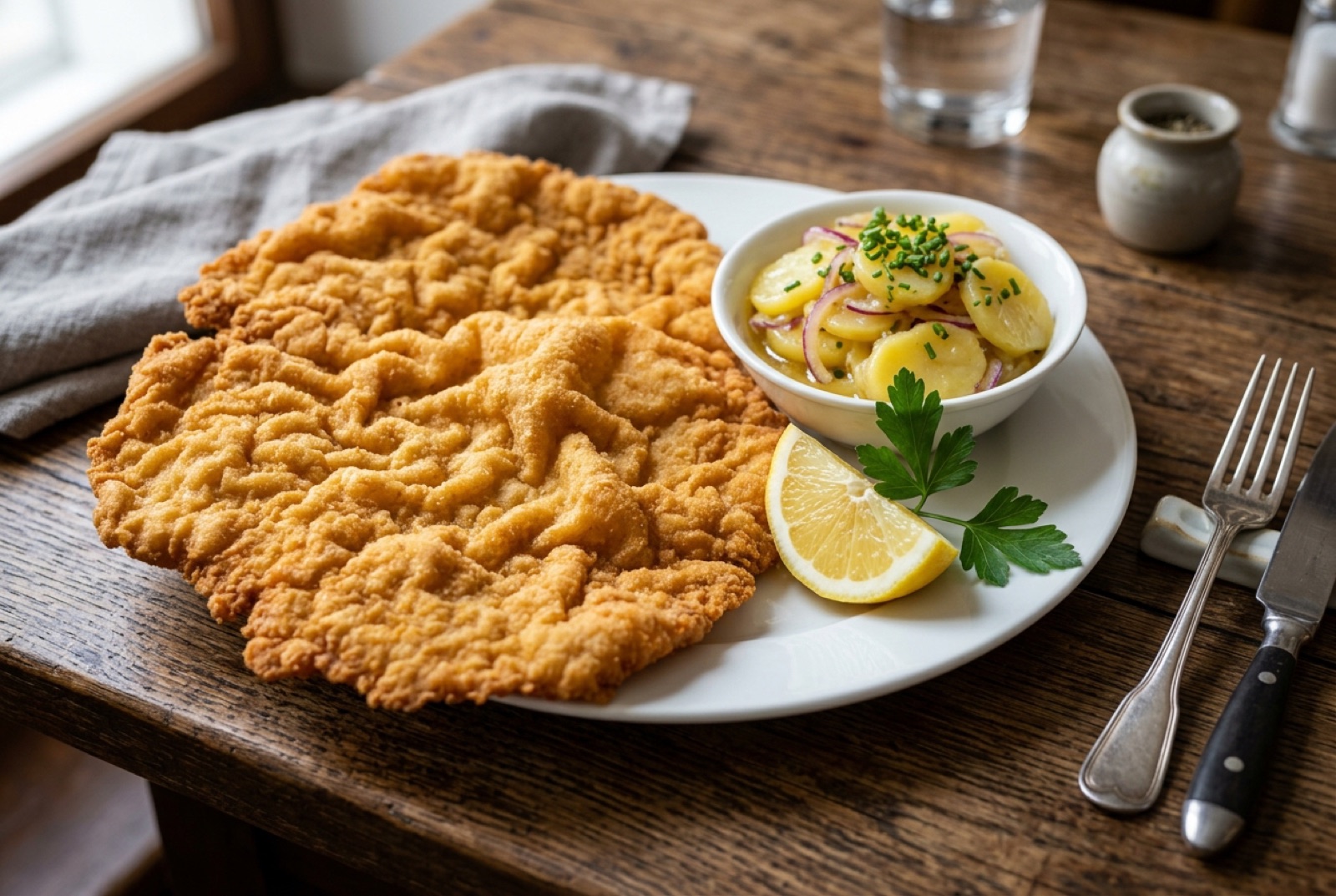
Wiener Schnitzel is a thin veal cutlet in a breadcrumb coat that is supposed to blister and lift off the meat rather than stick to it, so that a cooked schnitzel rattles slightly when you shake the plate. The taste is mild and clean — milky veal, toasted crumb, salt, a hard squeeze of lemon — and the whole point is texture: dry, crisp, wavy crust over meat that is barely three or four millimetres thick and cooks in about ninety seconds a side. In Austria the name is legally protected and means veal; anything else on the menu has to say Schnitzel Wiener Art, schnitzel in the Viennese style. It is not difficult cooking, but it is unforgiving cooking, because everything that goes wrong goes wrong in the pan.

- Gate
- AustriaVienna
- Prep
- 25 min
- Cook
- 15 min
- Total time
- 40 min
- Serves
- 4
- Status
- Medium
- Nutrition / serving · estimated
- Calories 610 kcal
- Protein 42 g
- Carbs 38 g
- Fat 31 g
- Fiber 2 g
- Sodium 890 mg
Why this recipe works.
- Uses the loose-crumb method that makes the coat puff and separate instead of gluing itself to the veal.
- Enough fat, and a specific pan-basting motion, so you get the wavy Viennese crust at home without a deep fryer.
- Honest about the veal-versus-pork question and how to adjust the timing if you cook the pork version.
- Includes the Austrian doneness cues — crumb colour and sound — instead of a minute count you cannot verify.
Ingredients.
10 itemsFor the schnitzel
For the breading
For frying
To serve
Equipment
- Meat mallet or heavy pan for pounding
- Wide, heavy frying pan (28 cm or larger)
- Three shallow trays for breading
- Wire rack
- Kitchen thermometer (optional)
Instructions.
Pound the cutlets
Lay each veal cutlet between two sheets of baking parchment and beat it out with the flat of a mallet, pushing outwards from the centre rather than hammering down, until it is an even 4 mm thick and roughly the size of a side plate.
Tip Nick the outer membrane in two or three places with a knife tip so the schnitzel does not curl in the pan.
Set up the breading line
Season both sides of the veal with the salt and pepper. Put the flour in one tray, the eggs beaten with the cream in a second, and the breadcrumbs in a third, in that order along your worktop.
Heat the fat
Melt the clarified butter in a wide pan to a depth of about 2 cm and bring it to 170°C. A pinch of breadcrumbs dropped in should sizzle and rise immediately without browning in under three seconds.
Bread one schnitzel at a time
Turn a cutlet in the flour and shake off all the excess, pass it through the egg letting the surplus drip away, then lay it in the crumbs and tip the tray so crumbs cover the top. Lift it straight out without pressing.
Tip Bread each schnitzel immediately before it goes in the fat — the crumb coat goes soggy if it stands around.
Fry and baste
Slide the schnitzel into the fat away from you and keep the pan moving, tilting and shaking so hot fat rolls over the top. After 60–90 seconds the underside should be a light nut brown and the crust visibly lifting and blistering.
Turn once and finish
Flip with tongs and fry the second side for another 60–90 seconds to the same even gold. Lift onto a wire rack and let it drain for a moment; the crust should sound papery when tapped, not soft.
Serve immediately
Fry the remaining cutlets, skimming loose crumbs from the fat between batches so they do not burn and darken the next schnitzel. Serve straight away with lemon wedges, parsley and warm potato salad.
Tips from our kitchen.
- Dry breadcrumbs only, and never press them on. Lay the cutlet in the crumbs, tip the tray, let them fall over the top and lift it straight out — a pressed crust cannot puff.
- Loosen the egg with a splash of cream or water so it coats in a thin film. A thick, ropey egg layer steams under the crumbs and turns the crust soft.
- The fat should be 2 cm deep and hot enough that a crumb sizzles instantly, around 170°C. Shallow fat gives you a pale, greasy schnitzel every time.
- Tilt and shake the pan the whole time so hot fat runs over the top of the schnitzel. That basting motion is what lifts the breading away from the meat.
- Salt the veal before flouring, not after frying — the crust will not take salt once it has set.
- Drain on a rack, never on paper. Paper traps steam under the schnitzel and softens the underside within a minute.
Substitutions.
- Veal cutlet → Pork loin, cut and pounded the same way
- This is Schnitzel Wiener Art, sold everywhere in Austria and half the price. Pork is fattier and slightly sweeter, and needs about 30 seconds longer per side.
- Clarified butter or lard → Neutral oil with 2 tbsp butter added in the last 30 seconds
- Plain oil fries fine but tastes flat. The late butter gives you some of the nutty aroma without burning through the whole cook.
- Dry white breadcrumbs → Stale white rolls blitzed and dried in a low oven, then sieved
- Closest to what Viennese kitchens use. Panko is too coarse and gives a spiky, Japanese-looking crust rather than a fine wavy one.
Variations.
- Schnitzel Wiener Art
- The pork version, legally required to carry a different name in Austria. Same method, cheaper meat, and what most people actually eat at home.
- Cordon bleu
- A thicker cutlet folded around ham and mountain cheese before breading — an Austrian and Swiss favourite where the cheese should run when cut.
- Schnitzel mit Preiselbeeren
- Served with lingonberry jam alongside the lemon. The sweet-sour berry against the fried crumb is a common Alpine pairing.
Storage & reheating.
Schnitzel is at its best within five minutes of leaving the pan and gets steadily worse after that, so cook it to order. Leftovers keep one day refrigerated and are traditionally eaten cold the next day, sliced into strips with potato salad — genuinely good, and better than reheating. If you must reheat, use a 200°C oven on a wire rack for 6–8 minutes; a microwave turns the crust to wet bread. Do not freeze cooked schnitzel. Breaded but unfried cutlets can be refrigerated for up to 2 hours, uncovered on a rack, before frying.
Serve with
Warm Erdäpfelsalat dressed with beef broth and vinegar, a lemon wedge, and a green salad with pumpkin seed oil.
The story behind Wiener Schnitzel.
The schnitzel that Vienna is famous for is almost certainly not Viennese in origin, and Austrians are relaxed about admitting it. The most repeated story — that Field Marshal Radetzky brought the recipe home from Milan in 1857, where cotoletta alla milanese had been breaded and fried for centuries — was traced back in the twentieth century to a single unsourced anecdote and has no documentary support at all. What is documented is that breaded, fried cutlets appear in Central European cookbooks well before the Radetzky story is supposed to have happened, and that gilding food in crumbs was a Renaissance trick that travelled north through the Habsburg lands along with everything else. The honest answer is that Milan and Vienna developed overlapping versions of the same idea, and that Vienna refined the technique into its final form.
What is unmistakably Viennese is the discipline around it. Austrian food law protects the term: a Wiener Schnitzel is veal, full stop, and a restaurant selling pork under that name is breaking labelling rules, which is why menus are dense with the phrase "Wiener Art". The traditional frying fat is clarified butter or lard, never a thin film of oil, and the pan is kept moving so the hot fat washes over the top of the crust — the "souffléing" that makes the breading balloon. Old Viennese kitchen manuals are specific to the point of obsession about the crumbs: white bread, dried, ground fine, never fresh and never pressed onto the meat.
On the table it comes with almost nothing. A wedge of lemon, warm Erdäpfelsalat dressed with broth and vinegar, sometimes a spoon of lingonberry jam and a few capers with an anchovy if you order the Holstein-adjacent variants. The plates in the classic Viennese houses are enormous and the schnitzel hangs over the edge, which is not showmanship so much as arithmetic: pounded that thin, a single 150-gram cutlet covers a lot of porcelain.
Questions, answered.
Why did my breading fall off?
Almost always moisture. Pat the meat completely dry before flouring, shake off every loose speck of flour, and let the egg drip for a few seconds before it hits the crumbs. A wet or thickly floured surface turns to paste under the crumbs and slides off in the pan. Frying in fat that is not hot enough has the same effect, because the crust never sets quickly.
Can I make Wiener Schnitzel with pork or chicken?
Yes, and most Austrian households do — but then it is called Schnitzel Wiener Art, not Wiener Schnitzel, and the distinction is protected by Austrian food labelling law. Pork loin behaves almost identically and needs roughly 30 seconds more per side. Chicken breast works too, pounded to the same thinness, though it dries out faster so watch it closely.
How thin should the veal be pounded?
About 4 mm, thin enough that the cutlet looks translucent at the edges when held up to light but not so thin that it tears. Use the flat side of a mallet or a heavy pan and work from the centre outwards with pushing blows rather than hammering straight down, which punches holes. Put the meat between two sheets of plastic or baking parchment first.
Why is my crust not puffed and wavy?
Three usual causes: the crumbs were pressed onto the meat, the fat was too shallow, or the pan sat still. The Viennese crust forms when steam from the meat is trapped under a loose crumb layer while hot fat washes over the top, so you need at least 2 cm of fat at about 170°C and constant tilting and shaking of the pan while it fries.
What is traditionally served with Wiener Schnitzel?
Warm Austrian potato salad dressed with beef broth and vinegar is the classic partner, plus a lemon wedge that should be squeezed over just before eating. Some houses add lingonberry jam, parsley potatoes or a simple green salad. Sauce is not served — a schnitzel is meant to stay dry and crisp, and gravy defeats the entire technique.
You might also like.
All recipes →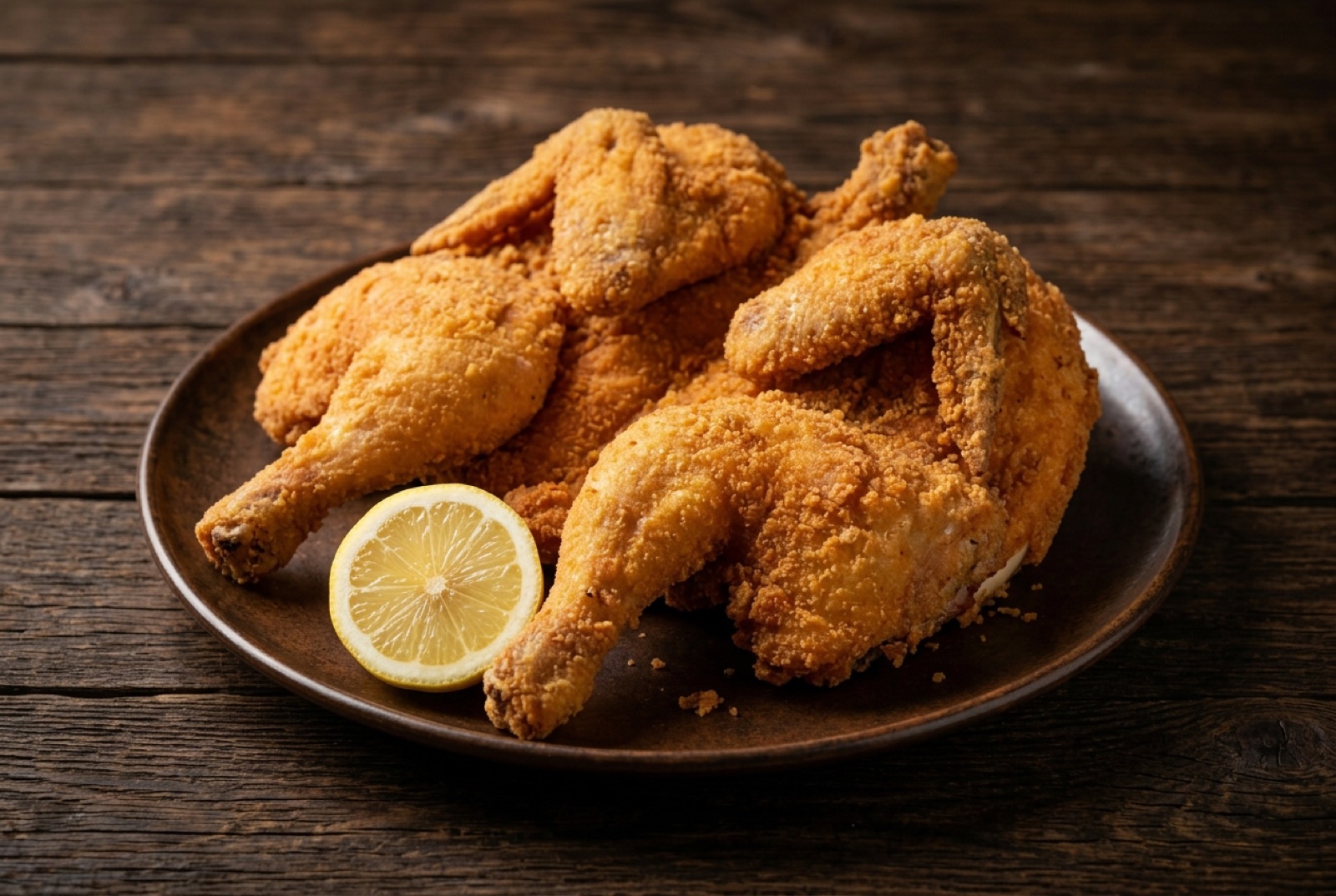
Keep exploring Austria.
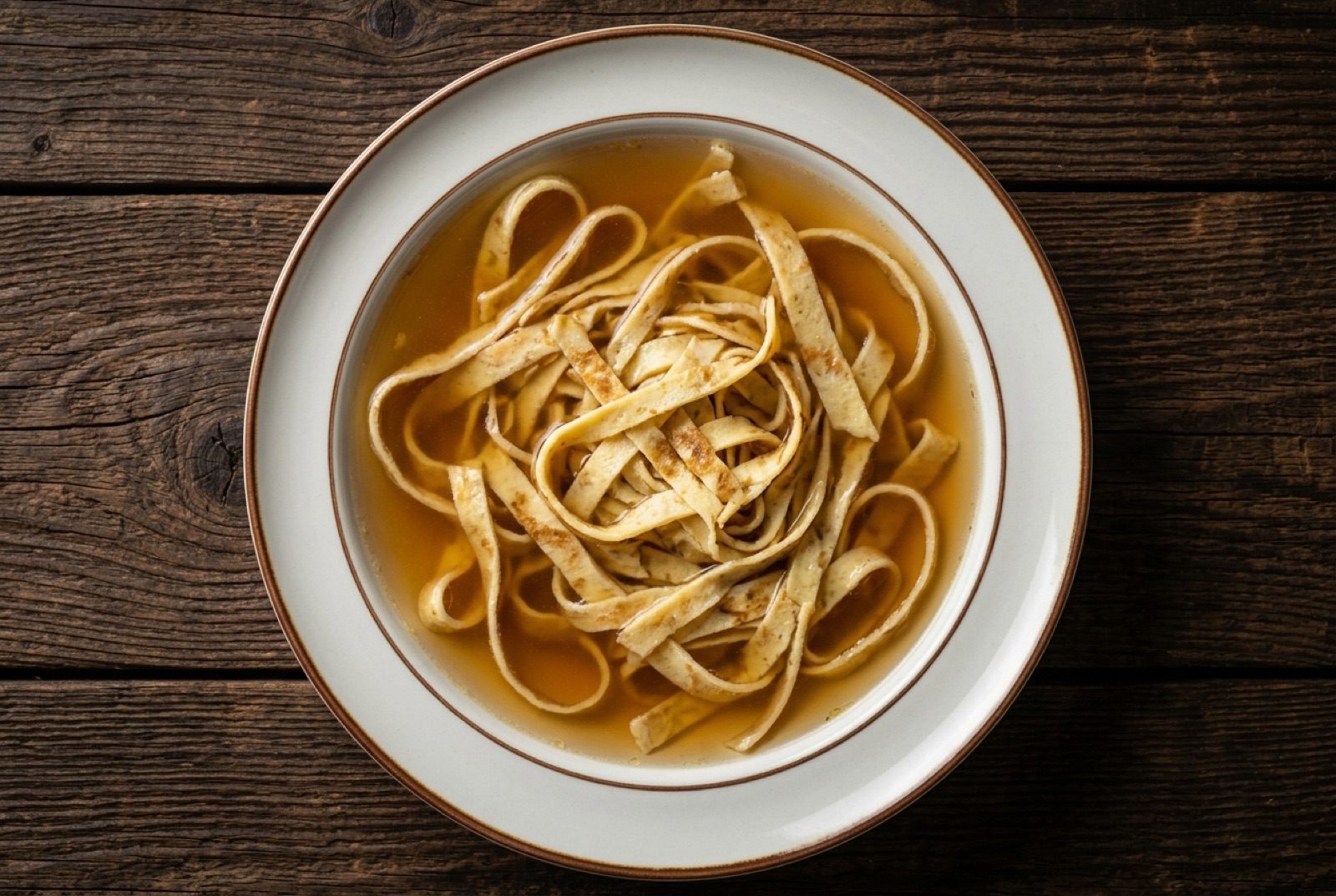
Austria has 9 more dishes in the atlas — Backhendl and Erdäpfelsalat, and 7 more.
Recipe by The DishRoute Kitchen · published August 19, 2026 · updated August 19, 2026