Backhendl.
Austrian Breaded Fried Chicken
Backhendl · say it: BAHK-hen-dl
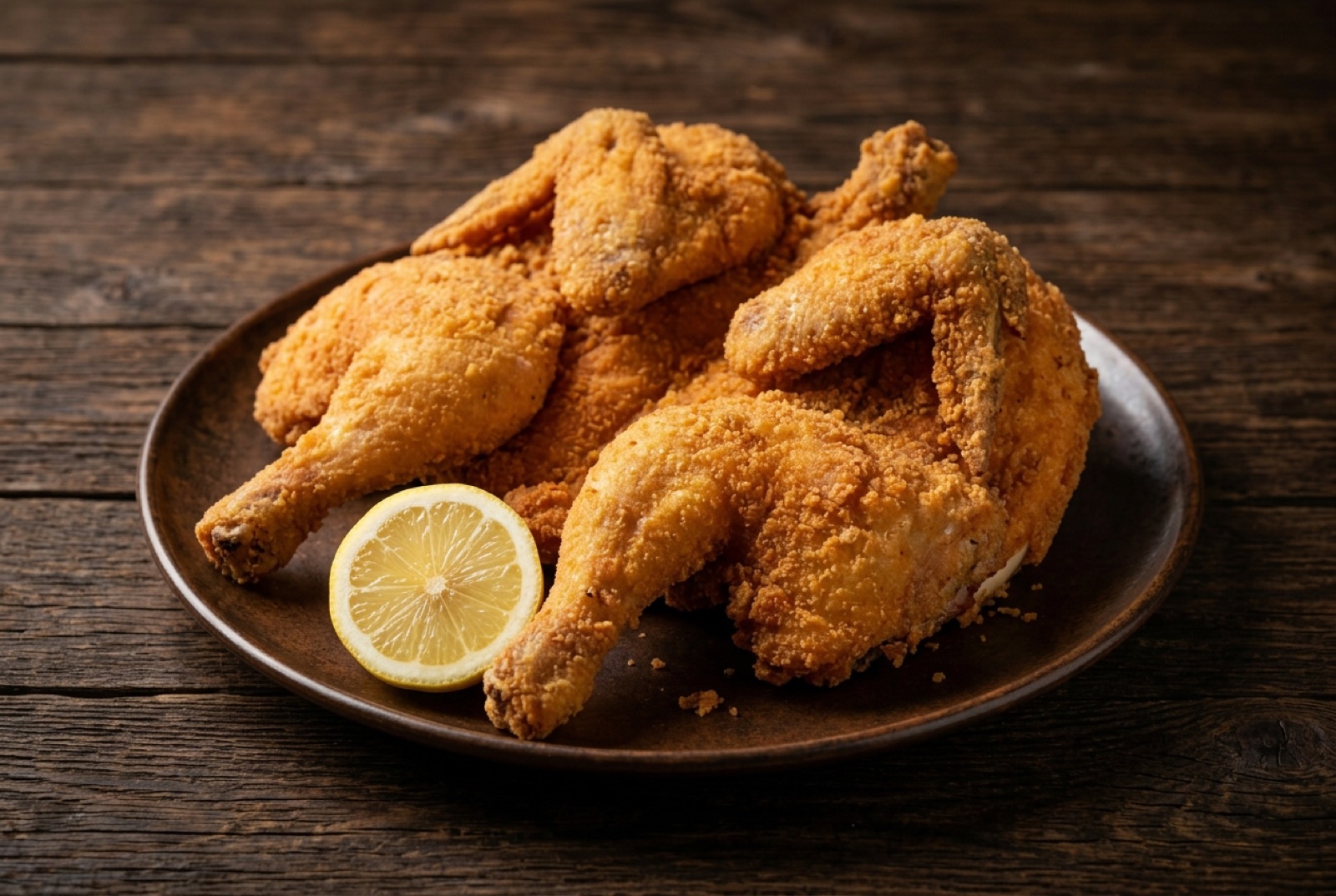
Backhendl is chicken on the bone cut into pieces, floured, egged, rolled in dry crumbs and fried in a generous depth of fat until the coating is dry, blistered and pale gold. It is not battered and not spiced: the seasoning is salt, pepper and lemon, and the pleasure is in the contrast between a brittle crumb shell and meat that has steamed on the bone underneath. Austrians eat it in beer gardens and Heurigen with potato salad and a wedge of lemon, often with a handful of parsley sprigs fried crisp in the same fat and scattered over the top. Cold Backhendl the following day is a recognised dish in its own right, not a leftover.

- Gate
- AustriaStyria and Vienna
- Prep
- 30 min
- Cook
- 30 min
- Total time
- 2 hr incl. 1 hr rest
- Serves
- 4
- Status
- Medium
- Nutrition / serving · estimated
- Calories 700 kcal
- Protein 48 g
- Carbs 40 g
- Fat 38 g
- Fiber 2 g
- Sodium 950 mg
Why this recipe works.
- Joints the bird properly so breast and leg both finish cooked without one drying out.
- A short salt cure firms the meat and seasons it inside, which a surface sprinkle cannot do.
- Frying temperature is given as a range with visual cues, since bone-in pieces need lower heat than schnitzel.
- Includes the fried parsley finish that most home recipes drop and every Austrian Gasthaus keeps.
Ingredients.
9 itemsFor the chicken
For the breading
For frying
To serve
Equipment
- Deep, heavy pan or Dutch oven
- Poultry shears or a sharp knife
- Three shallow trays for breading
- Wire rack
- Kitchen thermometer
Instructions.
Joint and salt the chicken
Cut the chicken into two drumsticks, two thighs, two wings and two breast pieces, cutting the breast across the bone so the pieces are of similar thickness. Season all over with the salt and pepper.
Dry the skin in the fridge
Lay the joints on a rack set over a tray and refrigerate uncovered for at least an hour. The surface should feel tacky and dry rather than damp when you come back to it.
Heat the fat
Pour the fat into a deep pan to a depth of about 3 cm and bring it to 160°C. A crumb dropped in should fizz steadily and rise slowly, not spit violently.
Tip Keep the thermometer in the pan. Bone-in chicken drops the temperature more than you expect when it goes in.
Bread the joints
Turn each piece in flour and shake off the excess, dip in the beaten egg and let it drain, then coat in breadcrumbs, tipping the tray over the top rather than pressing them on. Rest the breaded pieces for 5 minutes.
Fry the dark meat
Lower the drumsticks and thighs into the fat, keeping them in a single uncrowded layer, and fry for 14–16 minutes, turning once, until the crumb is a light even gold and a skewer at the bone runs clear.
Fry the breast and wings
Lift the dark meat onto a rack in a low oven. Fry the breast pieces and wings for 10–12 minutes to the same colour — they cook faster and dry out if you treat them like legs.
Crisp the parsley
Drop the dry parsley sprigs into the fat for about 10 seconds, standing back as they hiss, then lift them out the moment the spluttering stops and drain on paper.
Tip Any water on the parsley will make the fat erupt — dry the sprigs thoroughly first.
Serve piled high
Pile all the chicken onto a warm platter, scatter the fried parsley over the top and tuck lemon wedges around the edge. Serve immediately with warm potato salad.
Tips from our kitchen.
- Use a small bird, ideally under 1.4 kg. A large roasting chicken has pieces so thick that the crumb burns long before the bone is done.
- Salt the joints and leave them uncovered in the fridge for an hour. Drier skin means the flour grips and the crust stays crisp far longer.
- Fry at 160–165°C, lower than for schnitzel. Bone-in chicken needs 12–15 minutes and hotter fat will darken the crumb before the thigh is cooked.
- Give the pieces room. Crowding the pan drops the fat temperature by 20 degrees and the coating soaks instead of sealing.
- Fry the legs first and the breast pieces second — thighs need a few minutes more and can rest while the white meat cooks.
- Throw a handful of dry parsley sprigs into the hot fat for ten seconds at the end. They crisp instantly and are the traditional garnish.
Substitutions.
- Whole small chicken, jointed → Bone-in thighs and drumsticks only
- Dark meat is far more forgiving in deep fat and stays juicy. This is what most Austrian home cooks buy when a small whole bird is not available.
- Lard or clarified butter → Neutral high-smoke-point oil such as sunflower or rapeseed
- Lard is traditional and gives a rounder flavour, but oil is cheaper for the quantity needed and performs identically at these temperatures.
- Fine dry breadcrumbs → Dried white bread ground and sieved at home
- Shop breadcrumbs are often too coarse or contain seasoning. Home-dried crumbs from stale rolls give the fine, even coat Austrian frying expects.
Variations.
- Steirisches Backhendl
- The Styrian version, served with a green salad dressed in dark pumpkin seed oil and cider vinegar rather than potato salad.
- Backhendl mit Leber
- The bird's liver breaded and fried alongside the joints, as older Austrian cookbooks specify, and served tucked among the pieces.
- Cold Backhendl
- Deliberately fried a day ahead and eaten cold from a basket with pickles and bread — a standard Austrian picnic, not a leftover.
Storage & reheating.
Backhendl is genuinely good cold, so leftovers need no rescuing: refrigerate uncovered on a rack for up to 2 days and eat straight from the fridge with pickles and bread. To eat it hot again, use a 190°C oven on a wire rack for 10–12 minutes, which drives moisture back out of the crumb; a microwave makes the coating soft and greasy within seconds. Do not freeze fried Backhendl — the crumb separates from the skin on thawing. Breaded raw joints can wait up to an hour in the fridge on a rack before frying.
Serve with
Warm Erdäpfelsalat, lemon wedges, fried parsley, and a green salad dressed with pumpkin seed oil.
The story behind Backhendl.
Fried chicken became a marker of prosperity in Central Europe in the first half of the nineteenth century, when it moved from being an occasional treat into a routine of urban comfort. The Viennese Biedermeier decades — roughly the 1810s to the 1840s, remembered for domestic interiors, chamber music and small pleasures — became known in retrospect as the Backhendlzeit, the fried-chicken era, because a household that could afford to eat young chicken breaded and deep-fried in lard on a regular basis was announcing something about its situation. The nickname stuck and is still used in Austria as shorthand for that whole period.
The dish itself is claimed most loudly by Styria, the green agricultural province in the south-east, where Steirisches Backhendl is a regional standard served with pumpkin seed oil dressing on the accompanying salad. Styrian versions traditionally use a genuinely small bird, jointed into eight pieces, and the breading is the same loose-crumb method used for Wiener Schnitzel — flour, egg, crumbs, never pressed. In older Austrian cookbooks the chicken's liver was breaded and fried alongside and tucked into the serving dish, and the whole bird arrived on a napkin-lined platter with fried parsley on top.
What separates Backhendl from most other fried chicken traditions is that there is no marinade doing the flavour work — no buttermilk soak in the old recipes, no spice blend, no hot sauce. The chicken is salted, breaded and fried, and everything depends on the quality of the bird and the temperature of the fat. That austerity is characteristic of Austrian frying generally: the technique is meant to be visible, and anything that would mask a badly made crust is treated with suspicion. A squeeze of lemon at the table is the only correction permitted.
Questions, answered.
How is Backhendl different from Wiener Schnitzel?
The breading method is identical — flour, egg, loose dry crumbs — but Backhendl is bone-in chicken cut into joints rather than a pounded boneless cutlet. That means deeper fat, a lower frying temperature and twelve to fifteen minutes of cooking instead of ninety seconds a side. The crust is the same style; the meat underneath steams on the bone rather than cooking instantly.
What size chicken should I use?
As small as you can buy, ideally 1.2 to 1.4 kg. Backhendl was historically made with young spring chickens, and the thin joints of a small bird cook through in the time it takes the crumb to reach a light gold. With a large chicken the coating darkens well before the thigh bone is done, so joint it into smaller pieces if that is all you can find.
Why is my coating falling off the chicken?
Wet skin is the usual culprit. Pat the joints completely dry, salt them and leave them uncovered in the fridge for an hour, then flour and shake off every loose speck before the egg. Also let the crumbed pieces sit for five minutes before frying so the coating sets, and lower them into the fat gently rather than dropping them.
Can I make Backhendl in an oven or air fryer?
You can bake breaded chicken at 200°C on a rack with the crumbs tossed in melted butter first, and it will be pleasant, but it is not Backhendl — the puffed, blistered crust depends on hot fat surrounding the piece. An air fryer gets closer than an oven. If you want the real texture, use a deep pan and about three centimetres of fat.
Do I need to marinate the chicken first?
No. Traditional Austrian recipes use nothing but salt, and the flavour comes from the bird, the frying fat and the lemon at the table. A short dry salting improves the texture, and a buttermilk soak will make the meat softer if you prefer that, but it is a modern addition rather than part of the dish as Austria makes it.
You might also like.
All recipes →
Keep exploring Austria.
Austria has 9 more dishes in the atlas — Erdäpfelsalat and Frittatensuppe, and 7 more.
Recipe by The DishRoute Kitchen · published August 19, 2026 · updated August 19, 2026