Kaiserschmarrn.
Shredded Austrian Emperor Pancake
Kaiserschmarrn · say it: KY-zer-shmarn
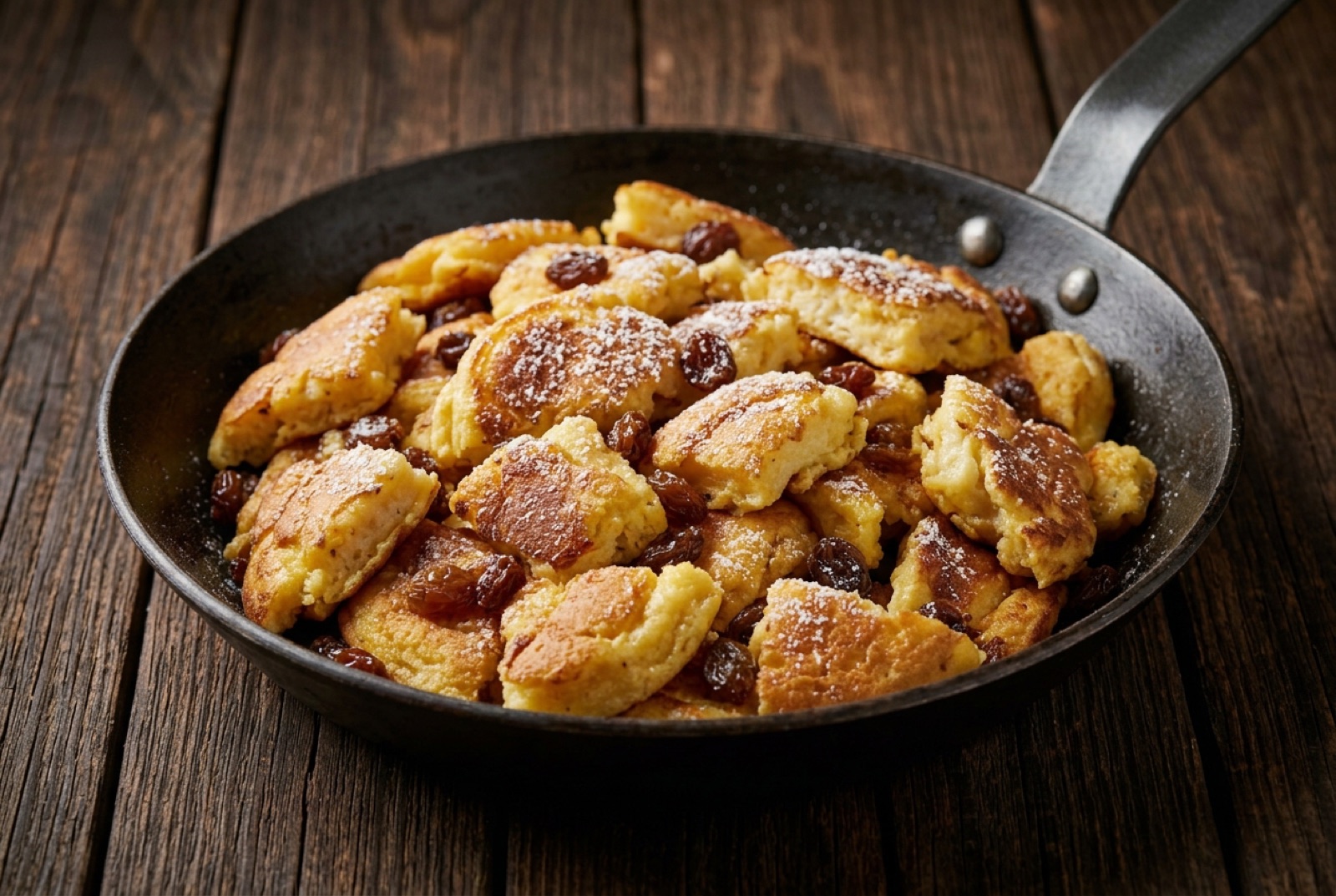
Kaiserschmarrn is a pancake that is deliberately destroyed. You pour a batter lightened with whipped egg whites into a hot buttered pan, let the underside set, then tear the whole thing into rough pieces with two forks and keep tossing them in butter and sugar until the torn edges caramelise. The result is somewhere between a soufflé and a doughnut: soft and eggy inside, crisp and sweet at the edges, studded with raisins soaked in rum. It is served buried under icing sugar with stewed plums or apple sauce on the side, and in Austria it counts as a main course, not just a pudding.

- Gate
- AustriaSalzburg and Tyrol
- Prep
- 20 min
- Cook
- 20 min
- Total time
- 55 min incl. 15 min rest
- Serves
- 4
- Status
- Easy
- Nutrition / serving · estimated
- Calories 620 kcal
- Protein 16 g
- Carbs 88 g
- Fat 21 g
- Fiber 3 g
- Sugar 48 g
Why this recipe works.
- Separates and whips the egg whites, which is what makes the pieces puffed rather than dense and rubbery.
- Caramelises the torn edges in sugar and butter, the step that turns pancake into Kaiserschmarrn.
- Includes the plum compote that Austrians consider part of the dish rather than an optional extra.
- Straight about the origin stories instead of picking a legend and stating it as history.
Ingredients.
14 itemsFor the Schmarrn
To finish
Plum compote
Equipment
- Heavy ovenproof frying pan, 26–28 cm
- Electric whisk or balloon whisk
- Two forks or a spatula for tearing
- Fine sieve for dusting
Instructions.
Soak the raisins
Warm the rum briefly, pour it over the raisins and leave them to swell for at least 15 minutes while you get everything else ready. They should look plump and glossy, not shrivelled.
Make the plum compote
Simmer the plums with their sugar and the cinnamon stick over low heat for 15–20 minutes, until they slump into a thick dark sauce with some pieces still holding shape. Set aside somewhere warm.
Mix the base batter
Whisk the egg yolks with half the sugar, the vanilla and the salt until pale, then whisk in the milk and finally the flour until just smooth. Stop as soon as the lumps are gone.
Whip and fold the whites
Beat the egg whites with the remaining sugar to soft peaks that flop over at the tip. Fold them into the batter in three additions with a spatula, cutting down and lifting over until no white streaks remain.
Tip Soft peaks, not stiff. Stiff whites break into lumps that will not fold in evenly.
Cook the first side
Melt half the butter in a heavy 26 cm pan over medium heat until foaming. Pour in the batter, scatter the drained raisins over the surface and cook for 4–5 minutes, until the underside is golden and the top is nearly set.
Tear it up
Flip it in quarters, add the remaining butter, then tear the pancake into rough 4 cm pieces with two forks. Do not aim for neat — the ragged edges are what catch the caramel.
Caramelise
Sprinkle the 2 tablespoons of sugar over the pieces, leave them for 20 seconds to melt against the hot pan, then toss and turn for 3–4 minutes until the edges are deep gold, crisp and smell of butterscotch.
Dust and serve at once
Tip onto warm plates and dust generously with icing sugar through a sieve — the traditional amount looks like snow. Serve immediately with the warm plum compote.
Tips from our kitchen.
- Soak the raisins in warm rum or apple juice for at least 15 minutes. Dry raisins pull moisture from the batter and stay hard and leathery.
- Whip the egg whites to soft peaks, not stiff ones, and fold them in with a spatula in three additions. Overbeaten whites break and give you a flat, streaky batter.
- Use a heavy pan you can put in the oven, and get the butter properly foaming before the batter goes in. A lukewarm pan gives a pale, damp Schmarrn.
- Do not tear too early. The underside needs to be set and golden or the pieces smear rather than separate into distinct chunks.
- Sprinkle the sugar directly onto the torn pieces in the hot pan and let it sit for a few seconds before tossing, so it melts and catches rather than dissolving into the batter.
- Serve straight from the pan onto warm plates. Kaiserschmarrn softens within minutes of standing and loses its crisp edges.
Substitutions.
- Rum-soaked raisins → Raisins soaked in apple juice or orange juice, or left out entirely
- Perfectly acceptable and better for children. Some Austrian regions and plenty of households never add raisins at all, so this is not a compromise.
- Plum compote (Zwetschkenröster) → Apple sauce, cherry compote or lingonberry jam
- All are standard partners in Austria. Applesauce is the usual choice in Tyrol, plums further east.
- Plain flour → Half plain flour, half fine semolina
- Gives a slightly grainier, more traditional farmhouse texture. Let the batter rest ten minutes longer so the semolina softens.
Variations.
- Apfelschmarrn
- Thin apple slices laid into the batter as it sets, so they caramelise along with the torn pieces. Common in Tyrolean huts in autumn.
- Semmelschmarrn
- Made with stale bread rolls soaked in the egg and milk mixture instead of flour — the older, thriftier version of the same idea.
- Salzburger Nockerl
- A different but related Salzburg dessert: the same whipped-white principle baked into three enormous soufflé peaks rather than torn in a pan.
Storage & reheating.
Kaiserschmarrn is a dish to eat immediately — the crisp caramelised edges soften within about ten minutes and never come back properly. If you do have leftovers, refrigerate up to a day and revive them in a hot buttered pan for 2–3 minutes with a pinch of extra sugar, which re-crisps the surfaces reasonably well. A microwave produces something steamed and sad. It does not freeze. The plum compote, by contrast, keeps a week in the fridge and freezes for 3 months, so it is worth making a double batch.
Serve with
Warm plum compote or apple sauce, a heavy dusting of icing sugar, and coffee.
The story behind Kaiserschmarrn.
Schmarrn is an Austrian and Bavarian word for something torn up, jumbled, or — used about a person's opinion — nonsense. There is a whole family of these dishes in the Alps: Semmelschmarrn made from stale rolls, Kirschenschmarrn with cherries, Grießschmarrn from semolina. They were shepherd and farmhouse food, a way of turning flour, eggs and milk into something filling without needing an oven, and the tearing was practical rather than decorative.
The Kaiser part is where the stories multiply. The dish is universally attached to Emperor Franz Joseph I, and at least four different origin legends circulate: that a court cook created it for him and apologised for the mess; that it was made for Empress Elisabeth, who ate almost nothing, and the Emperor finished her portion; that a hut keeper in the mountains served it to him on a hunting trip. None of these has documentary support, and food historians have also pointed out an entirely different possibility — that Kaiser here may derive from Kaser, the Alpine word for a dairyman on a mountain pasture, which would make it a herder's dish that got promoted by folk etymology. The honest position is that nobody knows, and that the imperial connection is good marketing regardless of its truth.
What is not in doubt is where Kaiserschmarrn lives now. It is the standard order at Alpine huts in Tyrol, Salzburg and Vorarlberg, eaten mid-afternoon by skiers and hikers in portions that arrive on metal platters and defeat most people. It is also served in Vienna's cafés and, in a survival from the Mehlspeisen tradition, as a full lunch main course rather than a dessert — an arrangement that makes complete sense once you have eaten a proper portion of it.
Questions, answered.
Why is my Kaiserschmarrn dense and rubbery?
The egg whites were either not whipped or folded in too roughly. The air trapped in soft-peaked whites is the only thing making the pieces light, and stirring them in deflates the batter completely. Fold in three additions with a spatula, cutting down through the middle and lifting over, and stop the moment no white streaks remain. Overmixing the flour also toughens it.
Do I need to caramelise it with sugar?
Yes, if you want the real thing. Sprinkling sugar over the torn pieces in the hot buttered pan is what creates the crisp, slightly bitter caramel edges that distinguish Kaiserschmarrn from a chopped-up pancake. Add it after tearing, not to the batter, and give it a few seconds undisturbed on the hot surface before tossing.
Is Kaiserschmarrn a dessert or a main course?
Both, in Austria. It belongs to the Mehlspeisen tradition of sweet flour dishes that are eaten as a full lunch, and in Alpine huts it arrives as an enormous main-course portion for hungry skiers. Served in smaller quantity after a meal it functions as dessert. There is no contradiction in Austrian eating habits — sweet lunches are entirely normal.
What is Zwetschkenröster?
A thick Austrian compote of damson plums stewed with sugar, cinnamon and a little clove until they collapse into a dark jammy sauce. It is the classic accompaniment to Kaiserschmarrn and also served with dumplings and pancakes. Apple sauce is the usual alternative, especially in Tyrol, and lingonberry jam works if you want something sharper.
Can I make the batter ahead of time?
Not really. The whipped egg whites start collapsing within twenty minutes, so the batter has to be finished and cooked promptly. What you can do ahead is measure the dry ingredients, soak the raisins, separate the eggs and make the compote — then whipping the whites and folding takes five minutes when you are ready to cook.
You might also like.
All recipes →
Keep exploring Austria.
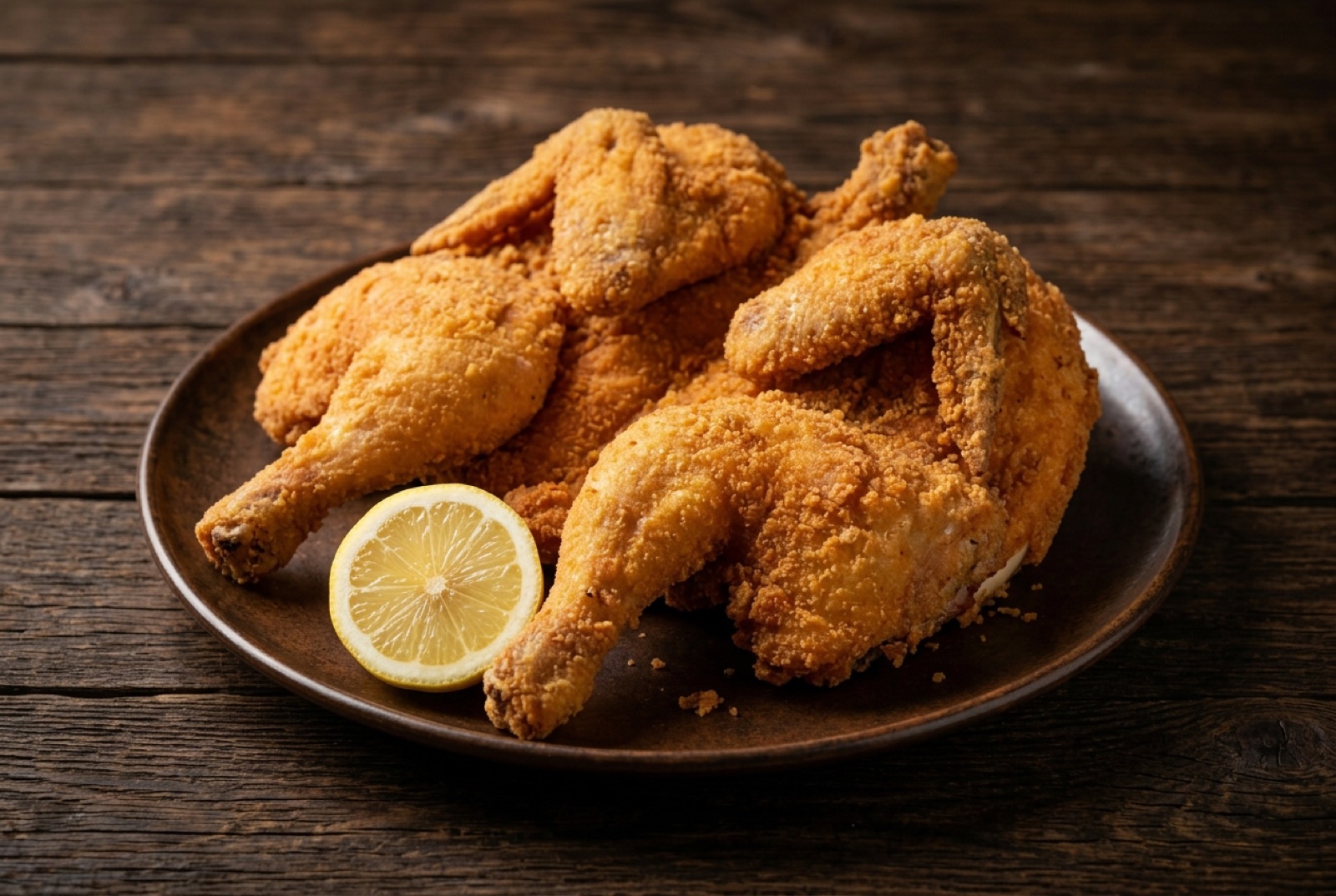
Austria has 9 more dishes in the atlas — Backhendl and Erdäpfelsalat, and 7 more.
Recipe by The DishRoute Kitchen · published August 19, 2026 · updated August 19, 2026