Morocco.
المغرب
Moroccan cooking sits at a crossroads few cuisines can claim: indigenous Amazigh (Berber) traditions layered with Arab, Andalusi and Mediterranean influences, plus spices carried for centuries along trans-Saharan trade routes. The result is a kitchen of slow braises and gentle heat — spice here means depth, not fire. Cumin, ginger, saffron, cinnamon and sweet paprika build warm, rounded flavors, while two signature preparations supply the high notes: preserved lemons, salt-cured until the rind turns tender and intensely aromatic, and olives in a dozen regional cures. Sweet and savory share a plate without apology — onions cooked down with cinnamon over meat, dried fruit in a lamb tagine. Meals are communal, eaten from a shared dish with bread as the utensil, and the whole day is paced by glasses of sweet mint tea, poured from a height and offered to every guest as a matter of course.

- Continent
- AfricaMaghreb / North Africa
- Recipes in atlas
- 10
- Must-try dishes
- 3
- Pantry staples
- 8
Start with the classics.
Must tryThe dishes that explain the Morocco kitchen fastest — if you cook only a few things from this page, cook these.
Inside the Morocco kitchen.
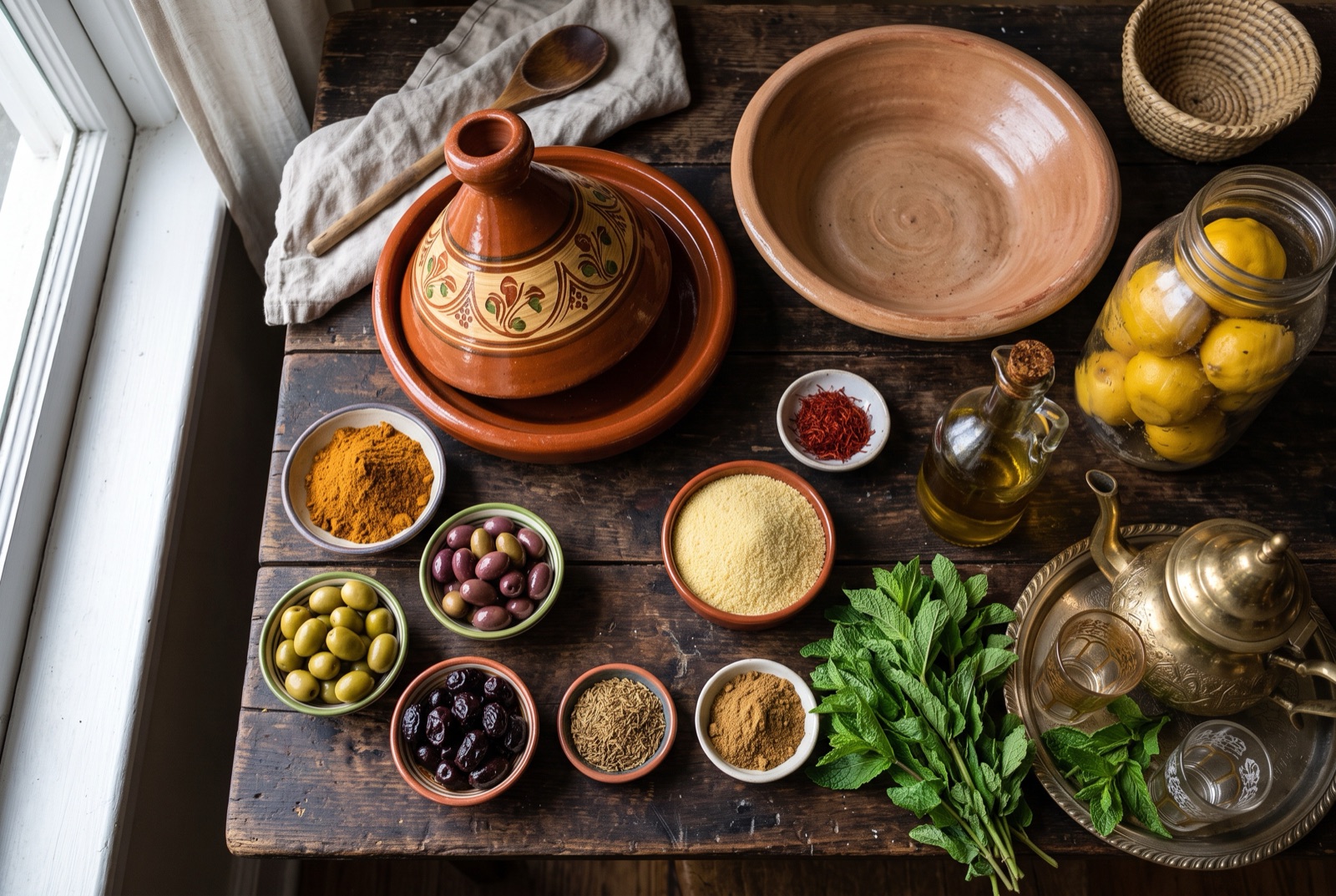
Start with a word that confuses everyone: tagine is both the pot and the food cooked in it. The vessel is glazed or unglazed clay — a shallow base and a conical lid whose shape does real work, catching rising steam, condensing it, and dripping it back over the food so a stew braises in its own moisture with very little added liquid. Traditionally it sits over a charcoal brazier at a murmur for hours. The dish called tagine is whatever emerges: chicken with preserved lemon and olives, lamb with prunes, kefta with eggs poached in tomato sauce. A heavy lidded pot on a modern stove reproduces the physics honestly, which is why Moroccan home cooks abroad rarely bother hauling clay.
The pantry is defined by preservation and patience. Preserved lemons — whole lemons packed in salt and their own juice for weeks — lose their raw sourness and gain a deep, almost floral saltiness; the softened rind, not the flesh, is the prize, slivered into tagines, salads and marinades. Olives are bought by cure and color from market barrels: green and firm, violet mid-cure, wrinkled black beldi. Olive oil, smen (aged salted butter with a cheese-like funk), honey and dried fruit round out the store cupboard.
Spices are handled with a merchant's precision. Cumin sits on the table next to salt. Ginger, turmeric, sweet paprika, cinnamon and saffron do the daily work, and above them stands ras el hanout — literally "head of the shop," each spice seller's own best blend. There is no fixed recipe: a modest version might hold a dozen spices, an ambitious one thirty or more, and comparing blends is part of shopping.
Structure matters as much as seasoning. A proper meal often opens with a spread of cooked salads — zaalouk of smoky eggplant, taktouka of peppers and tomato — scooped up with khobz, the round semolina-dusted bread that acts as fork and spoon. Couscous, steamed and never boiled in the traditional method, is Friday food, served after midday prayers from one great communal platter.
And through it all runs mint tea: gunpowder green tea brewed with a fist of fresh spearmint and serious sugar, poured theatrically from high above the glass to raise a light froth. It opens negotiations, welcomes guests, ends meals and fills every pause — less a beverage than the country's social punctuation.
Signature pantry.
8 staplesThe ingredients this cuisine cannot function without.
- preserved lemons
- ras el hanout
- olives
- olive oil
- couscous
- saffron
- cumin
- fresh mint
How people eat in Morocco.
Food arrives in one communal dish set at the center of the table, and each person eats the wedge directly in front of them — reaching across is bad form. Bread does the work of cutlery: torn pieces of khobz pinch up meat and mop sauce, traditionally with the right hand. Meals often open with an array of small cooked salads eaten mezze-style. Couscous belongs to Friday, after prayers, shared by the whole family. Mint tea frames everything — offered the moment a guest sits down, poured from a height, and refusing the first glass takes some diplomacy.
Regional kitchens.
Morocco cooks 4 distinctly different ways depending on where you stand — here is what changes between them.
- R1Fez
- The old imperial capital is widely considered the refined heart of Moroccan cooking — home of b'stilla, the sweet-savory pie of spiced poultry under cinnamon-dusted pastry, and of an elaborate style honed over centuries of court and merchant kitchens.
- R2Marrakech
- Street-food capital: the stalls of Jemaa el-Fna fire up every evening, and the city's signature is tanjia, an urn of meat, preserved lemon and spices slow-cooked for hours in the embers of the hammam furnace.
- R3The Coast (Essaouira)
- Atlantic ports like Essaouira live on the day's catch — sardines grilled over charcoal, fish tagines, and chermoula, the cilantro-garlic-cumin marinade that defines Moroccan seafood cooking.
- R4Atlas Mountains
- The Amazigh heartland cooks simply and seasonally: barley bread, hearty vegetable and lamb tagines, and couscous steamed over the very broth it will be served with — mountain food built for cold nights.
All Morocco recipes.
10 recipes and counting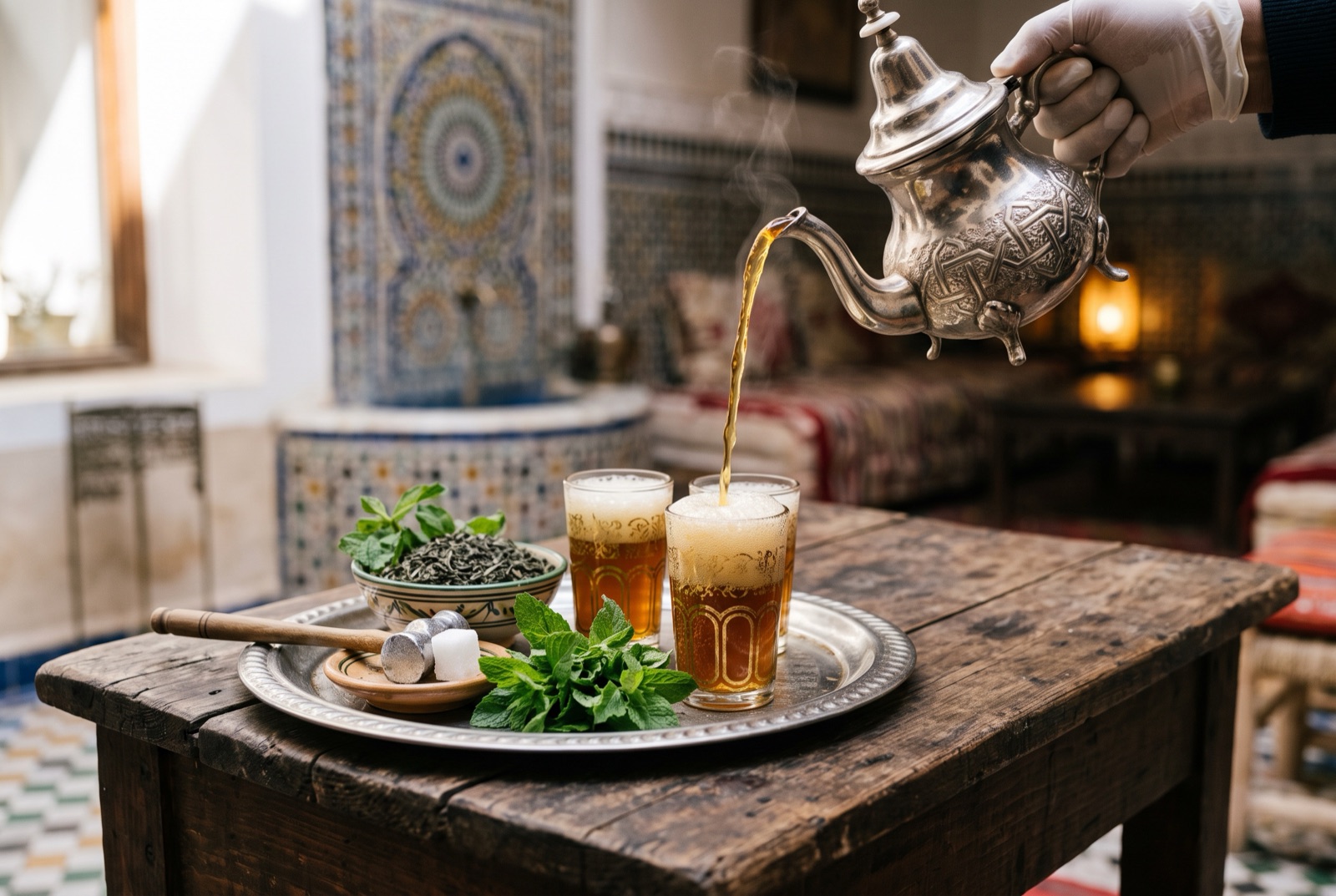
Morocco15 min
Atay bi Na'na
Moroccan Mint Tea
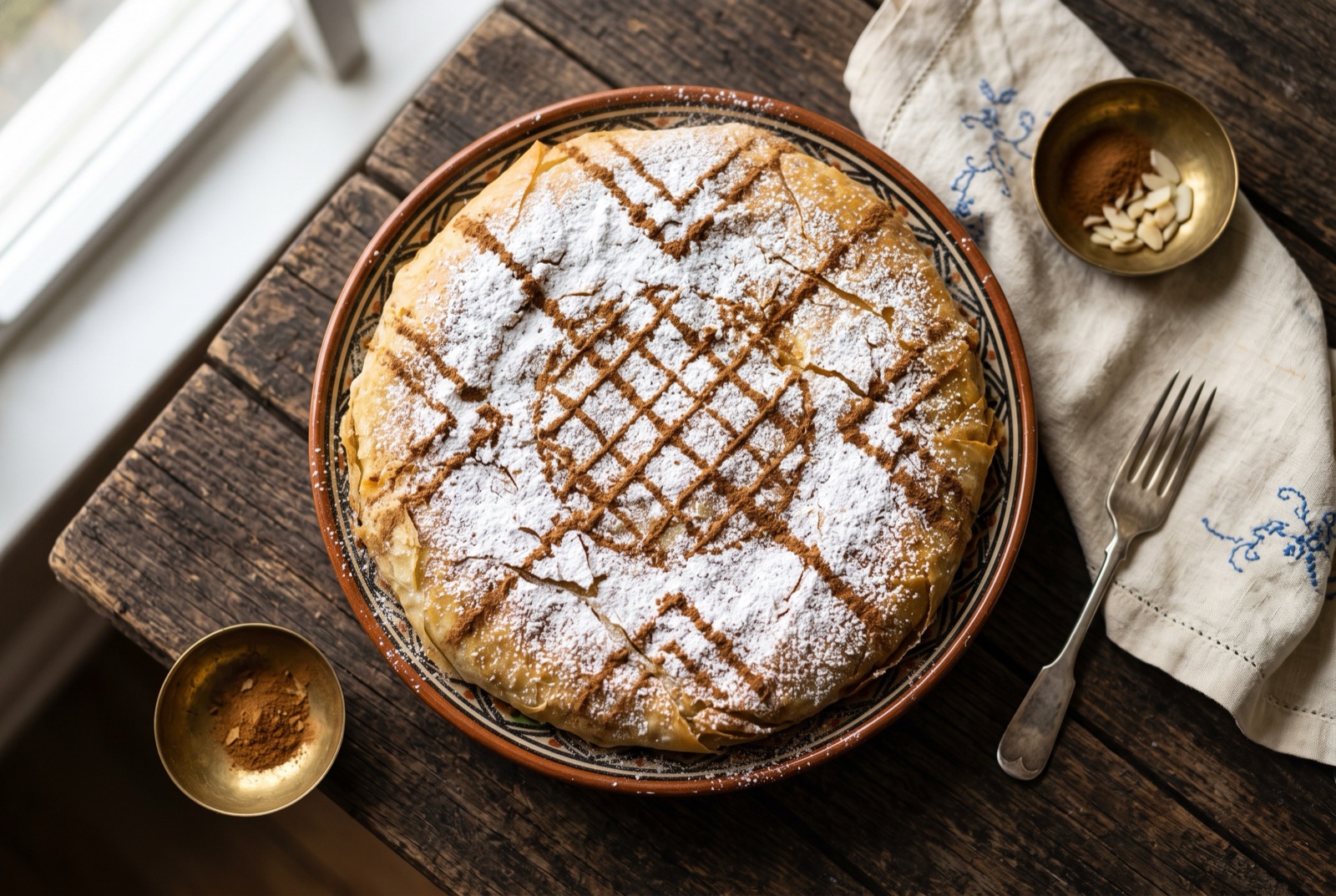
Morocco2 hr 40 min
Bastilla
Moroccan Sweet-Savoury Chicken Pie
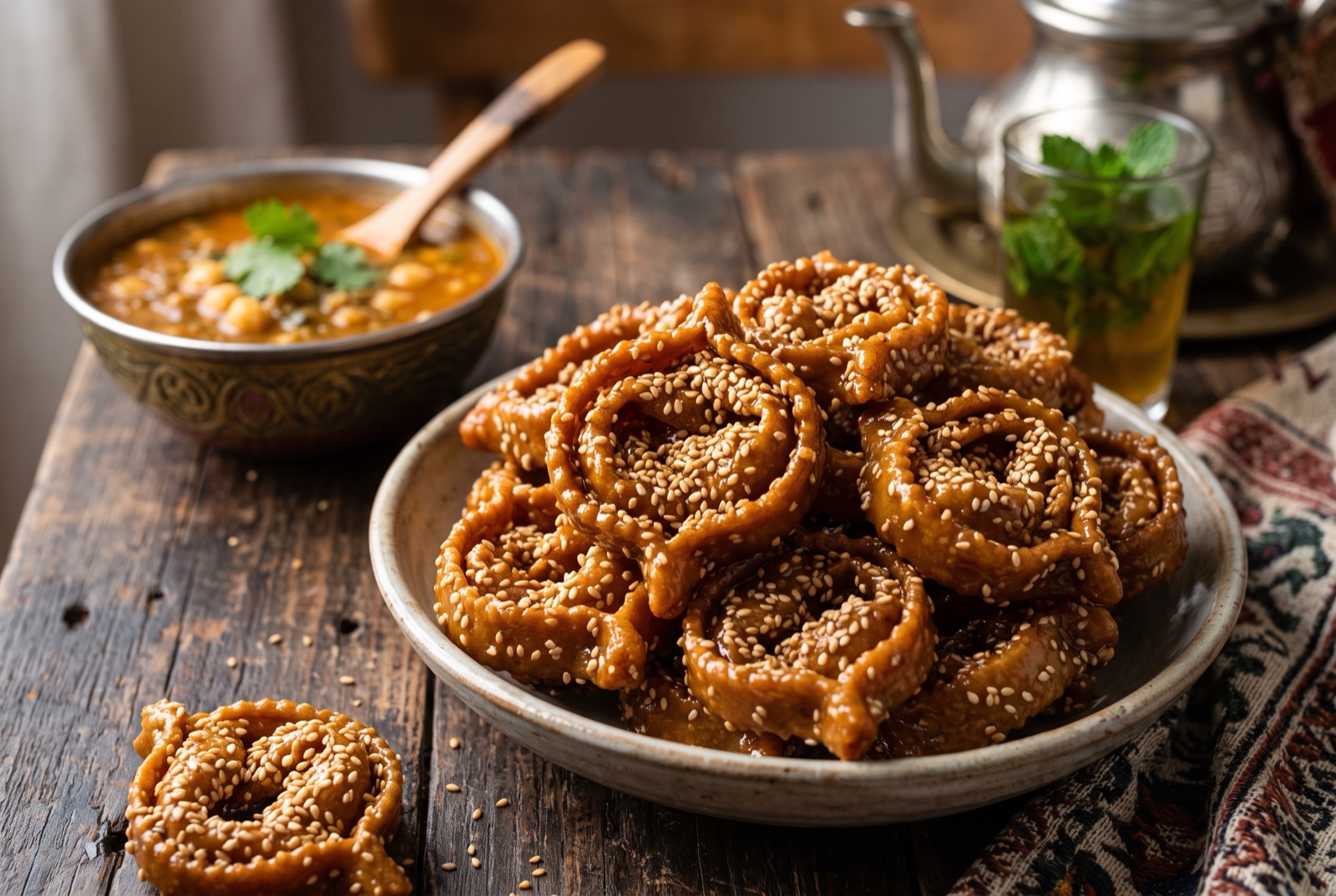
Morocco3 hr 5 min
Chebakia
Moroccan Sesame Honey Flower Cookies
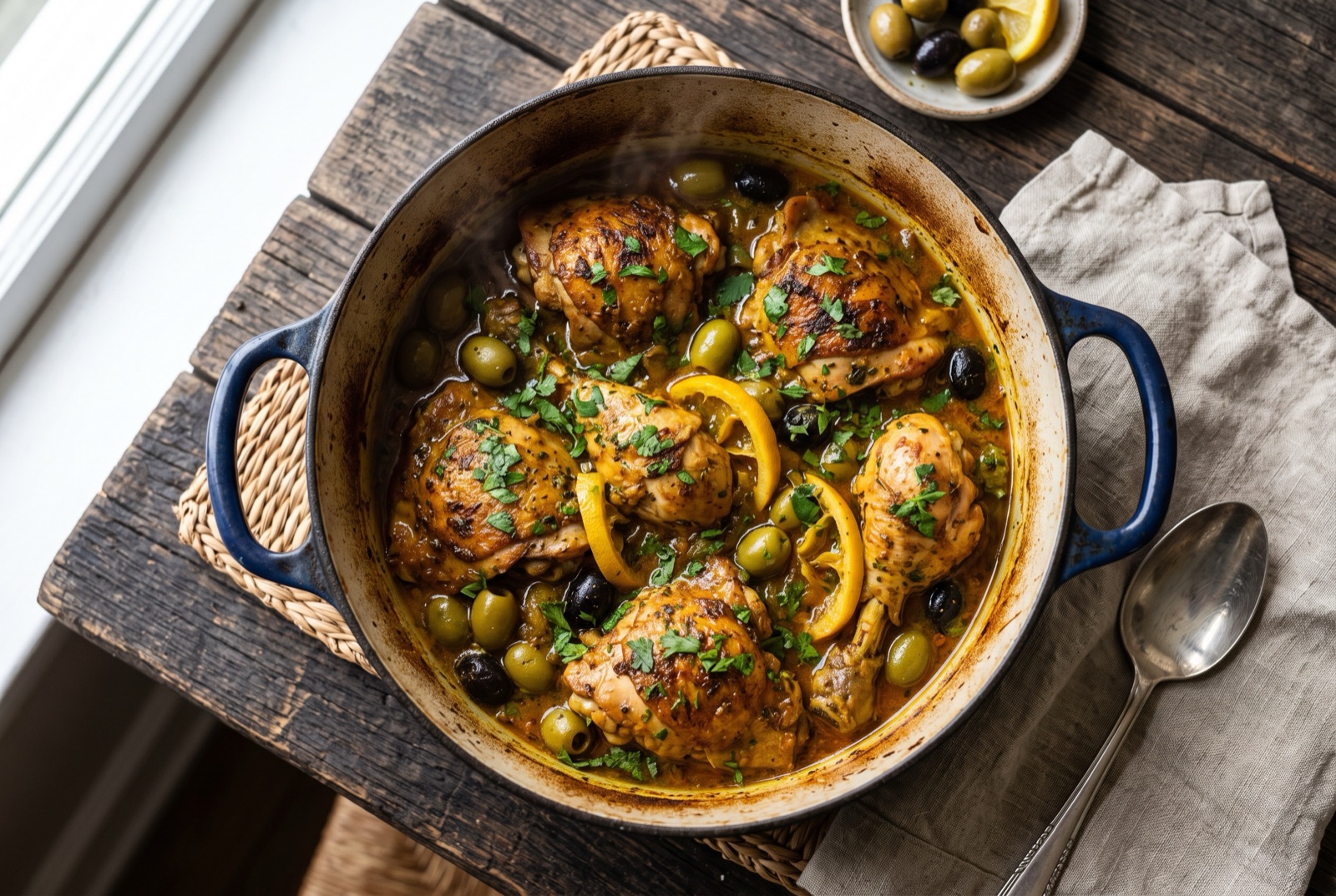
Morocco2 hr
Chicken Tagine with Preserved Lemon and Olives
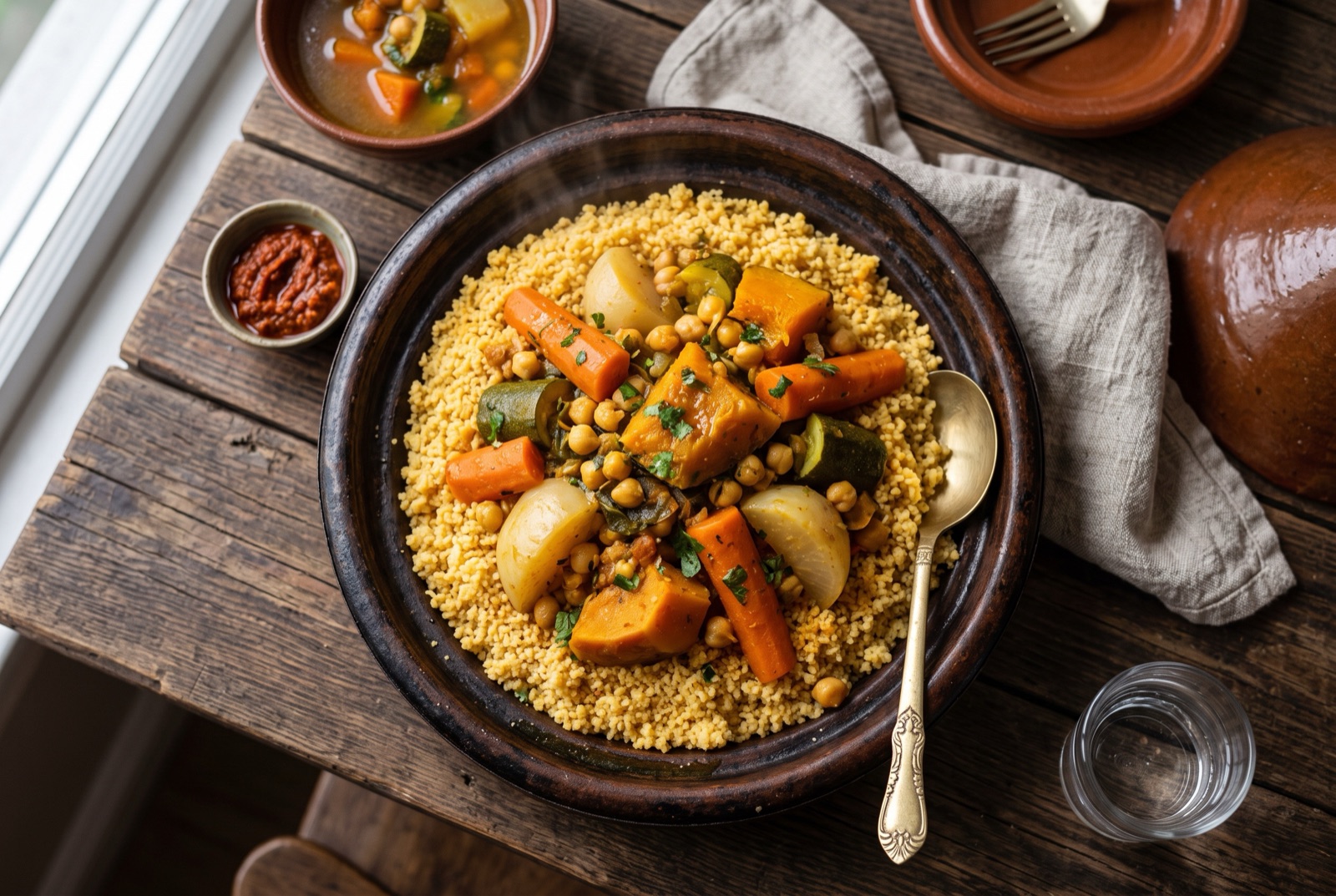
Morocco2 hr 25 min
Couscous bel Khodra
Seven-Vegetable Couscous
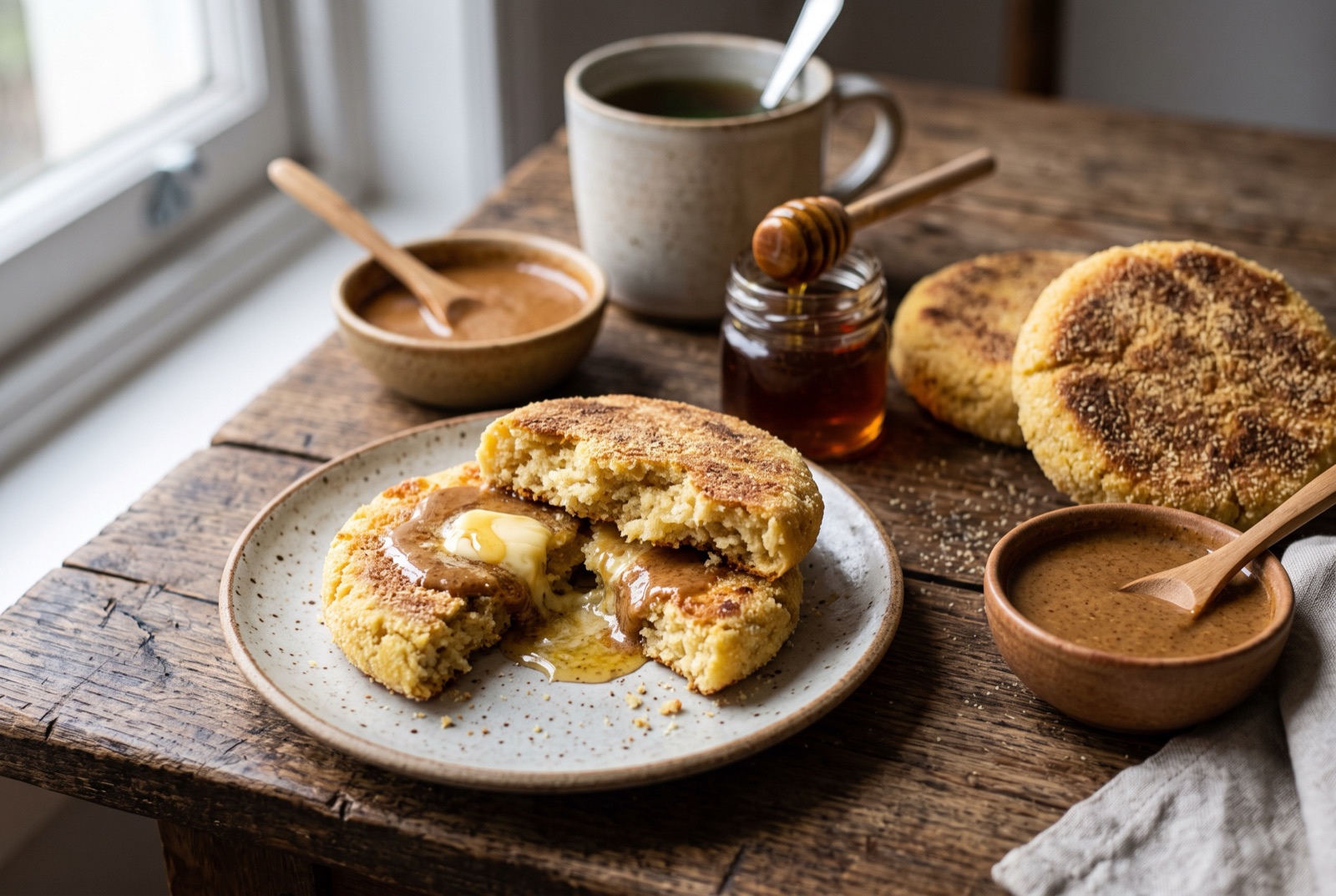
Morocco36 min
Harcha
Moroccan Semolina Pan Bread
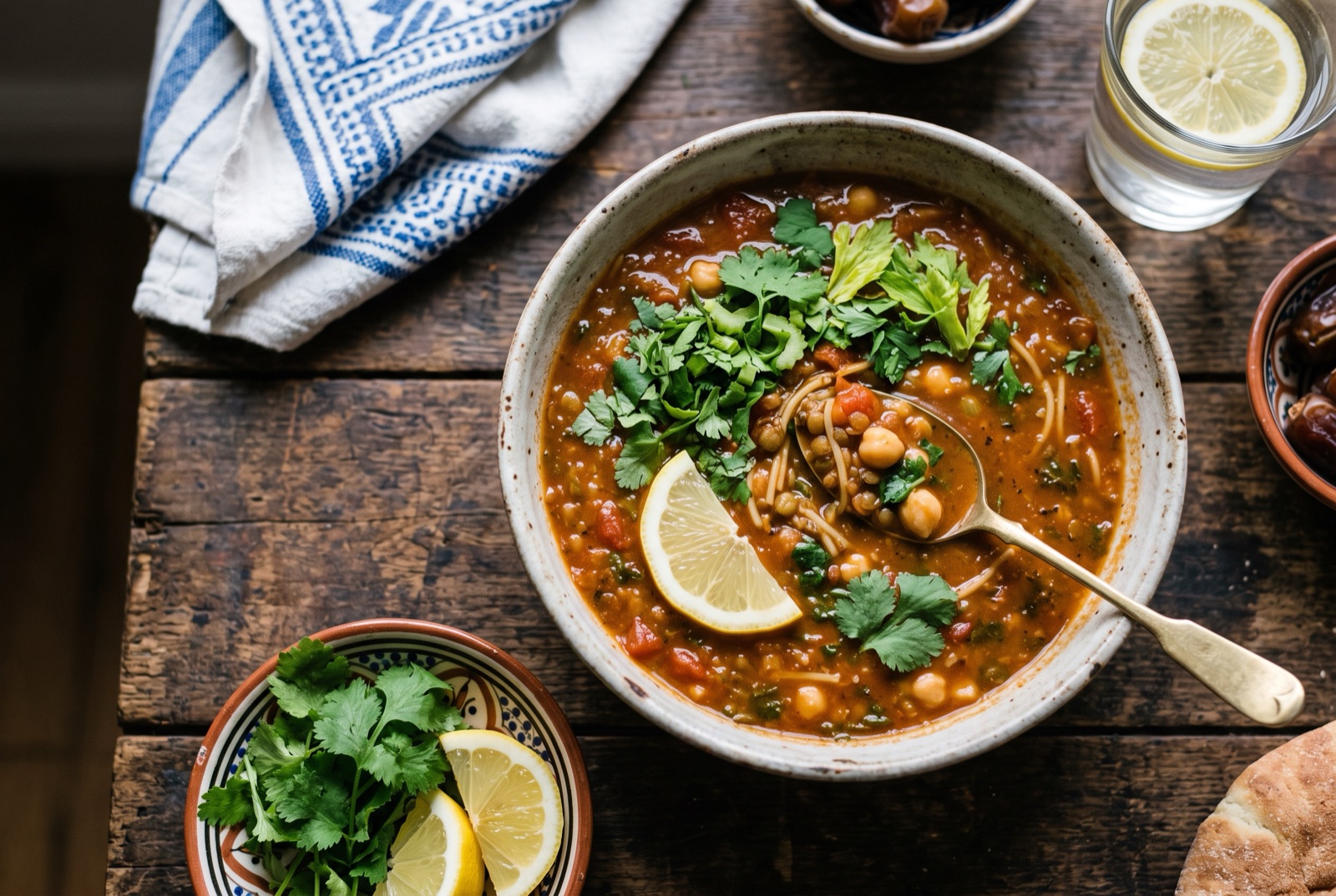
Morocco1 hr 20 min
Harira
Moroccan Tomato, Lentil and Chickpea Soup
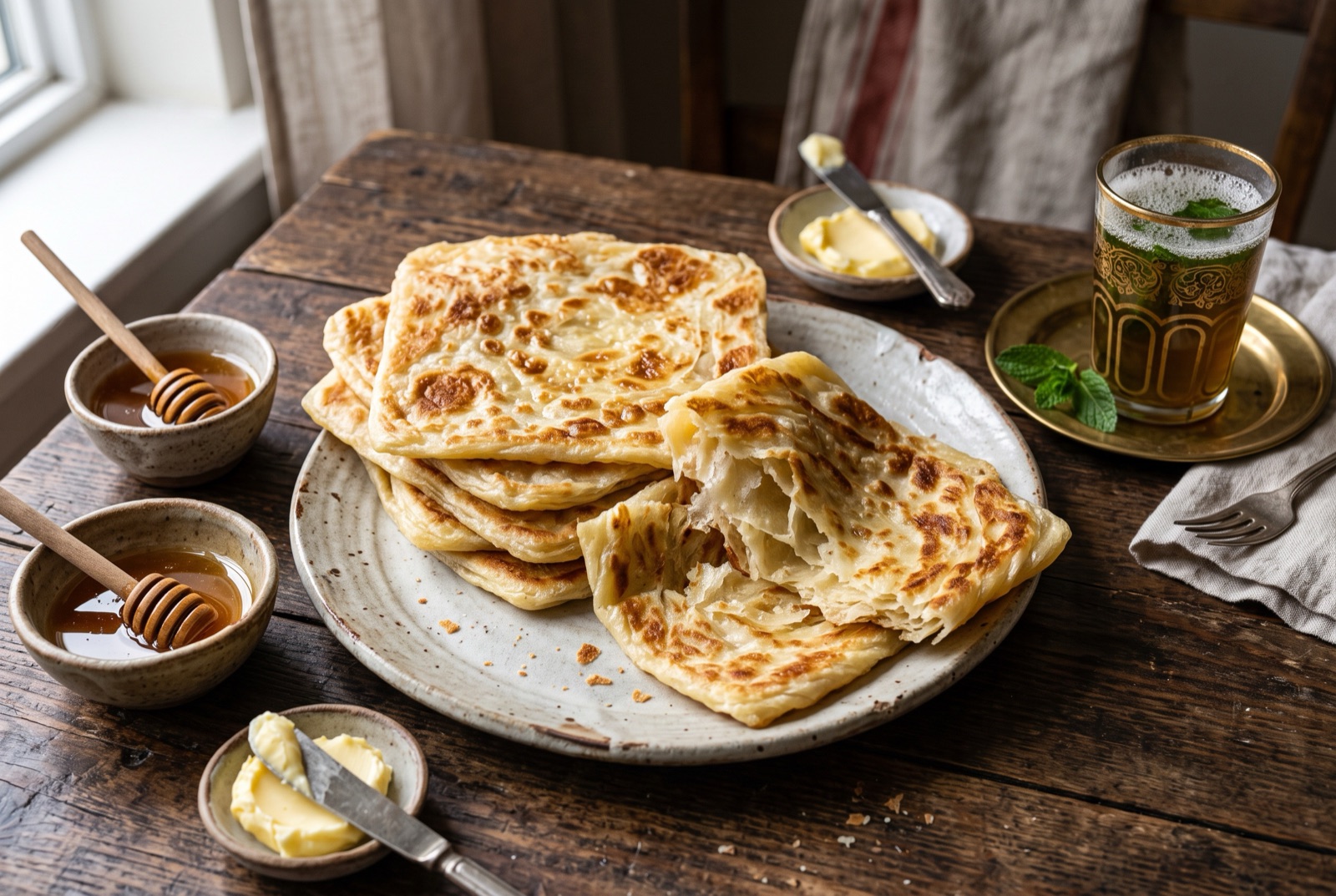
Morocco1 hr 35 min
Msemen
Moroccan Square Laminated Flatbread
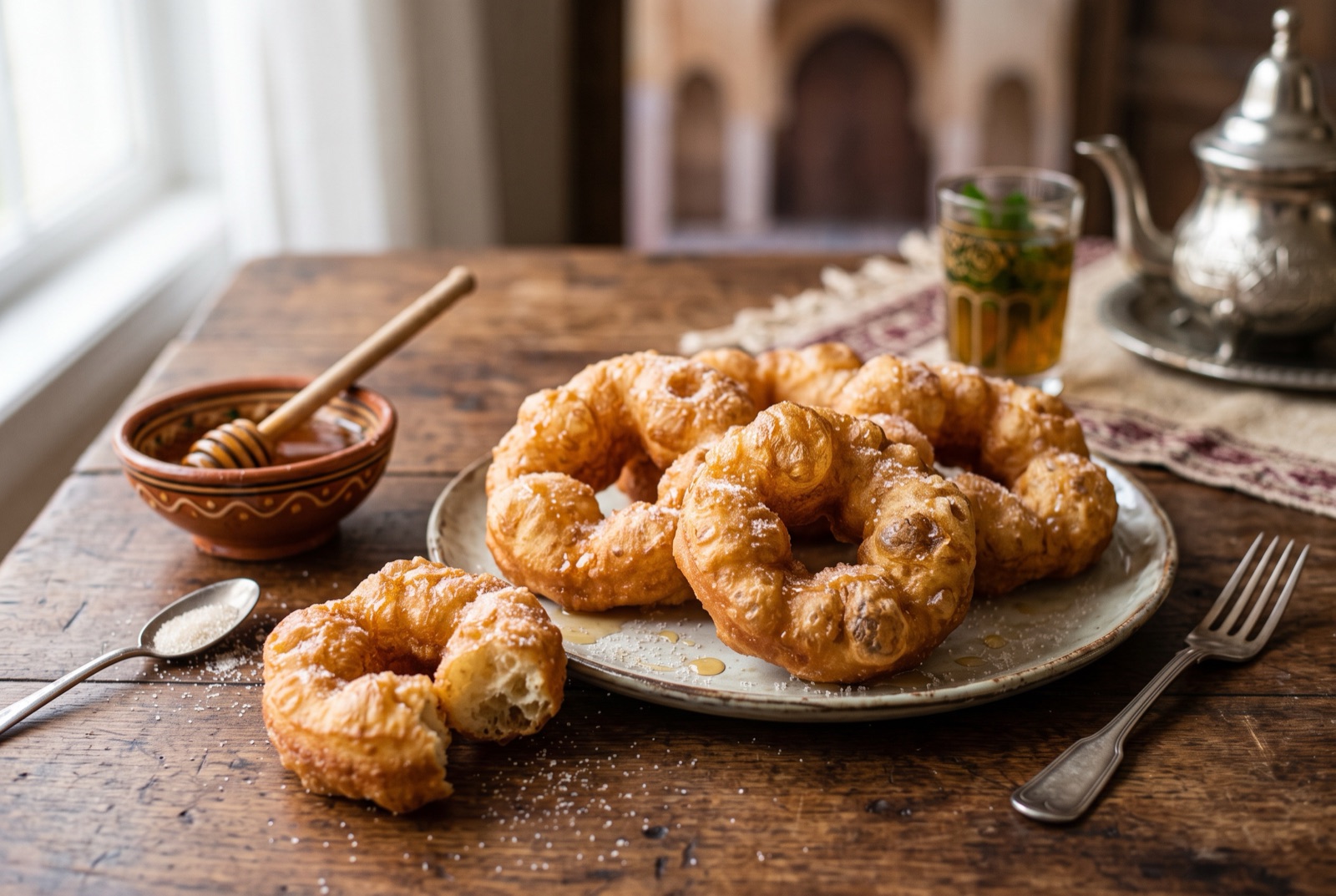
Morocco2 hr 10 min
Sfenj
Moroccan Yeast Doughnuts
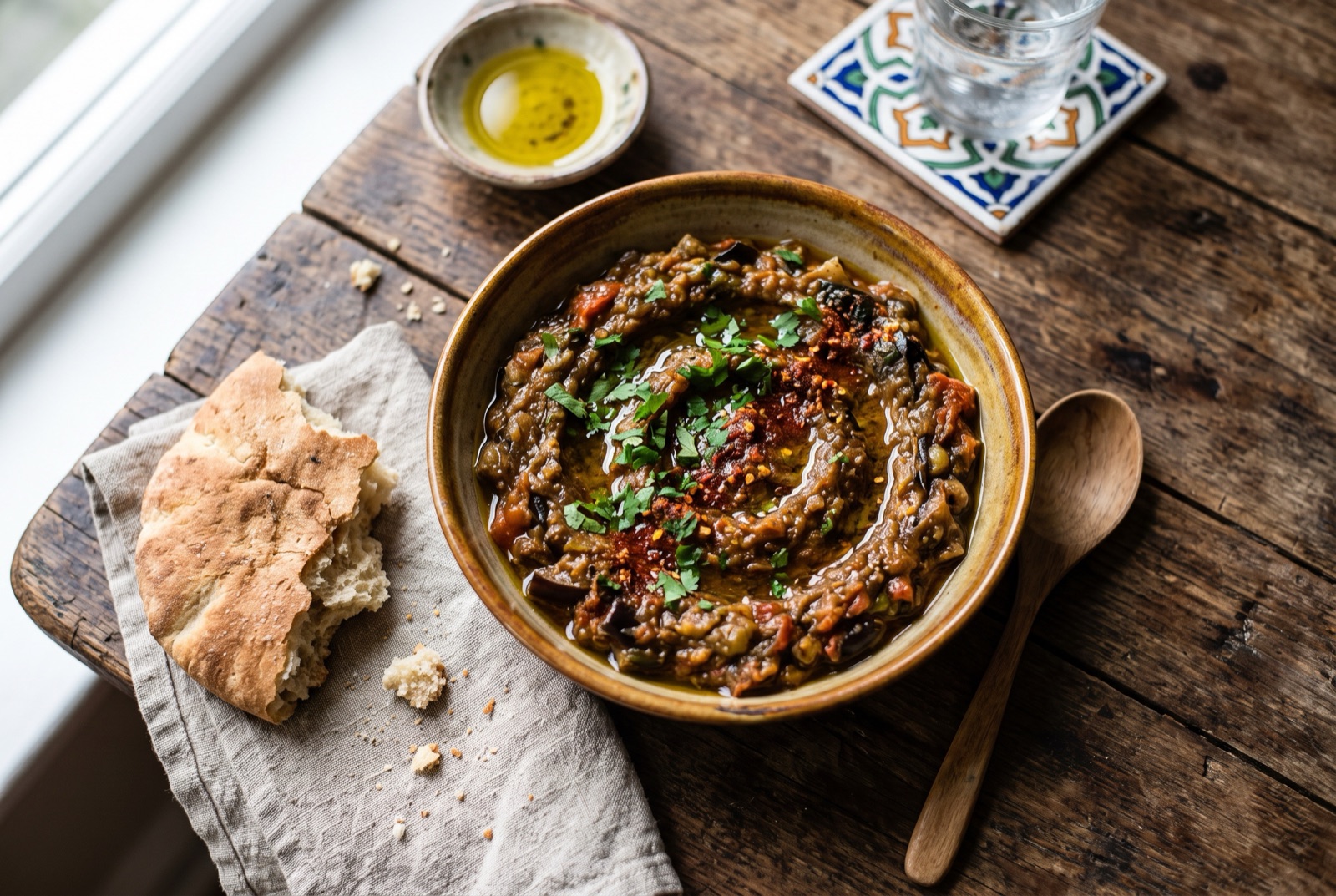
Morocco50 min
Zaalouk
Moroccan Smoky Eggplant and Tomato Salad
Keep traveling.
Morocco sits in Maghreb / North Africa, and its kitchen shares borders as well as ingredients with Algeria and Cameroon.
 Algeria
 Cameroon