Harira.
Moroccan Tomato, Lentil and Chickpea Soup
حريرة · Harira · say it: ha-REE-ra
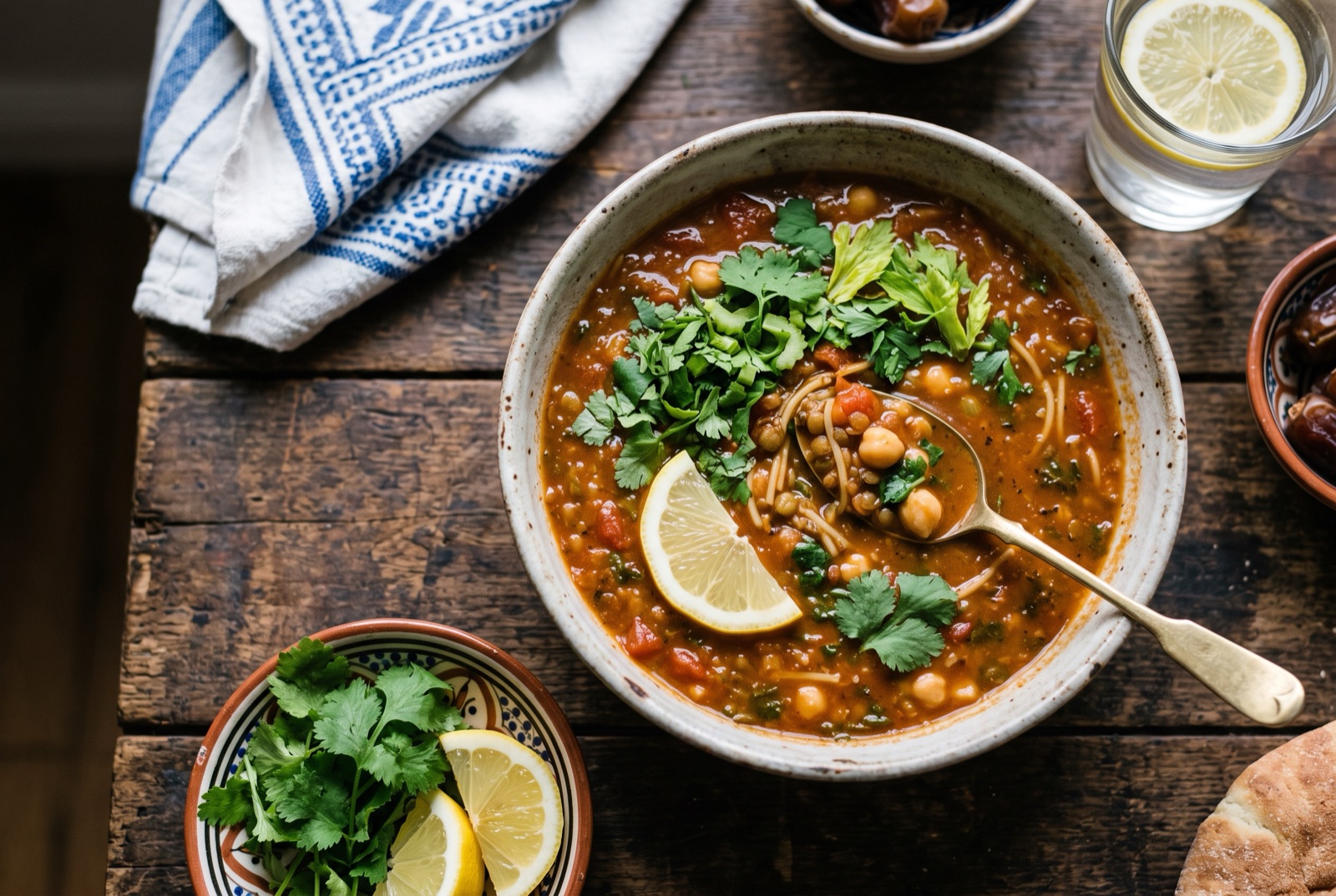
Harira is Morocco's great soup: a deep tomato broth crowded with lentils and chickpeas, perfumed with ginger, cinnamon and black pepper, thick with fresh cilantro and celery leaf, and given its signature velvety body by tadouira — a flour-and-water slurry whisked in at the end. It tastes warm and rounded rather than spicy, with a bright lemon finish that keeps all that body from feeling heavy. This version is meatless as written, which is common in Moroccan homes, with lamb as the classic enrichment if you want it. Everything happens in one pot, and the technique that matters — the tadouira — takes two minutes and a whisk.

- Gate
- Morocco
- Prep
- 25 min
- Cook
- 55 min
- Total time
- 1 hr 20 min
- Serves
- 6
- Status
- Easy
- Nutrition / serving · estimated
- Calories 310 kcal
- Protein 14 g
- Carbs 48 g
- Fat 8 g
- Fiber 12 g
Why this recipe works.
- Real tadouira thickening for the silky body harira is known for — not just a long simmer.
- Meatless as written and no poorer for it, with an honest lamb option for the classic version.
- Two additions of herbs — simmered and fresh — keep the cilantro flavor vivid instead of boiled out.
- One pot, pantry legumes, and it tastes better on day two.
Ingredients.
18 itemsFor the soup
For the tadouira
For serving
Equipment
- Large heavy pot or Dutch oven
- Box grater (for the tomatoes)
- Whisk
- Small bowl for the tadouira
Instructions.
Sweat the aromatics
Warm the olive oil in a large pot over medium heat and cook the onion and celery with a pinch of salt until soft, translucent and sweet-smelling, 6–8 minutes, without letting them brown.
Build the tomato base
Add the grated tomatoes, tomato paste, ginger, cinnamon, turmeric and black pepper. Cook, stirring often, until the mixture darkens a shade and thickens enough that a spoon dragged through leaves a brief trail, about 8 minutes.
Tip This reduction is where the flavor concentrates — rushing it leaves the soup tasting of watery tomato.
Simmer the lentils
Stir in the lentils, half the cilantro, all the parsley and the water or stock. Bring to a boil, then lower to a steady simmer, partly covered, until the lentils are tender but still whole — about 30 minutes.
Add the chickpeas
Add 240 g of cooked chickpeas and salt to taste, and simmer another 10 minutes so they warm through and take on the broth's seasoning.
Whisk in the tadouira
Whisk the flour into the cold water until completely smooth. Stream it into the simmering soup while stirring constantly, then keep the soup at a gentle bubble, stirring often, for 10 minutes — it will turn glossy and thicken until it coats the back of the spoon with no floury taste left.
Tip Stir along the bottom of the pot; the thickened soup catches and scorches easily once the flour goes in.
Finish and serve
Stir in the remaining cilantro and taste — it should be warmly spiced, rounded and just salty enough. Ladle into bowls and serve hot with lemon wedges for squeezing, and dates on the side if you are doing it properly.
Tips from our kitchen.
- Whisk the tadouira into a completely smooth slurry before it goes anywhere near the pot, and stream it in while stirring — dumping it in gives you dumplings, not silk.
- Simmer at least 10 minutes after adding the tadouira so the raw flour taste cooks out; the soup should turn glossy and coat the spoon.
- Use canned chickpeas without shame, but give dried lentils the full simmer — they hold their shape and season the broth as they cook.
- Celery leaves, not just stalks, are traditional and do real work here. Save and chop them along with the cilantro and parsley.
- The soup thickens dramatically as it sits. Loosen leftovers with water and re-season with salt and lemon before serving.
- Serve with dates on the side, the Ramadan way — the sweet bite against the savory soup is a genuinely great combination, fasting or not.
Substitutions.
- Meatless base (as written) → 250 g lamb shoulder in small cubes
- The classic enrichment. Brown it with the onions at the start and extend the initial simmer to about 45 minutes until tender.
- Green or brown lentils → Red lentils
- They dissolve into the broth rather than holding shape — the soup gets thicker and softer. Cut the simmer to 20 minutes.
- Fresh tomatoes → A 400 g can of crushed tomatoes
- Fine year-round and arguably more consistent in winter. Skip the grating step and add them straight to the pot.
Variations.
- With vermicelli
- A handful of fine broken vermicelli added in the last 10 minutes — a common household touch that makes the soup a full meal.
- With rice
- Two tablespoons of rice simmered in from the start, the alternative starch in many families, giving a softer, more porridge-like body.
- Extra-sour tadouira
- Some homes let the flour-water slurry sit at room temperature for several hours to ferment slightly, adding a faint traditional tang.
Storage & reheating.
Keeps 4 days refrigerated and improves overnight as the spices settle in. It thickens as it sits — loosen with water when reheating gently on the stove, then re-season with salt and a fresh squeeze of lemon. Freezes well for 3 months; the texture holds because of the flour thickening.
Serve with
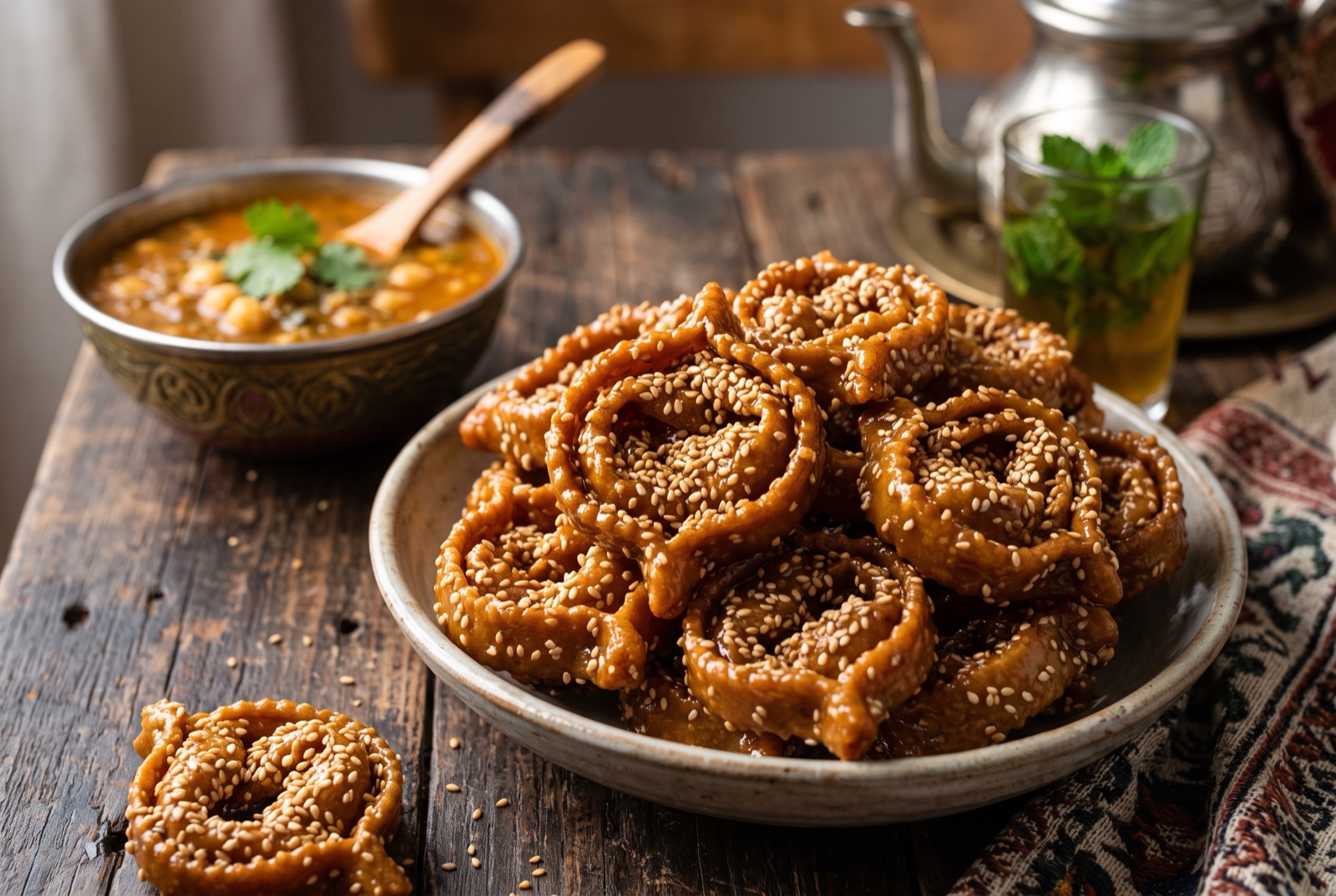
Dates and lemon wedges, plus crusty bread or chebakia pastries if you want the full iftar table.
The story behind Harira.
Harira is most famous as the soup of Ramadan. Across Morocco, when the sunset call to prayer marks the end of the day's fast, the iftar table very often opens with a bowl of harira, traditionally alongside dates and sweets such as chebakia, sesame-honey pastries. The pairing is practical as much as ceremonial: after a day without food or water, a warm, gently spiced soup with legumes, tomato and a little acid is about the kindest thing a stomach can receive. During the holy month, pots of harira simmer in home kitchens and at street stalls alike, and the smell of it at dusk is, for many Moroccans, the smell of Ramadan itself.
It is not only a Ramadan dish, though. Harira is everyday food the rest of the year — a supper soup, a street-cart staple in cities like Marrakech, a thing grandmothers are judged by. Every household keeps its own version: some lean harder on the tomato, some on the legumes; some include rice or fine broken vermicelli in the pot; many enrich it with lamb or beef, while plenty of home versions are meatless by habit or economy. The constants are the legumes, the tomato base, the fresh-herb intensity, and the final thickening.
That thickening is the defining move. Tadouira — flour whisked with water (in some homes with a spoon of tomato paste, and traditionally sometimes left to ferment slightly for a faint sourness) — is streamed into the simmering pot, where it transforms a brothy soup into something silky that coats the spoon. Done well, it is undetectable as flour; the soup simply feels complete. Finished with lemon and eaten with dates, harira manages to be both humble and celebratory, which is exactly the role it plays.
Questions, answered.
What is harira and when do Moroccans eat it?
Harira is a thick Moroccan soup of tomatoes, lentils and chickpeas, seasoned with ginger, cinnamon, pepper and lots of fresh cilantro and celery. It is most famously the soup that breaks the daily fast at iftar during Ramadan, traditionally served with dates, but it is also everyday comfort food across Morocco the rest of the year.
What is tadouira in harira?
Tadouira is the traditional thickening step: flour whisked smooth with water (sometimes with tomato paste, and in some homes left to sour slightly) and streamed into the simmering soup while stirring. It gives harira its signature silky, spoon-coating body. Whisked in properly and simmered ten minutes, it is undetectable as flour.
Does harira contain meat?
Both versions are authentic. Many Moroccan households enrich harira with small pieces of lamb or beef browned at the start, while plenty of home versions are meatless, especially as everyday cooking. The soup's character comes from the tomato-legume base, the spices and the herbs, so the meatless pot loses less than you would expect.
Is harira spicy?
No — it is warmly spiced rather than hot. Ginger, cinnamon, turmeric and black pepper give it a rounded, aromatic warmth, and there is no chile in the standard pot. Heat lovers add harissa or cayenne at the table, which is common practice and keeps the base version family-friendly.
Can I make harira with canned chickpeas and lentils?
Canned chickpeas work perfectly — add them in the last 20 minutes so they do not disintegrate. Lentils are worth cooking from dry in the pot, since they need only about 30 minutes and flavor the broth as they simmer. If you must use canned lentils, add them with the chickpeas and expect a softer texture.
You might also like.
All recipes →
Keep exploring Morocco.
Morocco has 9 more dishes in the atlas — Atay bi Na'na and Bastilla, and 7 more.
Recipe by The DishRoute Kitchen · published August 18, 2026 · updated August 18, 2026