Hraimi.
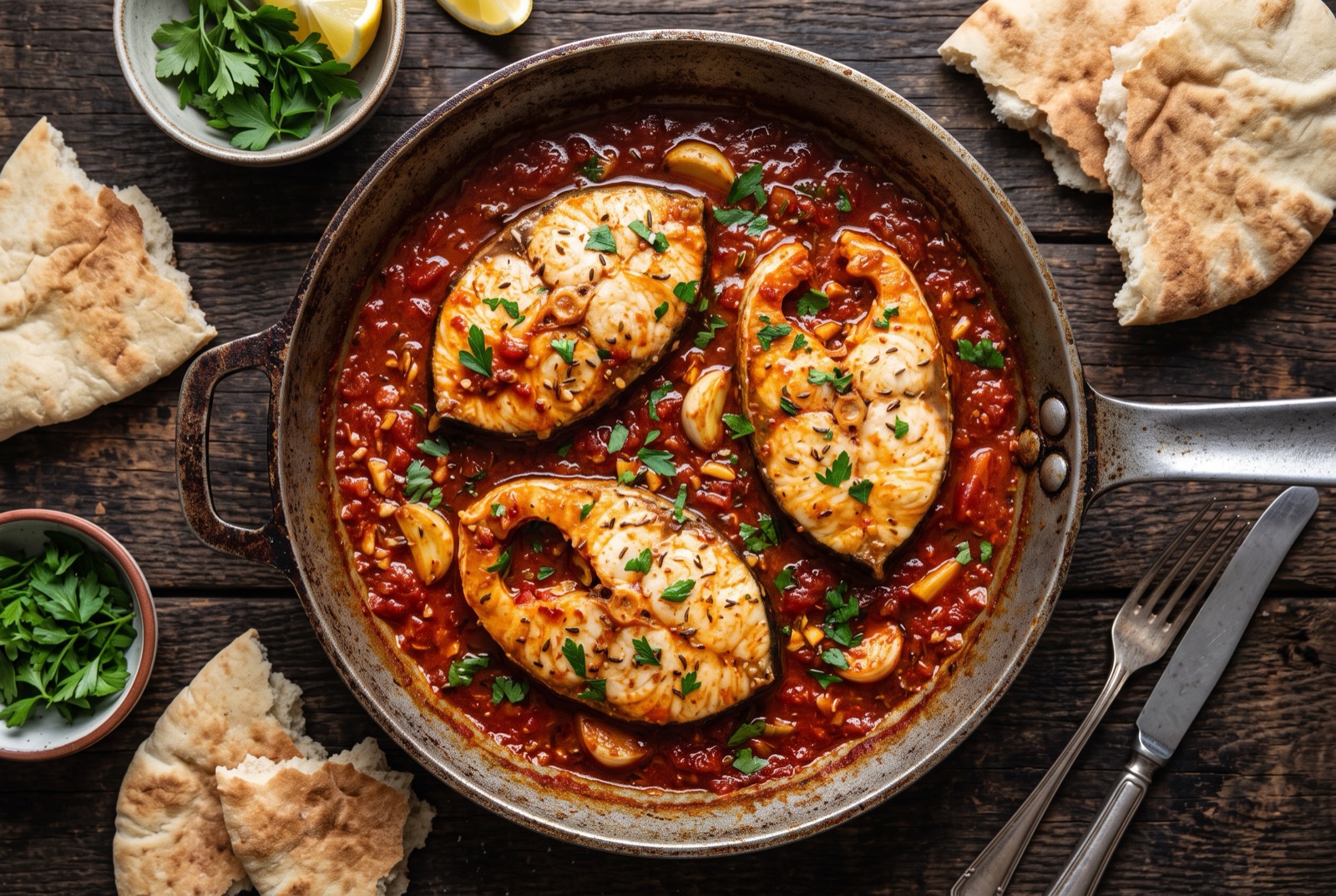
Libyan Fish in Spicy Tomato Sauce
حرايمي · Hraimi / Chraime · say it: h-RYE-mee
Hraimi is fish cooked in a sauce that is deliberately, unapologetically hot. Garlic goes into the oil in quantities that would season four ordinary dishes, followed by cumin and caraway, harissa and tomato paste, and the whole thing is loosened with water into a brick-red sauce before the fish is laid in and poached without ever being turned. The name comes from the Arabic root for heat, and the dish is built for bread: nobody plates hraimi neatly, they put the pan on the table and everyone mops. From cold pan to eating takes well under an hour, and the only real skill involved is not overcooking the fish.

- Gate
- LibyaTripoli and the coast
- Prep
- 15 min
- Cook
- 30 min
- Total time
- 45 min
- Serves
- 4
- Status
- Easy
- Nutrition / serving · estimated
- Calories 390 kcal
- Protein 41 g
- Carbs 10 g
- Fat 21 g
- Fiber 3 g
- Sodium 720 mg
Why this recipe works.
- Blooms the garlic and ground spices in oil before any liquid arrives, which is where the depth of the sauce comes from.
- Poaches the fish flat and never turns it, so thick steaks stay whole instead of breaking into the sauce.
- Keeps the sauce loose enough to eat with bread, the way it is actually served on the Libyan coast.
- Gives a clear doneness signal at the bone rather than a fixed number of minutes, since steak thickness varies wildly.
Ingredients.
13 itemsEquipment
- Wide, shallow sauté pan with a lid
- Fish slice or wide spatula
- Mortar and pestle for the spices
Instructions.
Salt the fish
Pat the fish steaks dry, season both sides lightly with salt and leave them on a plate while you make the sauce. This short wait firms the surface so the flesh holds together in the pan.
Bloom the garlic and spices
Warm the olive oil in a wide, shallow pan over medium-low heat and cook the sliced garlic for about 90 seconds, stirring constantly, until it smells sweet and is still pale. Add the cumin, caraway, paprika and turmeric and stir for 30 seconds more, until the oil turns deep red and fragrant.
Tip Pull the pan off the heat the instant any garlic edge starts to colour. Browned garlic ruins the sauce.
Fry the harissa and tomato paste
Stir in the harissa and tomato paste and fry for 3 minutes, pressing them into the hot oil. The mixture should darken from bright red to brick and separate slightly, with a slick of red oil pooling at the edge of the pan.
Simmer the sauce
Pour in the water, season with salt and simmer for 8 minutes, until the sauce thickens just enough to coat a spoon. Taste it now and correct the salt and heat, because once the fish is in you will not be able to stir.
Poach the fish
Lay the steaks into the sauce in a single layer so they are half submerged, cover, and cook at a bare simmer for 12 to 18 minutes, spooning sauce over the exposed tops every few minutes. The fish is ready when the flesh beside the bone has turned fully opaque and lifts away under light pressure.
Finish and serve from the pan
Take the pan off the heat, squeeze over the lemon juice and scatter the chopped coriander across the surface. Let it sit for 3 minutes, then carry the pan straight to the table with bread and the lemon wedges alongside.
Tips from our kitchen.
- Use bone-in steaks 3 cm thick. Skinless fillets cook too fast and fall apart before the sauce has done anything.
- Keep the garlic moving in the oil and pull the pan off the heat if it starts to colour — browned garlic turns the sauce bitter.
- Toast and grind the cumin and caraway yourself if you can; both lose most of their aroma within months of grinding.
- Make the sauce first and taste it before the fish goes in, because once the fish is in you cannot stir to correct it.
- Spoon sauce over the fish every few minutes instead of turning it, which is the only way to cook the top without breaking the steaks.
- Finish with lemon off the heat. Added during cooking, the acid dulls and the sauce loses its edge.
Substitutions.
- Grouper or sea bream steaks → Cod loin, hake, halibut or salmon
- Any firm fish cut thick will do. Salmon works but changes the character noticeably, since its own fat competes with the sauce.
- Harissa → 1 tbsp sweet paprika plus 1 tsp chilli flakes and an extra clove of garlic
- You lose harissa's slight sourness and depth but keep the heat and colour. Tunisian harissa in a tube is widely sold and keeps for months.
- Caraway → Extra cumin plus a pinch of fennel seed
- Not identical — caraway has a sharper, almost aniseed note that is part of the dish's signature — but it keeps the sauce in the right family.
Variations.
- Hraimi with potatoes
- Simmer 5 mm potato slices in the sauce for ten minutes before adding the fish. They soak up the spice and stretch the dish to feed more people.
- Milder family version
- Halve the harissa and lean on sweet paprika instead. Households with small children often cook it this way and put extra harissa on the table for the adults.
- Hraimi with chickpeas
- Add a drained tin of chickpeas to the sauce with the water. They thicken it slightly and make the pan a fuller meal without bread.
Storage & reheating.
Refrigerate for up to 2 days in the sauce. Reheat gently in a covered pan over low heat until the sauce steams — a hard reheat dries the fish out and it goes woolly. Many people prefer hraimi cold or at room temperature the next day, which is how it is often eaten for Shabbat lunch, so it is worth trying that before you reheat at all. Freezing is not recommended; the fish texture suffers badly.
Serve with
Plenty of fresh bread, lemon wedges, and a plain salad of tomato and cucumber. Couscous also works if you want a full plate.
The story behind Hraimi.
Hraimi belongs to Libya's Mediterranean coast, where fish is cheap enough to be everyday food, and it is most closely associated with the Libyan Jewish community of Tripoli, who cooked it for Shabbat and for holidays and served it at the start of the meal. When that community left Libya in the middle of the twentieth century, the dish travelled with them; in Israel it is a familiar item under the spelling chraime, and much of what is written about it today comes from that diaspora rather than from Libya itself. Muslim Libyan families cook it too, and no one has a monopoly on it.
The seasoning is a coastal Maghrebi fingerprint. Cumin and caraway together, with garlic and dried chilli, form a combination that runs from Tunisian fish cookery across to western Libya, and the sauce here is a close relative of Tunisian preparations under other names. Where Libyan versions tend to differ is in the sheer volume of garlic and in the willingness to let the sauce stay loose rather than reducing it to a paste — there should be enough of it that the bread work continues after the fish is gone.
The traditional fish is whatever came off the boat that morning, cut across the bone into thick steaks. Grouper is the prestige choice, sea bream and sea bass are the everyday ones, and bone-in cuts are strongly preferred because the bone keeps the flesh from drying and adds body to the sauce. This is a dish where the cooking method — laid in flat, spooned over rather than stirred, taken off the heat the moment the flesh turns opaque — matters more than the exact species.
Questions, answered.
What fish should I buy for hraimi?
A firm white fish cut into bone-in steaks about 3 cm thick — grouper, sea bream, sea bass, hake or cod loin all work well. The bone matters more than the species: it keeps the flesh moist during poaching and gives the sauce body. Avoid thin, delicate fillets like sole or plaice, which disintegrate in the pan long before the sauce is ready.
How do I know when the fish is cooked?
Slide a knife tip in next to the bone at the thickest point. The flesh should have turned from glassy to opaque all the way through and should release from the bone with gentle pressure. Depending on thickness this usually takes twelve to eighteen minutes at a gentle simmer, so check early rather than trusting a timer.
Is hraimi always very spicy?
Traditionally yes, since the name itself refers to heat, but the level is a matter of household preference and you can dial it down. Reduce the harissa to a single teaspoon and make up the colour with sweet paprika for a family-friendly version, then serve extra harissa at the table for anyone who wants it back at full strength.
Why did my sauce taste bitter?
Usually because the garlic browned. Hraimi uses a lot of garlic and it goes into hot oil at the start, so it burns easily and turns the whole pan acrid. Keep the heat moderate, stir constantly, and move to the next step while the garlic is still pale and fragrant. Under-fried tomato paste can also leave a harsh edge, so give it a full two to three minutes.
Can I make hraimi ahead of time?
Yes. Make the sauce up to two days in advance and refrigerate it, then reheat it and poach the fish just before serving. The whole finished dish can also be made ahead and eaten cold or at room temperature the next day, which is a traditional way to serve it and requires no reheating at all.
You might also like.
All recipes →
Keep exploring Libya.
Libya has 9 more dishes in the atlas — Bazin and Bsisa, and 7 more.
All Libya recipes White fish recipes Tomato paste recipes Harissa recipes mainpescatariandairy freegluten freehalal friendlynut freeRecipe by The DishRoute Kitchen · published August 20, 2026 · updated August 20, 2026