Jamaican Patty.
Turmeric Pastry with Spiced Beef
Beef patty · say it: juh-MAY-kun PAT-ee
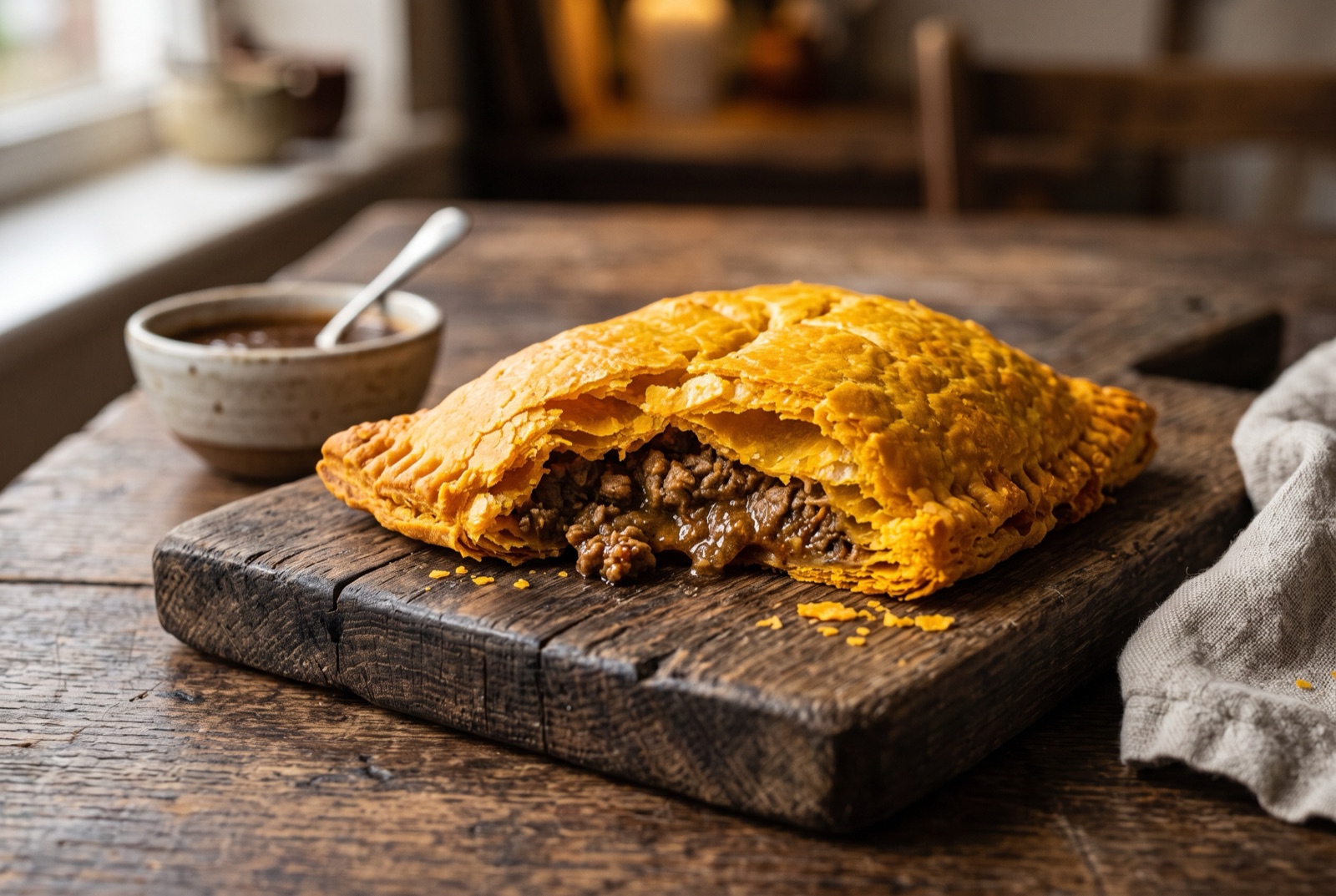
A Jamaican patty is a half-moon of vivid yellow pastry, coloured with turmeric and layered with cold fat, wrapped around a filling of minced beef cooked down with scallion, thyme, Scotch bonnet and breadcrumbs until it is thick, peppery and just moist enough. The pastry is the hard part and the whole point: done well it shatters into flakes when you bite it and holds its shape when you hold it; done badly it goes dense and greasy. The filling is assertively spiced and salty, closer to a curry than to a European meat pie. It is the island's most portable food — sold hot in paper bags from patty shops in Kingston, from every Jamaican bakery in Toronto, London and Brooklyn, and eaten walking, often stuffed into a folded piece of coco bread.

- Gate
- Jamaica
- Prep
- 50 min
- Cook
- 55 min
- Total time
- 3 hr 45 min incl. 2 hr rest
- Serves
- 8
- Status
- Takes skill
- Nutrition / serving · estimated
- Calories 480 kcal
- Protein 19 g
- Carbs 42 g
- Fat 27 g
- Fiber 2 g
- Sugar 2 g
- Sodium 720 mg
Why this recipe works.
- A laminated pastry method with folds and rests, which is what actually produces the flaky layers rather than a crumbly shortcrust.
- Breadcrumbs in the filling so it thickens and stays inside the pastry instead of leaking through the seam.
- Filling cooled completely before assembly, the single most common cause of patties bursting in the oven.
- Turmeric worked into the flour and an egg wash tuned so the colour is golden rather than orange.
Ingredients.
20 itemsFor the pastry
For the filling
Equipment
- Rolling pin
- Large mixing bowl
- Baking sheets and parchment
- 15 cm bowl or plate for cutting rounds
- Pastry brush
Instructions.
Cut the fat into the flour
Whisk the flour, turmeric and salt together, then add the cold butter and shortening. Rub or cut them in only until the fat is in flattened pieces the size of a thumbnail — you must still see distinct flakes of fat.
Tip Stop far earlier than you would for a normal shortcrust. Visible fat is the whole trick.
Bring the dough together
Sprinkle in the ice water a few tablespoons at a time, tossing with a fork, until the mixture just holds when squeezed. Press it into a rough slab without kneading, wrap it and chill 30 minutes.
Cook the filling
Heat the oil and fry the onion, scallions, garlic and Scotch bonnet for 5 minutes until soft. Add the beef and break it up, cooking 8 minutes until it has lost all pink and started to brown in patches.
Season and thicken
Stir in the thyme, allspice, curry powder, black pepper, soy sauce and stock, then simmer 10 minutes. Add the breadcrumbs and cook 3 minutes more until the mixture is thick and holds a clear channel when you drag a spoon through it.
Cool the filling completely
Spread the filling on a tray to cool fast, then refrigerate at least 1 hour until fully cold. Assembling with warm filling is the main reason patties leak.
Laminate the pastry
Roll the chilled dough into a rectangle about 1 cm thick, fold it in thirds like a letter, turn it 90 degrees and repeat. Wrap and chill another 30 minutes, then repeat the fold once more.
Cut and fill
Roll the dough to 3 mm and cut eight 15 cm rounds. Place two heaped tablespoons of cold filling on one half of each round, brush the rim with water, fold over and press the edge firmly with a fork.
Glaze and bake
Brush the tops with the egg wash, cut one small vent slit in each, and bake at 200C for 25 to 30 minutes until deep gold, puffed at the seam and visibly layered where the pastry has split.
Tip If they brown too fast, drop to 185C for the last 10 minutes rather than moving them down a shelf.
Rest before eating
Let the patties sit 10 minutes on the tray — the filling is molten straight from the oven and will burn your mouth. Eat warm, ideally tucked inside a split coco bread.
Tips from our kitchen.
- Keep the butter and shortening in the freezer until the moment you use them, and use ice-cold water. Warm fat smears into the flour and you lose the layers.
- Chill the filling until it is fridge-cold before assembling. Warm filling melts the fat in the pastry and steams the seams open.
- Roll and fold the dough like a letter twice, resting it in the fridge between folds — this is what builds the flaking.
- Seal the edges by pressing firmly with a fork through both layers, and do not overfill. Two heaped tablespoons per patty is the limit.
- Bake on the middle shelf at a high heat, around 200C, so the fat turns to steam quickly and pushes the layers apart.
- Cut one small vent slit in the top of each patty. Without it, steam builds and blows out the seam.
Substitutions.
- Vegetable shortening → All butter, or half butter and half lard
- Traditional patty shops use shortening or suet for a crisper, drier crust. All butter tastes better but is slightly softer and browns faster.
- Ground beef → Minced chicken, curried goat, or seasoned lentils and callaloo
- Chicken needs a little more liquid since it is leaner. Lentil versions are common in Jamaican bakeries and hold together well with the breadcrumbs.
- Turmeric → 1 tsp mild curry powder, or a pinch of annatto
- All three give the yellow. Curry powder also adds flavour to the crust, which some shops prefer.
Variations.
- Chicken patty
- Minced chicken thigh seasoned identically, with a spoonful of stock added so it does not dry out. The most popular alternative to beef.
- Callaloo patty
- Chopped steamed callaloo with onion, thyme and pepper, bound with breadcrumbs. The standard vegetarian option in Jamaican bakeries.
- Patty in coco bread
- Split a soft folded coco bread roll and put the whole patty inside. The classic Kingston lunch and the way most Jamaicans actually eat it.
Storage & reheating.
Baked patties keep 3 days refrigerated. Reheat at 180C for 10 minutes to bring the crust back — a microwave turns the pastry limp and leathery. They freeze extremely well both raw and baked: freeze unbaked patties on a tray, bag them once solid, and bake from frozen at 200C for 35 to 40 minutes. Baked ones reheat from frozen in 20 minutes. The filling alone keeps 3 days refrigerated or 3 months frozen.
Serve with
Coco bread, or on their own with hot pepper sauce and a cold ginger drink.
The story behind Jamaican Patty.
The patty is a hybrid with an obvious British ancestor and a completely Jamaican personality. The Cornish pasty and the English hand pie arrived with colonisation; what changed was everything inside and everything about the crust. The pastry took on turmeric — sometimes annatto or curry powder — for its yellow colour, a debt to the Indian influence on the island. The filling took on the Scotch bonnet, thyme and scallion of Jamaican seasoning and the habit of thickening with breadcrumbs so the meat holds together in the hand rather than running out of the pastry.
What happened next is a story about cities. The patty became the standard cheap lunch of Kingston, sold from bakeries and street vendors to workers and schoolchildren, and it travelled with Jamaican migration in the second half of the twentieth century. In Toronto it became so embedded that a 1985 federal attempt to stop vendors calling them "patties" — on the grounds that the word legally meant a plain beef burger patty — provoked enough public anger that the government backed down, an episode Torontonians still refer to as the Patty Wars. In New York the patty is a bodega and school-lunch fixture; in London it is in every Caribbean bakery.
The Jamaican way to eat one is inside coco bread — a soft, folded, coconut-milk enriched roll that turns the patty into a carbohydrate sandwich of a carbohydrate, entirely unapologetically. Fillings have multiplied over the decades: chicken, curried goat, saltfish, callaloo, shrimp, cheese, vegetable. The beef patty remains the benchmark, and any patty shop is judged first on whether its crust flakes.
Questions, answered.
Why is patty pastry yellow?
The colour comes from turmeric worked into the flour, and sometimes from annatto or curry powder instead. It is largely visual — turmeric contributes only a faint earthy note at this quantity — but it is a defining feature, and a pale patty looks wrong to anyone who grew up eating them. Egg wash on top deepens the gold further.
Why did my patties burst open in the oven?
Almost always because the filling was still warm when you assembled them, or because there was too much of it. Warm filling melts the fat in the pastry before it hits the oven and generates steam that forces the seam apart. Chill the filling completely, use no more than two heaped tablespoons per patty, seal the edge firmly with a fork, and cut a small vent in the top.
What makes patty crust flaky rather than crumbly?
Lamination. The fat must stay in visible cold flakes through the flour, and the dough is rolled and folded like a letter twice with a rest in the fridge between folds. Those folds create alternating layers of dough and fat, and in the oven the water in the fat turns to steam and pushes them apart. Rubbing the fat in fully, as for a shortcrust, gives you a crumbly pie crust instead.
Can I make patties ahead of time?
Yes, and freezing raw is the best method. Assemble them completely, freeze on a tray until solid, then bag them. Bake straight from frozen at 200C for 35 to 40 minutes with no thawing — thawing makes the pastry soggy. This is essentially what commercial patty producers do, and the results at home are just as good.
How spicy should the filling be?
Noticeably peppery. A Jamaican beef patty carries a real, warm heat that builds over the first few bites, usually from half to a whole Scotch bonnet per 500 g of meat plus a generous amount of black pepper. If it tastes mild while it is still hot in the pan, it will taste bland once cooled and sealed in pastry, so season it a shade stronger than seems right.
You might also like.
All recipes →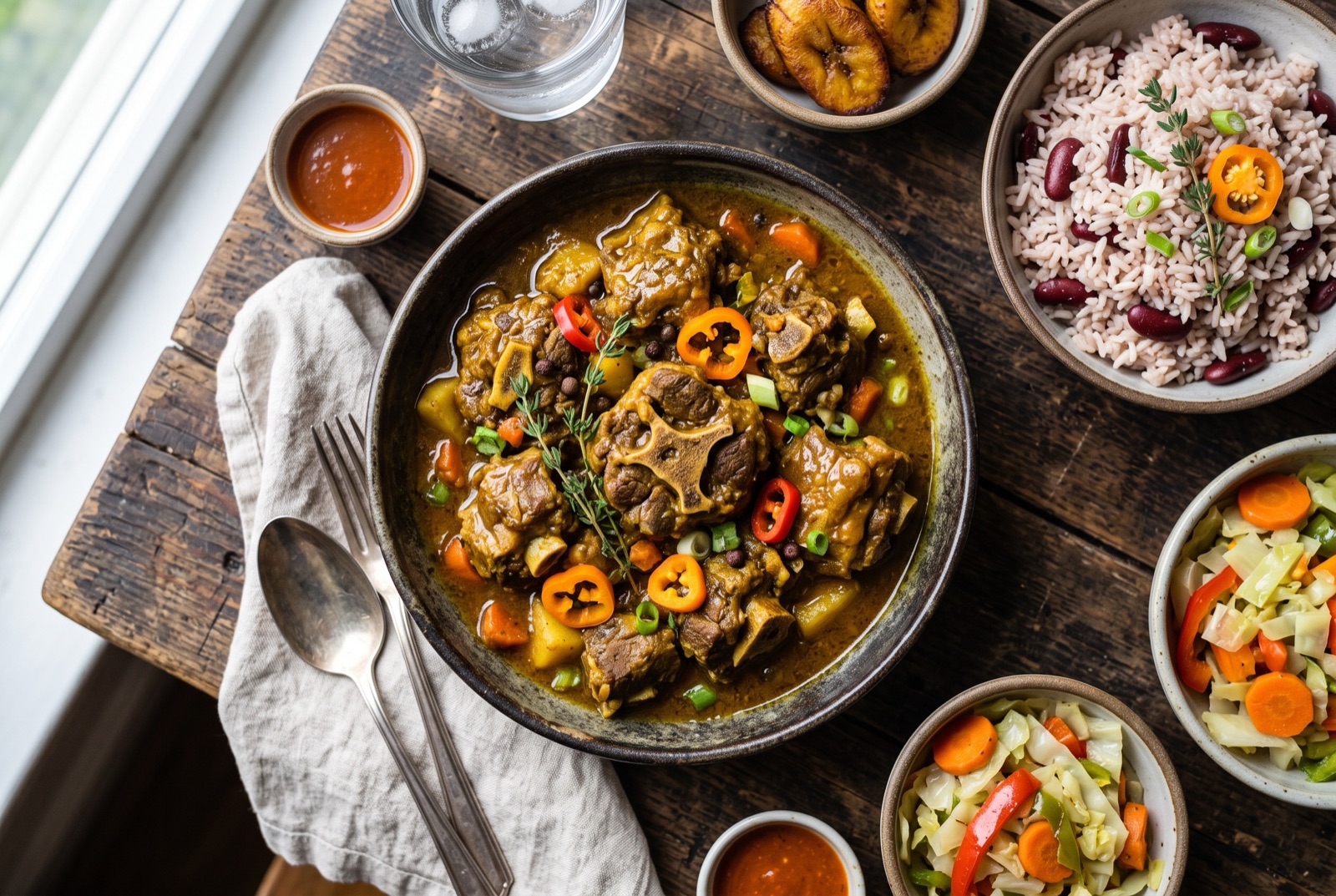
Keep exploring Jamaica.
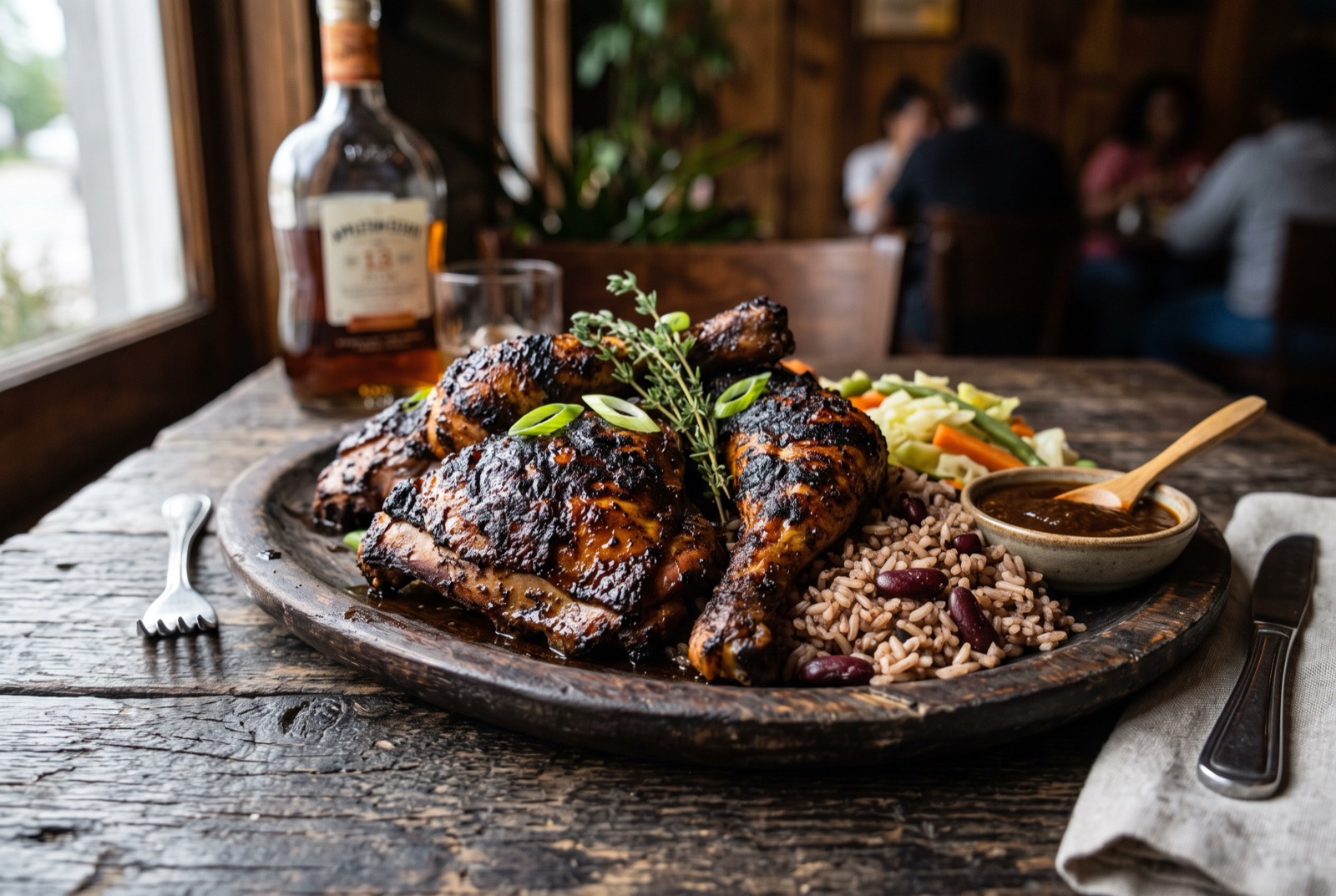
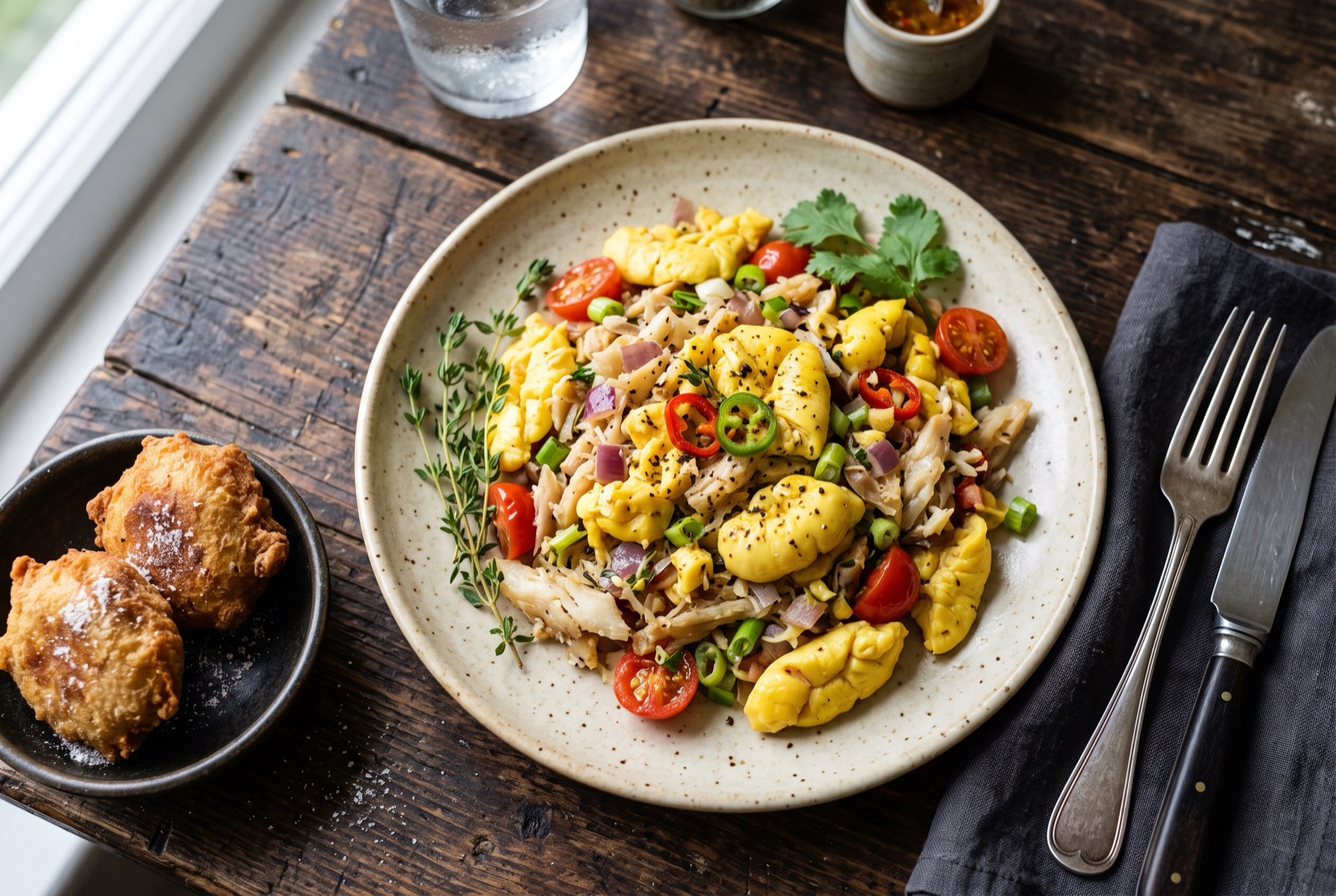
Jamaica has 9 more dishes in the atlas — Ackee and Saltfish and Brown Stew Oxtail, and 7 more.
Recipe by The DishRoute Kitchen · published August 20, 2026 · updated August 20, 2026