Ping Gai.
Lao Charcoal-Grilled Butterflied Chicken
ປີ້ງໄກ່ · Ping kai · say it: ping guy
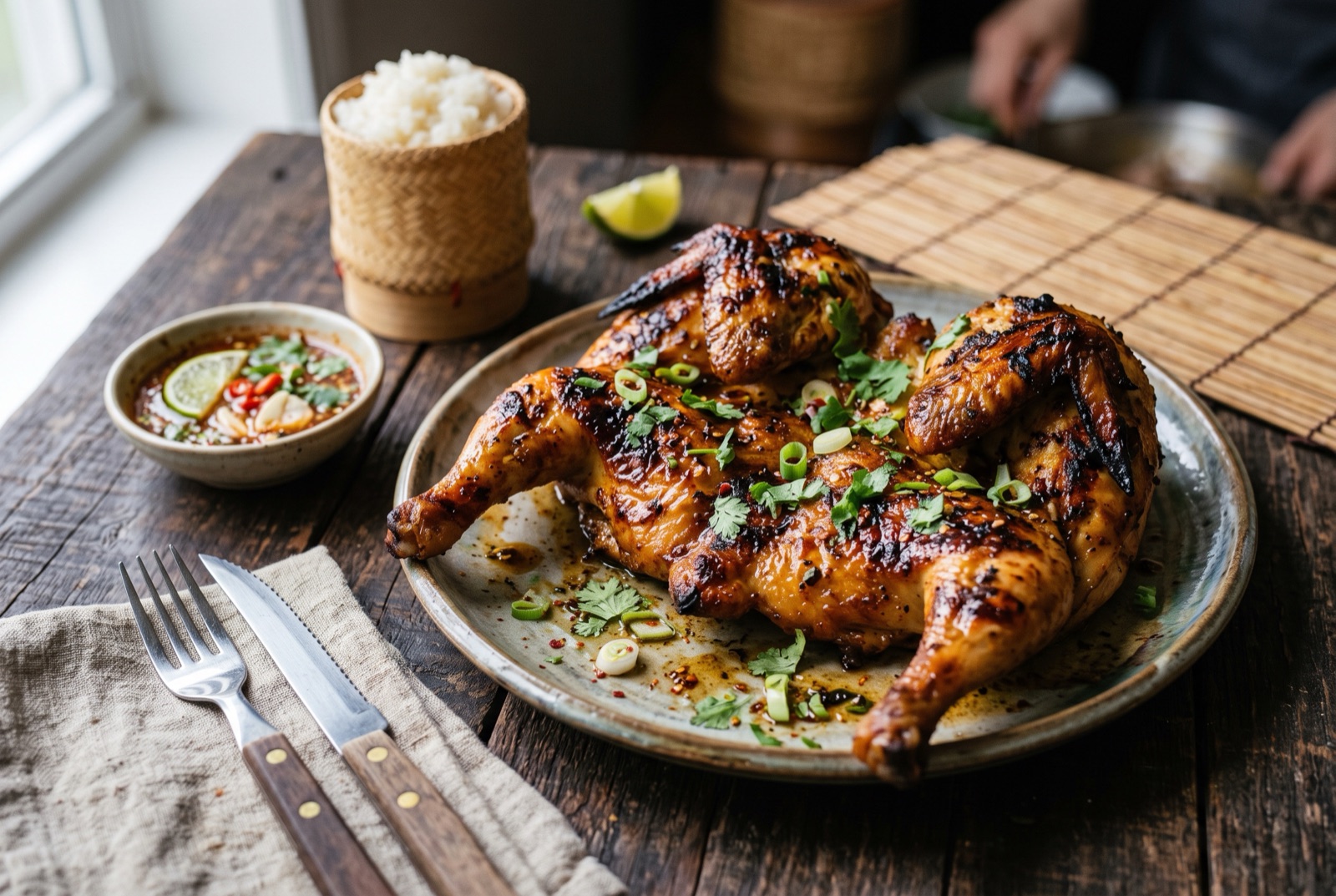
Ping gai is grilled chicken with a marinade that goes all the way to the bone. A whole bird is split flat, scored, and left overnight in a paste of pounded garlic, coriander root, white and black pepper and fish sauce, loosened with coconut milk that keeps the meat moist and helps the surface caramelise. It cooks slowly over low charcoal, skin side away from the heat for most of the time, and gets basted as it goes until the outside is mahogany and slightly sticky. The flavour is savoury and peppery rather than sweet or fiery — the chile arrives separately, in the sour dipping sauce served alongside.

- Gate
- LaosNationwide
- Prep
- 25 min
- Cook
- 50 min
- Total time
- 5 hr 15 min incl. 4 hr rest
- Serves
- 4
- Status
- Easy
- Nutrition / serving · estimated
- Calories 520 kcal
- Protein 45 g
- Carbs 5 g
- Fat 35 g
- Fiber 1 g
- Sodium 1600 mg
Why this recipe works.
- Pounds coriander root, garlic and pepper into a proper paste — the base that makes this taste Lao rather than generically grilled.
- Butterflies and scores the bird so the marinade reaches the bone and the whole thing cooks evenly.
- Uses indirect low heat for most of the cook, which prevents the coconut milk in the marinade from scorching.
- Includes the jeow som dipping sauce, without which the chicken is only half the dish.
Ingredients.
15 itemsFor the chicken
For the marinade
For the jeow som
Equipment
- Mortar and pestle
- Charcoal grill or oven
- Poultry shears or a heavy knife
- Meat thermometer
- Basting brush
Instructions.
Butterfly and score
Cut down either side of the backbone with shears and remove it, then press the bird flat with the heel of your hand until the breastbone cracks. Slash the thighs and drumsticks to the bone in two or three places on each side.
Tip Keep the backbone for stock — it makes a better broth than the carcass will after grilling.
Pound the marinade
Pound the garlic, coriander roots, black peppercorns, white pepper and salt in a mortar until you have a coarse green-grey paste, about 4 minutes. Stir in the fish sauce, oyster sauce and coconut milk.
Marinate overnight
Rub the marinade all over the chicken, pushing it deep into the scores and under the skin of the breast and thighs. Cover and refrigerate for at least 4 hours, ideally 12, turning once if you remember.
Set up a two-zone fire
Bank the coals to one side of the grill so you have a hot zone and a cool zone. You want a moderate fire — you should be able to hold your hand 15 cm above the cool side for six seconds.
Grill slowly, skin up
Lay the bird skin side up on the cool side, cover if your grill has a lid, and cook for 35–40 minutes, basting with the leftover marinade for the first 20 minutes only and turning every ten.
Tip Stop basting halfway so the raw marinade has time to cook through.
Finish over the coals
Move the chicken skin side down over the hot zone for the final 4–6 minutes, watching closely, until the skin blisters and turns deep mahogany. Check that the thickest part of the thigh reads 74°C.
Make the jeow som
While the chicken rests, stir the lime juice, fish sauce, chopped chiles, garlic, coriander and toasted rice powder together. Taste: it should be aggressively sour and salty, since it is a dip and not a dressing.
Rest and chop
Rest the bird for 10 minutes, then chop it through the bone into rough pieces with a heavy knife. Serve with the jeow som, sticky rice and green papaya salad, and eat with your hands.
Tips from our kitchen.
- Score the thighs and drumsticks through to the bone in two or three places, so the thickest meat seasons properly and finishes at the same time as the breast.
- Marinate overnight if you can. Four hours works, but the pepper and coriander root need time to travel past the surface.
- Grill skin side up over indirect heat for most of the cook, then flip it over the coals for the last few minutes to blister the skin.
- Baste with the leftover marinade only in the first half of cooking, so the raw coconut milk has time to cook through.
- Pull the bird at 74°C in the thickest part of the thigh, then rest it 10 minutes — carving straight off the grill loses the juices.
- If the skin is darkening faster than the meat cooks, move the bird further from the coals rather than turning the heat down; the sugars in the coconut milk burn quickly.
Substitutions.
- Coriander root → The thick lower stems of a large bunch of coriander, doubled in quantity
- Stems carry a good share of the same flavour. Leaves alone are too delicate and burn off within minutes on the grill.
- Charcoal grill → Oven at 190°C for 45–50 minutes, then 5 minutes under a hot grill
- The chicken will be excellent but not smoky. A handful of soaked wood chips in a foil packet under the oven grill helps a little, though not much.
- Whole butterflied chicken → Bone-in thighs and drumsticks
- Easier to handle and more forgiving on a home grill, since dark meat tolerates a wider window of doneness. Reduce cooking time to about 30 minutes.
Variations.
- Ping sin
- The same marinade on strips of beef or buffalo, threaded onto skewers and grilled fast over high heat rather than slow over low.
- Ping pa
- Whole river fish stuffed with lemongrass and spring onion, salt-crusted and grilled upright on a skewer — the riverbank version of the same habit.
- Ping gai with honey glaze
- A modern stall variation brushing a thin honey and fish sauce glaze over the bird in the last five minutes for a darker lacquer.
Storage & reheating.
Grilled chicken keeps 3 days refrigerated and is excellent cold, pulled off the bone into a salad. Reheat in a 180°C oven for 10–12 minutes rather than a microwave, which turns the skin rubbery. The raw marinated bird can sit in the fridge up to 24 hours, but no longer, because the fish sauce begins to cure the surface and the texture turns firm. Cooked meat stripped from the bones freezes for 2 months; the whole bird does not freeze well once grilled.
Serve with
Sticky rice and tam mak hoong — the standard Lao roadside lunch Jeow som, the thin sour chile dipping sauce made below
The story behind Ping Gai.
Ping means grilled, and grilling is the default Lao cooking method for anything with a bone in it. Ping gai is sold from roadside stalls the length of the country: birds split and clamped between split-bamboo tongs, lined up over a long low charcoal trough, turned every few minutes for the best part of an hour. The bamboo clamp is genuinely useful rather than picturesque — it holds the flattened bird rigid so it can be flipped in one motion, and it keeps the skin from sagging into the fire.
Coriander root is the ingredient most home cooks skip and should not. In Southeast Asian markets coriander is sold with the root attached, and the root has a deeper, earthier, more concentrated version of the leaf flavour that survives an hour over fire in a way the leaves never do. Together with white pepper and garlic it forms the base paste that shows up in a great deal of Lao and Thai grilling. If your coriander comes rootless, the thick lower stems are the next best thing, and worth using generously.
A stall in Vientiane sells ping gai with a basket of sticky rice, a bag of tam mak hoong and a twist of jeow som — a thin, sour, garlicky chile sauce — and that combination is the standard Lao lunch, eaten with fingers, usually outdoors. This recipe assumes most people are working with a domestic grill or an oven rather than a charcoal trough, and it is worth being clear: an oven produces very good chicken, but not ping gai. What is missing is the smoke, and no amount of smoked paprika replaces it. If you have any way to finish the bird over live coals, even for the last ten minutes, take it.
Questions, answered.
What is coriander root and where do I find it?
It is the root of the coriander plant, sold attached to the bunch at Southeast Asian grocers. It tastes like a deeper, earthier concentration of coriander leaf and holds up to long cooking, which the leaves do not. If you cannot find it, use double the quantity of thick lower stems from a large bunch.
Can I make ping gai without a charcoal grill?
Yes, and the result is good chicken, though not identical. Roast at 190°C for 45–50 minutes and finish under a hot grill for a few minutes to colour the skin. What you lose is the charcoal smoke, which is a real part of the dish and cannot be faked convincingly with smoked spices.
How do I stop the skin burning before the chicken is cooked?
Cook it over indirect heat with the coals banked to one side, skin side up, for most of the time, and only move it directly over the fire for the final few minutes. The coconut milk and fish sauce in the marinade contain sugars and proteins that colour quickly, so distance from the fire matters more than lowering the heat.
How long should I marinate the chicken?
Overnight is ideal, around 12 hours. Four hours gives a noticeably shallower flavour but still works for a weekday. Do not go past 24 hours: the salt in the fish sauce starts curing the surface of the meat and the texture becomes firm and slightly hammy.
What is jeow som and do I need it?
Jeow som is a thin Lao dipping sauce of lime juice, fish sauce, garlic, chile and coriander, sometimes with a little toasted rice powder. It is sour and sharp, and it is what cuts the richness of the grilled skin. The chicken is good without it, but at a Lao table it would never arrive alone.
You might also like.
All recipes →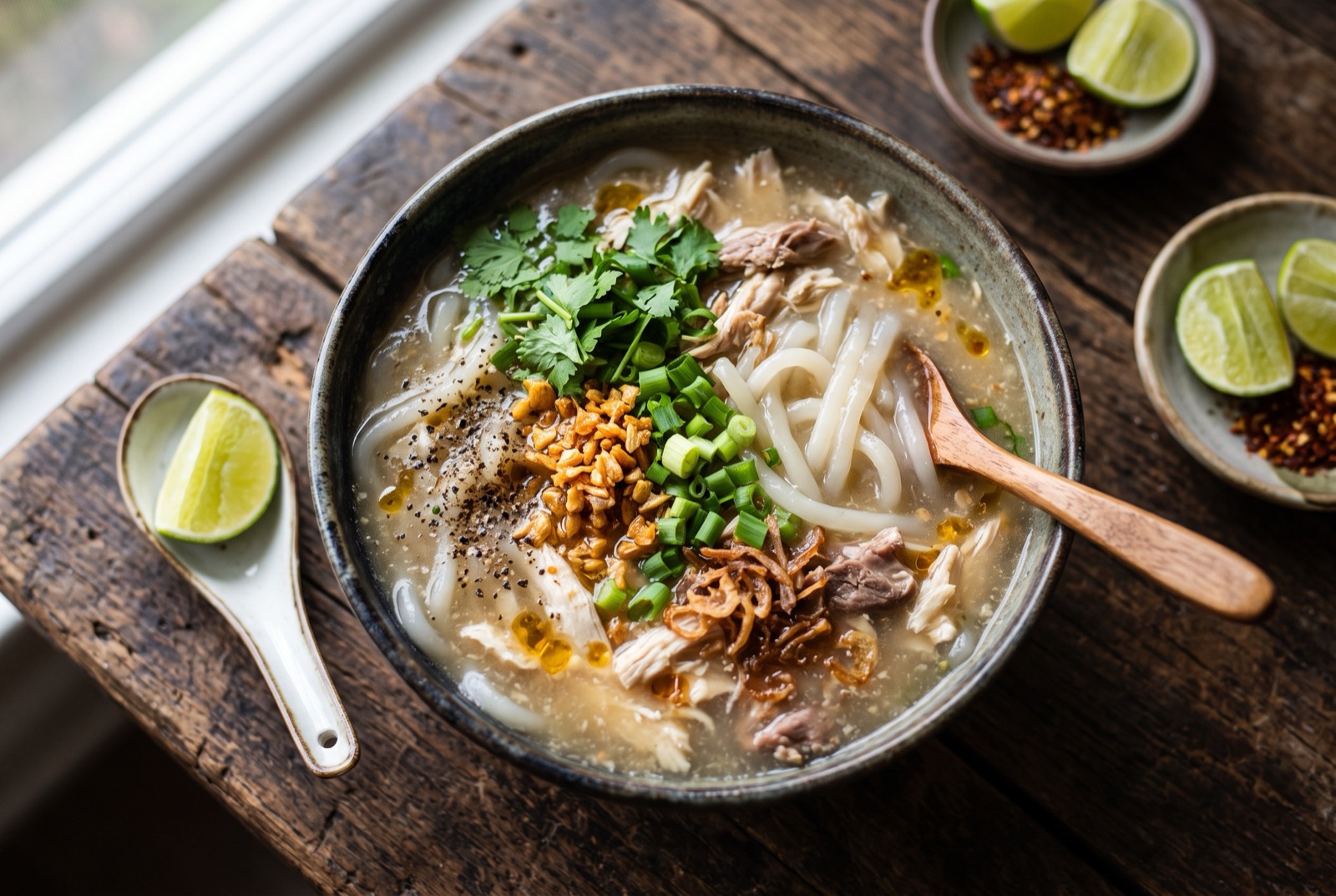
Keep exploring Laos.
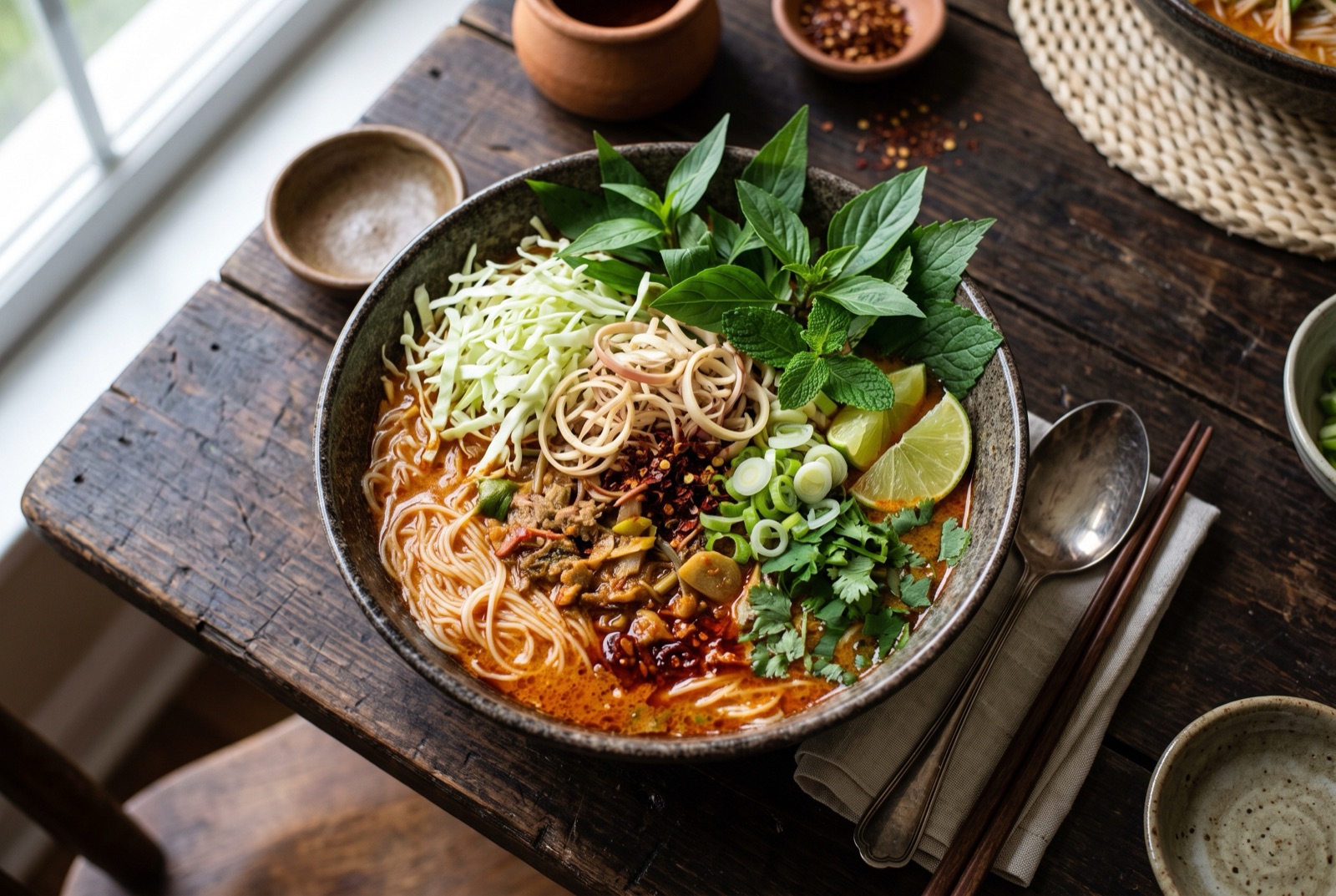
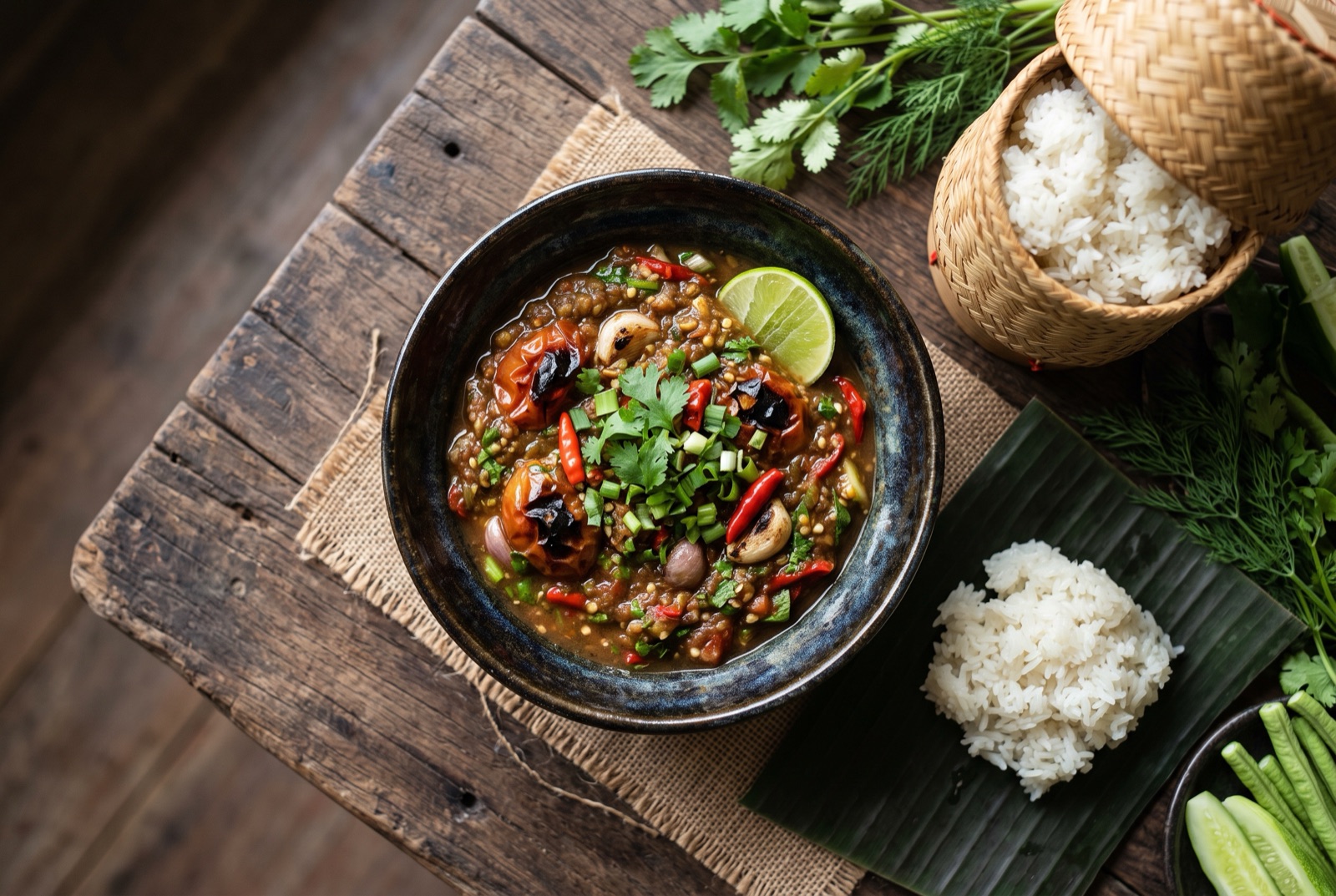
Laos has 9 more dishes in the atlas — Jeow Mak Len and Khao Piak Sen, and 7 more.
All Laos recipes Chicken recipes Garlic recipes Cilantro recipes street foodmaindairy freegluten freeRecipe by The DishRoute Kitchen · published August 20, 2026 · updated August 20, 2026