Bramborák.
Czech Garlic and Marjoram Potato Fritter
Bramborák · say it: BRAM-bo-rahk
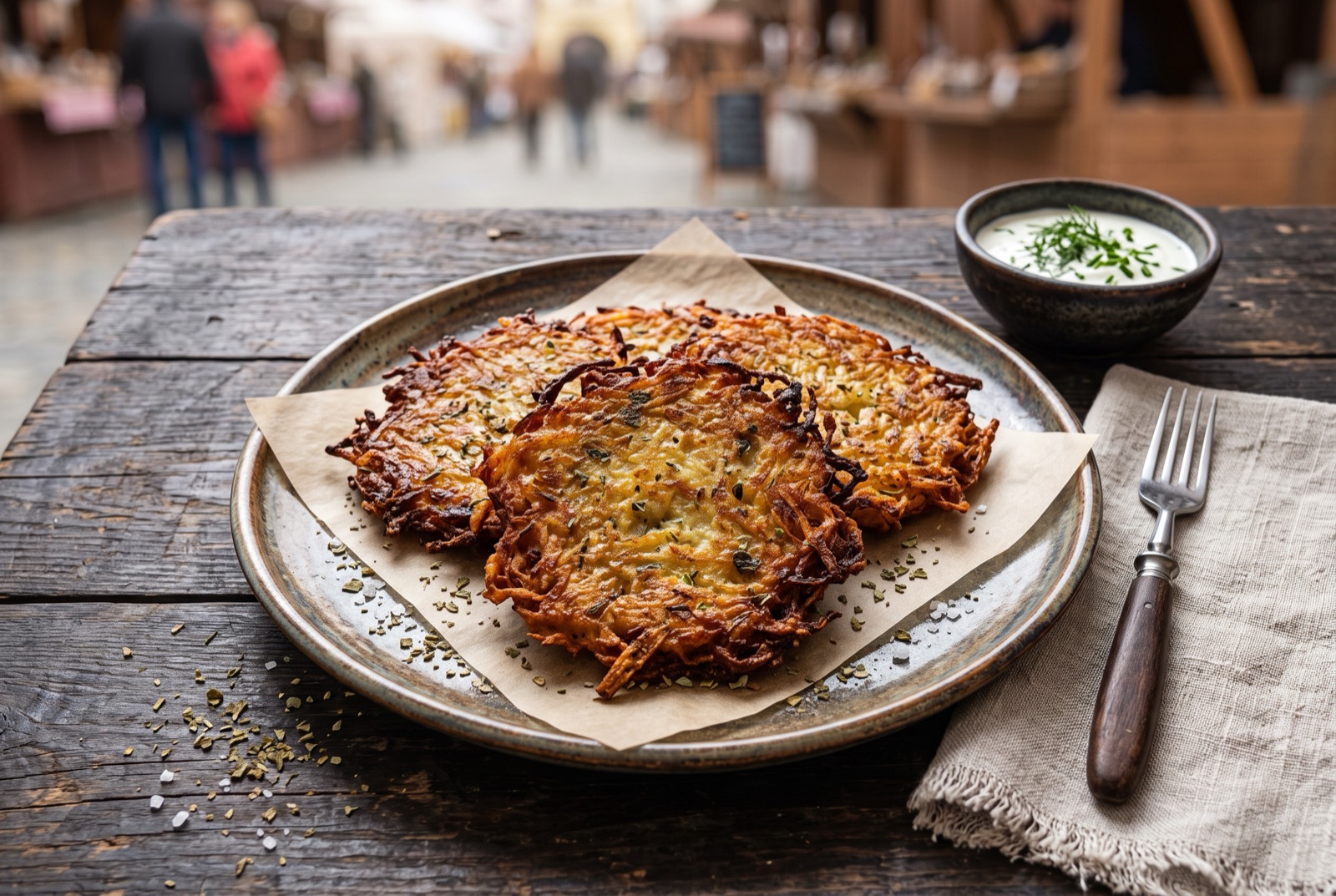
Bramborák is a thin fritter of raw grated potato held together with a little flour and egg and seasoned hard with garlic, marjoram and caraway. Fried in shallow fat until the edges go dark and lacy and the centre stays soft, it tastes savoury and unmistakably garlicky, with the sweet starchiness of potato underneath and a marjoram aroma that carries down the street. It takes twenty minutes, uses ingredients that are already in the house, and needs nothing served with it. In Czechia it is market food, fair food and Friday-night-at-home food in equal measure, and the difference between a good one and a bad one comes down entirely to how thin you spread it and how hot the fat is.

- Gate
- CzechiaBohemia
- Prep
- 15 min
- Cook
- 20 min
- Total time
- 35 min
- Serves
- 4
- Status
- Easy
- Nutrition / serving · estimated
- Calories 340 kcal
- Protein 7 g
- Carbs 42 g
- Fat 16 g
- Fiber 4 g
- Sodium 780 mg
Why this recipe works.
- Squeezing the grated potato dry is the difference between a crisp fritter and a pale, soggy one — this recipe treats that as a real step, not an afterthought.
- Garlic and marjoram are used in the quantity Czech cooks actually use, which is far more than most recipes admit.
- A batter loose enough to spread thin, which is how the lacy dark edges form.
- Works with a box grater and a frying pan — no food processor, no special equipment, no resting time.
Ingredients.
10 itemsFor the batter
For frying
Equipment
- Box grater
- Clean tea towel
- Wide heavy frying pan
- Fish slice or spatula
Instructions.
Grate and drain the potato
Grate the peeled potatoes on the fine or medium side of a box grater into a bowl. Tip the shreds into a clean tea towel and wring them out hard over the bowl until no more liquid comes out, then let the drained liquid stand for two minutes.
Reclaim the starch
Pour off the watery liquid from the bowl, leaving the chalky white starch stuck to the bottom, and scrape that starch back in with the squeezed potato. It is free binder and it is the reason the fritters hold together with so little flour.
Mix the batter
Add the garlic paste, marjoram crushed between your palms, caraway, egg, flour, salt and pepper and mix thoroughly. The batter should drop thickly from the spoon and spread when pressed; if it is stiff enough to hold a peak, loosen it with a spoonful of milk.
Tip Mix it now and fry it now. Standing turns the batter grey and watery within ten minutes.
Heat the fat properly
Heat about 5 mm of lard or oil in a wide heavy pan over medium-high heat until a shred of potato dropped in sizzles hard on contact. Lukewarm fat is absorbed rather than repelled, and you will get greasy fritters.
Spread them thin
Drop two or three spoonfuls of batter into the pan, well apart, and immediately flatten each with the back of the spoon into a round about 12 cm across and no more than 5 mm thick. Thinner is better; the fritter should look almost translucent at the rim.
Fry until lace-edged
Fry for 3–4 minutes on the first side, without moving them, until the edges are dark brown and lacy and the surface has dulled from wet to matte. Flip once and give the second side 2–3 minutes, pressing down gently with the spatula.
Drain and salt at once
Lift the fritters onto a rack rather than kitchen paper so the undersides stay crisp, and scatter a little salt over them while the surface is still glossy. Top up the fat between batches and let it come back to temperature before the next round.
Eat immediately
Serve them the moment they come off the rack, ideally standing at the stove while the next batch fries. They should crackle at the edge and give softly in the middle, and they lose that contrast within about ten minutes.
Tips from our kitchen.
- Grate the potato on the fine or medium side of a box grater, not the coarse one. Long shreds fry into a nest; a fine grate gives you the dense, crisp fritter Czechs mean by bramborák.
- Squeeze the grated potato hard in a clean tea towel and discard the liquid — but let the starch settle at the bottom of the bowl first and scrape it back in, because that starch is free binding.
- Mix and fry immediately. Raw grated potato greys within minutes, and the batter goes watery if it sits.
- Spread each fritter thin with the back of a spoon, no more than 5 mm. Thick bramboráky steam in the middle and never crisp properly.
- Fry in fat that shimmers and sizzles instantly around the edges. Lukewarm fat means the potato absorbs oil before it browns.
- Salt them the moment they leave the pan, while the surface is still glossy enough for the salt to stick.
Substitutions.
- Lard for frying → Sunflower oil, or oil with a spoon of butter added near the end
- Lard is traditional and gives the best browning, but any fat with a high smoke point works. Butter alone burns before the fritter is done.
- Plain flour → Fine semolina, or a gluten-free flour blend
- Semolina gives a slightly sandier, crunchier edge, which some Czech cooks prefer.
- Dried marjoram → Dried oregano, using slightly less
- Oregano is sharper and more assertive. It works, but marjoram is the flavour that makes this taste Czech rather than Mediterranean.
Variations.
- Bramborák with smoked meat
- A handful of finely cubed smoked pork or bacon folded into the batter, which crisps in the fat and turns the fritter into a proper meal.
- Šumavský bramborák
- A large, thicker fritter from the Šumava mountains, served as a plate under stewed meat or rolled around a filling.
- Sauerkraut bramborák
- Chopped, well-drained sauerkraut mixed through the batter for a sharper, more sour fritter — a good use of leftover cabbage.
Storage & reheating.
Best within minutes of frying and genuinely poor once cold. If you must keep them, spread them in a single layer on a rack in a 120°C oven for up to 30 minutes, which holds them crisp while you fry the rest. Refrigerated leftovers can be revived in a dry frying pan over medium heat for about 2 minutes a side; do not use a microwave, which turns them to steaming cardboard. The raw batter does not keep at all — it greys and weeps within half an hour.
Serve with
Nothing, ideally — eaten standing at the stove. A cold pilsner and a bowl of sauerkraut is as far as a Czech would go.
The story behind Bramborák.
The potato reached Bohemia in the eighteenth century and was treated with the usual suspicion before famine and Habsburg agricultural policy settled the argument. Once accepted it became central, and Czech cooking now uses potato in more forms than almost any other European kitchen: boiled, in dumplings, in soups, in salads, and grated raw into this fritter. The name simply comes from brambory, potatoes — which themselves are named after Brandenburg, the region the tubers were thought to have arrived from.
Bramborák belongs to a broad Central European family of grated-potato pancakes — Polish placki, German Reibekuchen, Jewish latkes — but the Czech version has a fingerprint of its own: garlic and marjoram, both in quantity, plus caraway. Marjoram in particular is the giveaway. It is the herb Czech cooks reach for with potato in almost any context, and its slightly resinous, oregano-adjacent aroma is what makes a bramborák smell Czech rather than generically fried.
It lives outdoors as much as indoors. At Christmas markets, village fairs and roadside stalls, bramboráky are fried on flat-top griddles the size of a table and handed over on paper, and in the Šumava and Beskydy regions you will find them served as a plate: a large fritter used as a base under stewed meat, or rolled around smoked pork. Households make them thicker or thinner, with more or less flour, sometimes with a handful of cubed smoked meat folded through. What nobody disagrees about is that they must be eaten straight from the pan. A bramborák that has waited ten minutes on a plate is a different and sadder object.
Questions, answered.
Why is my bramborák soggy instead of crisp?
Three usual causes: the grated potato was not squeezed dry, the fritter was spread too thick, or the fat was not hot enough. Wring the potato out in a tea towel until no more liquid comes, spread each fritter no thicker than 5 mm, and wait until the fat sizzles immediately when a shred of potato touches it before you start.
Which potatoes work best?
Floury, high-starch potatoes such as Maris Piper, russet or King Edward. They release more starch, which binds the fritter, and they crisp better than waxy varieties. Waxy potatoes hold too much water and give a denser, chewier result that needs more flour to hold together.
Can I make the batter in advance?
Not really. Raw grated potato oxidises within minutes and turns grey to almost black, and the mixture keeps releasing water so the batter gets progressively looser. If you need a head start, grate the potato into a bowl of cold water, then drain and squeeze it dry immediately before mixing — the colour holds but the texture is slightly worse.
How is this different from a Polish potato pancake or a latke?
The technique is nearly identical across Central Europe; the seasoning is what differs. A Czech bramborák carries a large amount of crushed garlic, dried marjoram and usually caraway, which none of its neighbours use in the same combination. Latkes are typically plainer and served with apple sauce or sour cream, while a bramborák is eaten as it is.
Can I bake them instead of frying?
You can bake them at 220°C on an oiled tray for around 20 minutes, turning once, and they will be edible and lighter. They will not have the lacy, dark, crunchy edge that comes from a thin layer of potato meeting hot fat, which is most of the appeal. Shallow frying uses less oil than people expect — about 5 mm in the pan is enough.
You might also like.
All recipes →
Keep exploring Czechia.
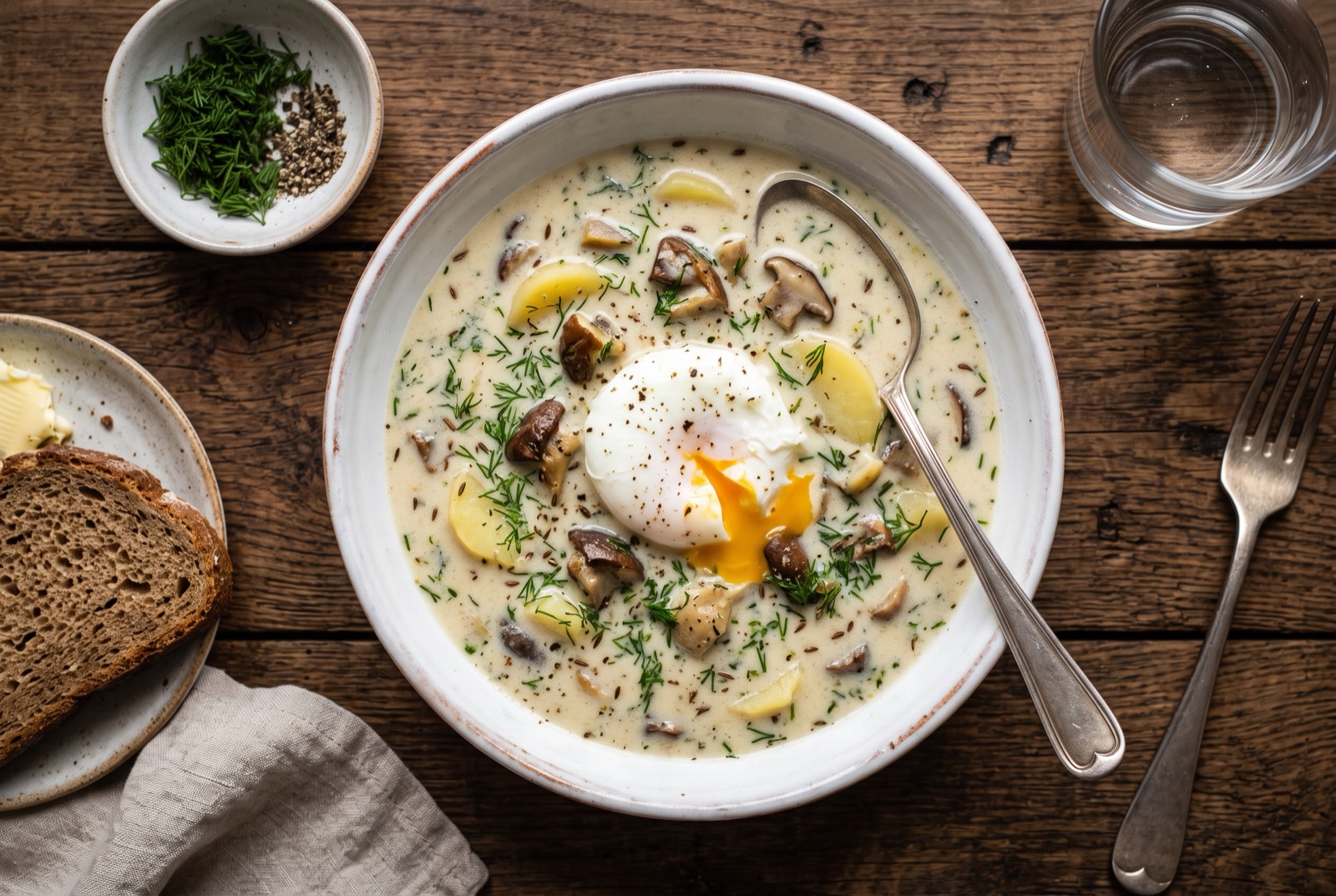
Czechia has 9 more dishes in the atlas — Hovězí Guláš and Kulajda, and 7 more.
Recipe by The DishRoute Kitchen · published August 20, 2026 · updated August 20, 2026