Dorayaki.
Honey Pancakes with Red Bean Filling
どら焼き · Dorayaki · say it: doh-rah-YAH-kee
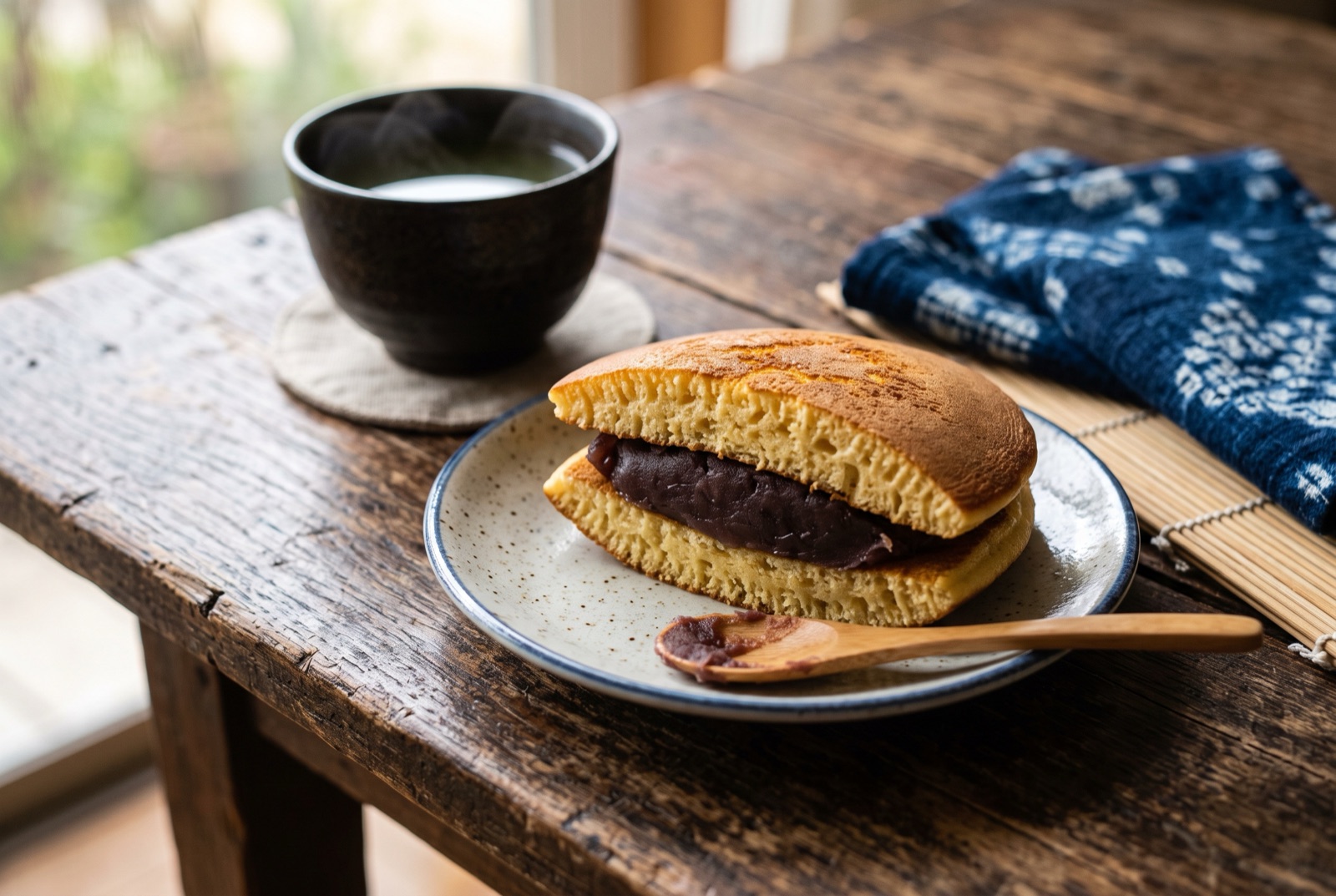
Dorayaki is a pair of small, deep-brown pancakes clamped around a thick layer of sweet azuki bean paste. The pancakes are not American breakfast pancakes: honey and mirin in the batter make them springy and faintly chewy rather than fluffy, closer to castella sponge cake, and they stay soft for days instead of drying out by lunchtime. The flavor is gentle and roasty — caramelized honey against the earthy, almost chestnut sweetness of the beans — and there is no butter or milk anywhere in it. You need one bowl, one flat pan and about half an hour, and the only real skill is heat control.

- Gate
- JapanTokyo
- Prep
- 20 min
- Cook
- 25 min
- Total time
- 1 hr 15 min incl. 30 min rest
- Serves
- 4
- Status
- Easy
- Nutrition / serving · estimated
- Calories 430 kcal
- Protein 10 g
- Carbs 88 g
- Fat 4 g
- Fiber 4 g
- Sugar 52 g
Why this recipe works.
- Honey and mirin in the batter, which is what gives the pancakes their bounce and keeps them soft for days rather than hours.
- A rest for the batter that visibly changes the result — smoother tops, fewer craters, and even color across the disc.
- Tells you exactly what a ready-to-flip surface looks like, so you stop guessing and stop burning the first three.
- Works with tinned anko straight off the shelf, with a from-scratch bean paste method for anyone who wants to go further.
Ingredients.
9 itemsFor the pancakes
For the filling
Equipment
- Flat non-stick frying pan or an electric griddle
- Small ladle
- Whisk
- Kitchen paper for wiping the pan
Instructions.
Whisk the wet base
Whisk 3 of eggs with the caster sugar in a large bowl for about a minute, until the mixture lightens slightly and no gritty sugar is left sitting on the bottom. Whisk in the honey and mirin until the whole thing is smooth and glossy.
Fold in the flour
Sift the flour over the bowl and whisk just until no dry streaks remain — stop the moment it comes together, because over-mixing here is what makes the pancakes tough. Dissolve the bicarbonate of soda in 2 tablespoons of the water and stir that in with the rest of the water.
Tip The batter should fall from the whisk in a smooth ribbon that sinks back into the surface after about three seconds.
Rest the batter
Cover the bowl and leave it at room temperature for 30 minutes. It will thicken as the flour hydrates; before cooking, check the consistency and whisk in a tablespoon or two of extra water if it has stopped pouring in a ribbon.
Cook the first side
Heat a flat non-stick pan over medium-low. Wipe it with oil, then wipe nearly all of it off with kitchen paper. Ladle in rounds of about 3 tablespoons, holding the ladle high so each one spreads into a circle roughly 9 cm across, and cook until the wet shine is gone, the surface is covered in bubbles that have opened and the underside is an even bronze — about 2 minutes.
Tip Sacrifice the first pancake to calibrate the heat. Every pan is different, and the first one is almost always wrong.
Flip and finish
Turn each pancake and cook the second side for 40 to 60 seconds, until it is set and pale gold — this face stays on the inside, so it does not need color. Stack the cooked pancakes on a plate and cover them with a damp cloth or plastic film while you cook the rest.
Fill and press
Match the pancakes into pairs of the same size. Mound about 40 g of anko in the middle of the paler face of one, leaving a 1 cm border bare, then top with its partner brown-side-out and press gently around the rim until the paste reaches the edge without escaping.
Wrap and rest
Wrap each filled dorayaki tightly in plastic film while still slightly warm and leave for at least 30 minutes before eating. The pancakes soften and the filling settles, which is the difference between a good dorayaki and a great one.
Tips from our kitchen.
- Wipe the pan with oil and then wipe almost all of it off with kitchen paper. A visibly greasy pan gives blotchy, ring-marked pancakes instead of an even bronze face.
- Cook on medium-low the whole time. Too hot and the outside is dark before the inside sets, which is what makes dorayaki taste dry.
- Pour from a small ladle held about 10 cm above the pan and let the batter spread itself into a circle. Spreading it with the ladle leaves streaks and uneven edges.
- Flip when the surface has gone from wet to matte and the bubbles that formed have opened and stayed open — usually around two minutes. The second side needs less than a minute.
- Sort the finished pancakes into matching pairs by size before you fill them, and always put the prettier face outward.
- Cover the stack with a clean damp cloth or wrap it in film while still warm, so the pancakes steam themselves soft instead of drying at the edges.
Substitutions.
- Anko (sweet azuki bean paste) → Tinned anko from an Asian grocer, or a thick chestnut, sweet potato or black sesame paste
- Tinned anko is genuinely good and is what many Japanese households use. If you are making your own, expect roughly 200 g of dried azuki beans plus 180 g of sugar to give you enough for eight dorayaki.
- Mirin → 1 tbsp water plus 1 tsp sugar
- Mirin adds sweetness, gloss and a little browning. The swap gets you close, though the pancakes brown slightly less evenly.
- Honey → Golden syrup or light corn syrup, measured the same
- Any invert syrup does the real work here, which is holding moisture so the pancakes stay springy. Plain granulated sugar alone will not do it.
Variations.
- Koshian dorayaki
- Filled with sieved, skinless bean paste instead of chunky tsubuan. Silkier and more uniform — the version most traditional wagashi shops in Tokyo lean toward.
- Cream dorayaki
- A modern bakery standard: a layer of anko with whipped cream piped over it, sometimes with a slice of strawberry. Must be refrigerated and eaten the same day.
- Matcha dorayaki
- Whisk a teaspoon of matcha into the dry flour. The pancakes turn a muted green and the tea bitterness cuts the sweetness of the bean paste noticeably.
Storage & reheating.
Dorayaki keep better than almost any other griddled thing, thanks to the honey. Wrap each one individually in plastic film as soon as it is filled and keep at room temperature for up to 3 days; the pancake actually improves on day two as moisture from the filling migrates outward. Do not refrigerate unless the filling contains cream — the cold dries the crumb and turns it tough. They freeze well for up to a month, wrapped individually: thaw at room temperature for about an hour, or microwave frozen for 20 seconds. Unfilled pancakes can also be stacked, wrapped and frozen, then filled fresh later.
Serve with
Plain green tea, ideally sencha or hojicha — the bitterness is the traditional counterweight to a very sweet filling.
The story behind Dorayaki.
The name comes from dora, the Japanese word for a gong, which is exactly what the finished snack looks like: two flat bronze discs pressed together. There is a well-worn folk story linking the shape to a warrior who left his gong behind at a farmhouse and inspired someone to cook batter on it, but it circulates as a legend rather than as documented history, and the plainer explanation — that a round, gong-colored cake got a gong's name — is the one worth trusting.
The older form of dorayaki was a single pancake folded over the filling, closer to a crepe than a sandwich. The two-disc version most people picture today is generally credited to the Ueno confectioner Usagiya in Tokyo in the early twentieth century, and Japanese wagashi shops have made it that way ever since. It sits in an interesting middle ground in Japanese sweets: made with anko like a formal wagashi, but cooked on a griddle and sold cheaply as an everyday snack rather than something reserved for a tea ceremony.
What made dorayaki internationally recognizable was a cartoon cat. Doraemon, the robotic cat from the future who has been a fixture of Japanese childhood since 1969, is obsessed with dorayaki, and generations of children across Asia learned the word from him before they ever tasted one. The snack also has a quieter cultural life at home, where the filling is the point of debate: tsubuan, the chunky paste that keeps the bean skins and some whole beans, against koshian, which is sieved to a completely smooth purée. Bakeries pick a side. Families do too.
Questions, answered.
Why are my pancakes pale and blotchy instead of evenly brown?
Too much oil in the pan is the usual cause. Dorayaki should be cooked on a nearly dry surface — oil it, then wipe it off with kitchen paper so only a film remains. The second cause is heat that is too low, which dries the batter before the sugars can brown; medium-low with a properly preheated pan gives that even bronze face.
Can I use tinned red bean paste?
Yes, and most home cooks in Japan do. Look for tsubuan for a chunky texture or koshian for smooth, both sold in tins or vacuum packs at Asian grocers. If the paste seems loose, cook it in a dry pan for a few minutes to stiffen it, otherwise it squeezes out of the sides when you press the pancakes together.
What is the difference between dorayaki and imagawayaki?
Dorayaki is two separate flat pancakes sandwiched together and cooked on an open griddle. Imagawayaki, also called obanyaki, is baked in a deep round mold so the batter forms a thick-walled cylinder around the filling and the whole thing is sealed while cooking. Dorayaki is softer and springier; imagawayaki has crisper edges.
Does the batter really need to rest?
Yes, and it is worth the 20 to 30 minutes. Resting lets the flour hydrate fully and lets the gluten formed during mixing relax, which gives a smoother surface, fewer blowout craters and a more tender crumb. A rested batter also thickens slightly, so check it before cooking and loosen with a splash of water if it no longer falls from the ladle in a ribbon.
How much filling should go in each one?
About 40 grams, mounded in the center of one pancake and left with a clear 1 cm border all the way around. When you press the top pancake on, the paste spreads to the edge without escaping. Overfilling is the most common home mistake and it makes the sandwich impossible to hold.
You might also like.
All recipes →
Keep exploring Japan.
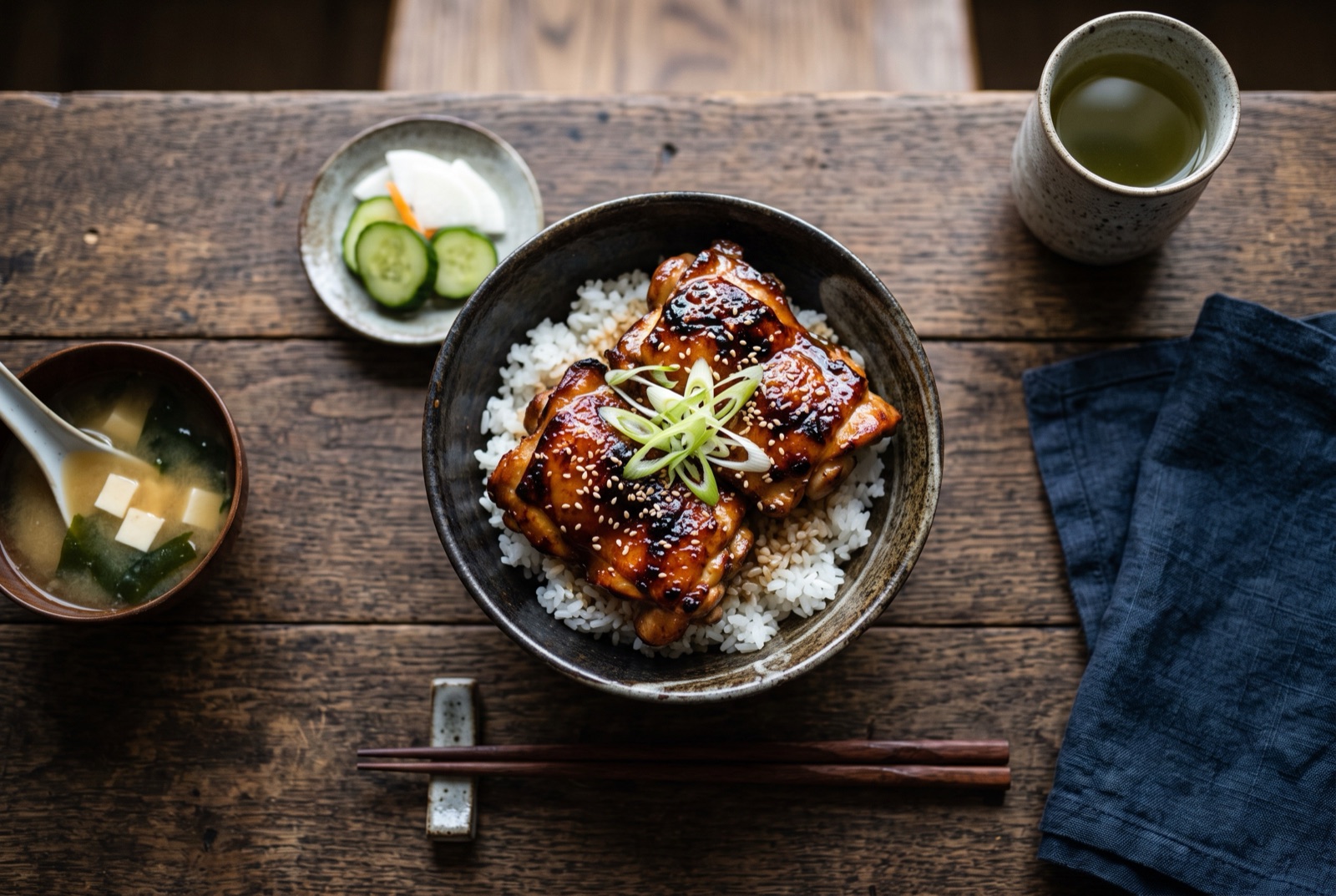
Japan has 9 more dishes in the atlas — Agedashi Dofu and Chicken Teriyaki, and 7 more.
Recipe by The DishRoute Kitchen · published August 19, 2026 · updated August 19, 2026