Tamagoyaki.
Japanese Rolled Layered Omelette
卵焼き · Tamagoyaki · say it: tah-mah-go-YAH-kee
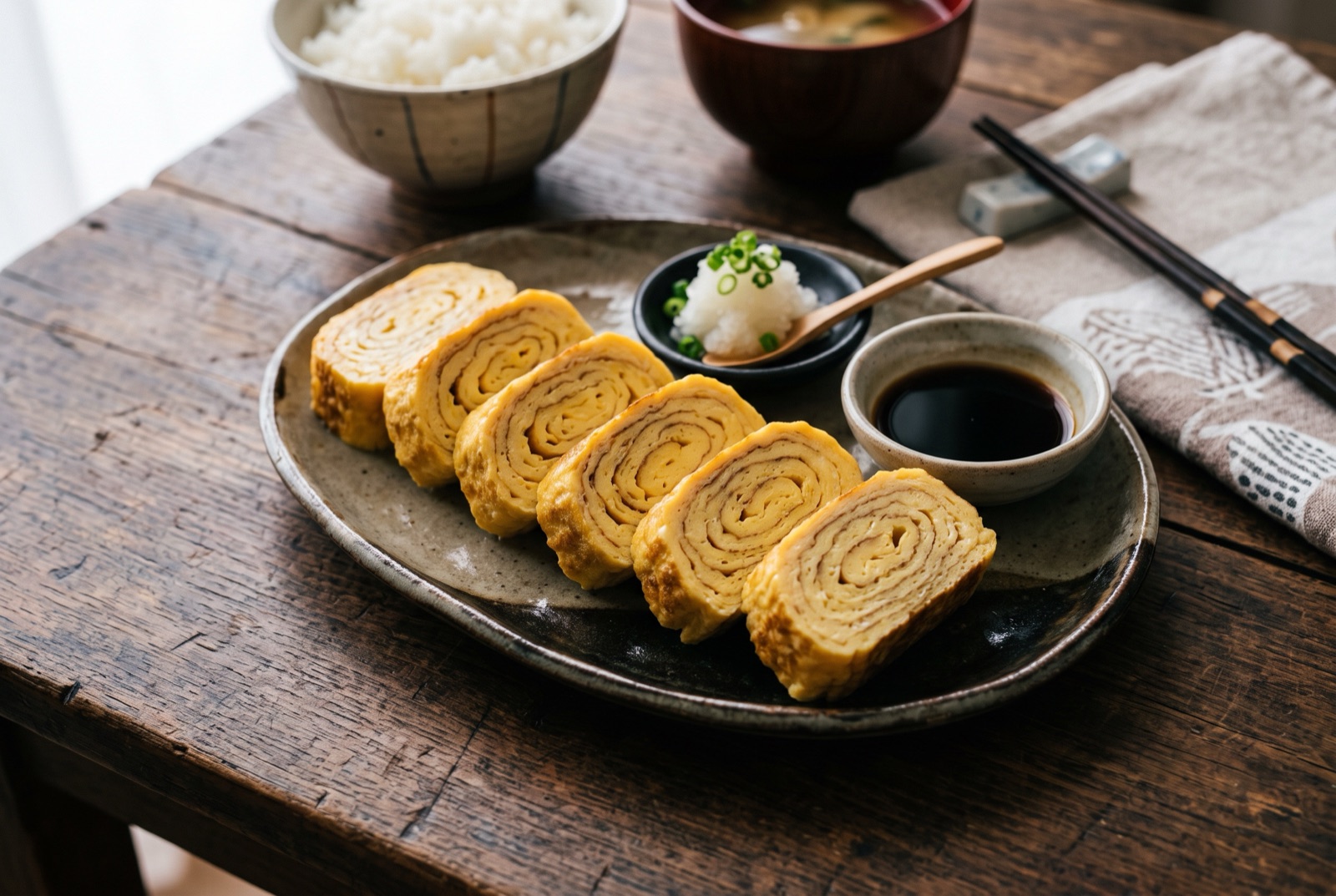
Tamagoyaki is an omelette built by rolling rather than folding. Egg seasoned with dashi, mirin, soy and a little sugar is poured into a hot pan in thin sheets; each sheet is rolled onto the last while still slightly wet, so the layers fuse into one dense, tender log with a spiral running through the cut face. The taste sits deliberately between sweet and savoury, the balance varying by household and region, and the texture is closer to a set custard than to a fluffy Western omelette. It appears in breakfast trays, in bento boxes at room temperature, and at sushi counters, where the quality of a chef's tamago is treated as a fair test of their skill.

- Gate
- JapanKanto
- Prep
- 10 min
- Cook
- 15 min
- Total time
- 30 min incl. 5 min rest
- Serves
- 4
- Status
- Medium
- Nutrition / serving · estimated
- Calories 170 kcal
- Protein 12 g
- Carbs 5 g
- Fat 11 g
- Sugar 4 g
- Sodium 340 mg
Why this recipe works.
- A ratio with enough dashi for real tenderness but not so much that the roll collapses in a home pan.
- The straining step, which is what removes the ropey chalaza and gives a smooth, even cut face.
- Written for a round frying pan as well as the rectangular tamagoyaki pan — the shaping trick is explained.
- Rolling cues based on how the egg looks and behaves, not on a fixed number of seconds.
Ingredients.
9 itemsFor the egg mixture
For the pan
To serve
Equipment
- Tamagoyaki pan or small non-stick frying pan
- Chopsticks or a thin spatula
- Fine sieve
- Bamboo sushi mat or foil
- Small bowl of oil with a folded paper towel
Instructions.
Season and strain the eggs
Beat the eggs with the cooled dashi, mirin, soy sauce, sugar and salt, cutting through the whites with chopsticks rather than whipping — you want it mixed, not aerated. Pour the mixture through a fine sieve into a jug to catch the stringy chalaza.
Tip Air bubbles become holes in the finished spiral. Stir low and slow, and skim any foam off the top.
Heat and oil the pan
Set the pan over medium-low heat and wipe it with a folded paper towel dipped in oil. Test with a drop of egg: it should set slowly with a faint hiss, not sizzle and bubble. If it browns instantly, lift the pan off the heat for ten seconds.
Cook the first layer
Pour in a thin layer of egg, about a fifth of the mixture, and tilt the pan so it covers the base. Pop any large bubbles with the chopsticks. When the surface is still glossy but no longer runny, roll the egg away from you into a loose log at the far side of the pan.
Build the roll
Wipe the empty part of the pan with oil, pour in another thin layer, and lift the existing roll so the raw egg runs underneath it. When the new layer is just set on top, roll the log back over it towards you, picking up the fresh sheet. Repeat until all the egg is used.
Tip Roll while the top layer still looks damp — that wet surface is the glue between layers.
Colour check and shape
Turn the finished roll on all four sides in the pan for a few seconds each to firm the shape, keeping it pale yellow with no browning. Slide it onto a bamboo mat or a sheet of foil, wrap it snugly, and rest 5 minutes so the layers set together.
Slice and serve
Unwrap and cut the roll across into 2 cm slices with a sharp knife, so each piece shows the spiral. Serve warm or at room temperature, with a small mound of grated daikon and a few drops of soy sauce alongside if you are eating it as a breakfast dish.
Tips from our kitchen.
- Strain the beaten egg through a sieve. It takes ten seconds and removes the stringy white that otherwise shows up as a rubbery streak in the finished slice.
- Roll each layer while the top is still glossy and slightly wet. A fully set layer will not weld to the next one and the roll separates when you slice it.
- Keep the heat at medium-low. Browning is a fault in tamagoyaki — the surface should stay pale yellow, never spotted or crisp.
- Oil the pan between every layer with a folded paper towel dipped in oil, wiping rather than pouring, so the egg slides but does not fry.
- If you use a round pan, roll from one side and simply trim the ragged ends after shaping; nobody will know once it is sliced.
- Press the finished roll in a bamboo mat or wrap it snugly in foil for five minutes while it cools — it tightens the layers and squares off the shape.
Substitutions.
- Dashi → Water with a pinch of salt
- Common in sweeter Kanto-style home versions. You lose depth but the roll behaves identically, and it is a little easier to handle.
- Mirin → 1 tsp sugar dissolved in 1 tbsp water per tablespoon
- Mirin adds gloss along with sweetness; sugar alone covers the flavour but not the sheen.
- Sugar → Reduce or omit entirely
- A savoury Kansai-style dashimaki tamago uses little or no sugar. Both versions are correct — it is a regional and family preference, not a rule.
Variations.
- Dashimaki tamago
- The Kansai version with much more dashi and little sugar, so the roll is wetter and softer, almost trembling, and is served warm with grated daikon.
- Negi tamagoyaki
- Finely sliced scallions scattered over each layer before rolling, giving green flecks through the spiral and a sharper flavour.
- Nori tamagoyaki
- A sheet of nori laid on each layer before it is rolled, so the finished slice shows dark rings between the yellow bands.
- Mentaiko tamagoyaki
- Spicy cured pollock roe smeared along the first layer before rolling — an izakaya version with a salty, faintly chilli-warm centre.
Storage & reheating.
Tamagoyaki keeps 2 days refrigerated, wrapped tightly so it does not pick up fridge smells, and is designed to be eaten cold or at room temperature — take it out 20 minutes before serving so it is not fridge-hard. Do not freeze: the egg weeps water on thawing and the layers turn spongy. If you are making it for a bento, cool it completely before packing, because trapped steam makes the rice around it wet.
Serve with
Steamed rice, miso soup and a grilled fillet of salted mackerel for a full Japanese breakfast tray, or cooled and packed into a bento.
The story behind Tamagoyaki.
Rolled egg has been made in Japan for centuries, but its rise is tied to two things: the arrival of chicken eggs as an affordable everyday food, and the invention of the makiyakinabe, the rectangular pan whose straight sides make the rolling possible. In the Kanto region around Tokyo the omelette is traditionally sweeter, sometimes markedly so, while Kansai cooks around Osaka and Kyoto lean on dashi and make a wetter, more savoury version usually called dashimaki tamago, which trembles when cut and is served warm rather than packed cold.
At a sushi restaurant the tamago has an outsized reputation. It is the piece that is often eaten last, and the old line among diners is that ordering it first tells you everything about the kitchen, because a good one is nothing but eggs, dashi and technique — there is nowhere to hide a clumsy hand. Some traditional shops make a denser, cake-like version enriched with ground shrimp or grated yam and cooked slowly in a square mould, closer to a savoury sponge than to the home-style roll.
At home the dish plays a much less ceremonial part. It is one of the first things Japanese children learn to cook, one of the standard fillings that give a bento its block of yellow next to the rice, and a common quick breakfast alongside grilled fish and miso soup. Because it is good at room temperature it travels well, which is exactly why it earned its permanent place in the lunchbox. Most home cooks have a fixed ratio they never write down, adjusted over the years to whether their family likes it sweet.
Questions, answered.
Do I need a rectangular tamagoyaki pan?
No. The rectangular makiyakinabe makes straight edges effortless, but a small non-stick round frying pan works fine — roll from one edge, use the curved sides to help turn the log, and trim the tapered ends before slicing. Shaping the warm roll in a bamboo sushi mat or foil evens out any irregularity.
Why do my layers separate when I slice it?
Each layer was cooked too long before rolling. The egg needs to be still tacky and glossy on top when you begin to roll, so the wet surface fuses to the previous layer. If the pan is too hot the surface sets in seconds — lower the heat, pour thinner layers, and start rolling almost immediately.
Is tamagoyaki sweet or savoury?
Both, depending on where you are. Tokyo-style versions are noticeably sweet, sometimes with a tablespoon of sugar or more per few eggs. Kyoto and Osaka lean savoury and dashi-forward. This recipe sits between the two; add or remove sugar freely, since neither version is more authentic than the other.
Can I make it the night before for a lunchbox?
Yes, that is one of its main uses. Cook it, cool it completely at room temperature, wrap it whole rather than sliced, and refrigerate. Slice in the morning so the cut faces stay fresh. It is meant to be eaten unheated, so nothing is lost by making it ahead.
Why is my omelette browned in patches?
The pan was too hot or too dry. Tamagoyaki should stay pale yellow all over, which means medium-low heat and a thin wipe of oil before every layer applied with a folded paper towel. If the egg sizzles loudly when it hits the pan, pull the pan off the heat for a few seconds before pouring.
You might also like.
All recipes →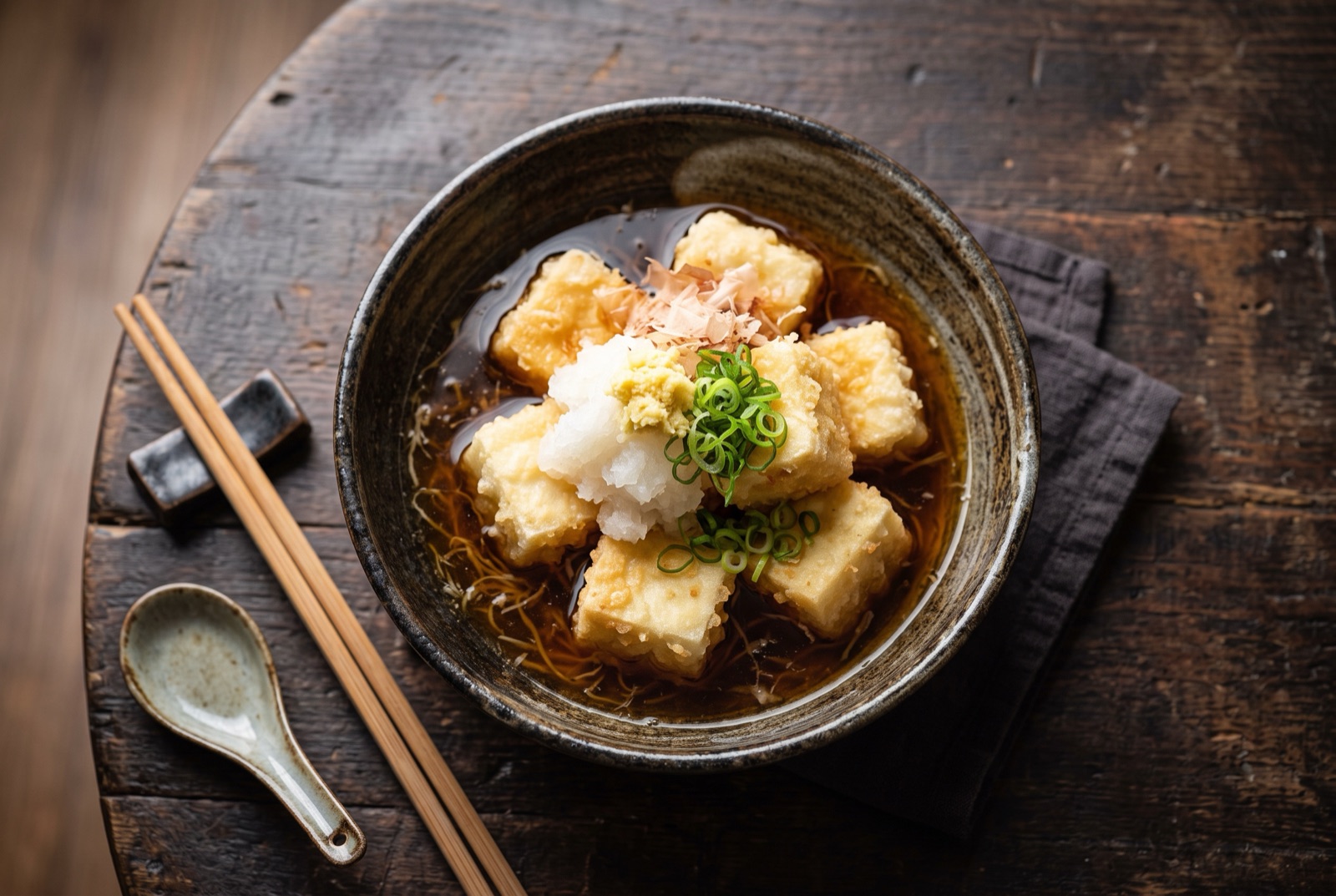
Keep exploring Japan.
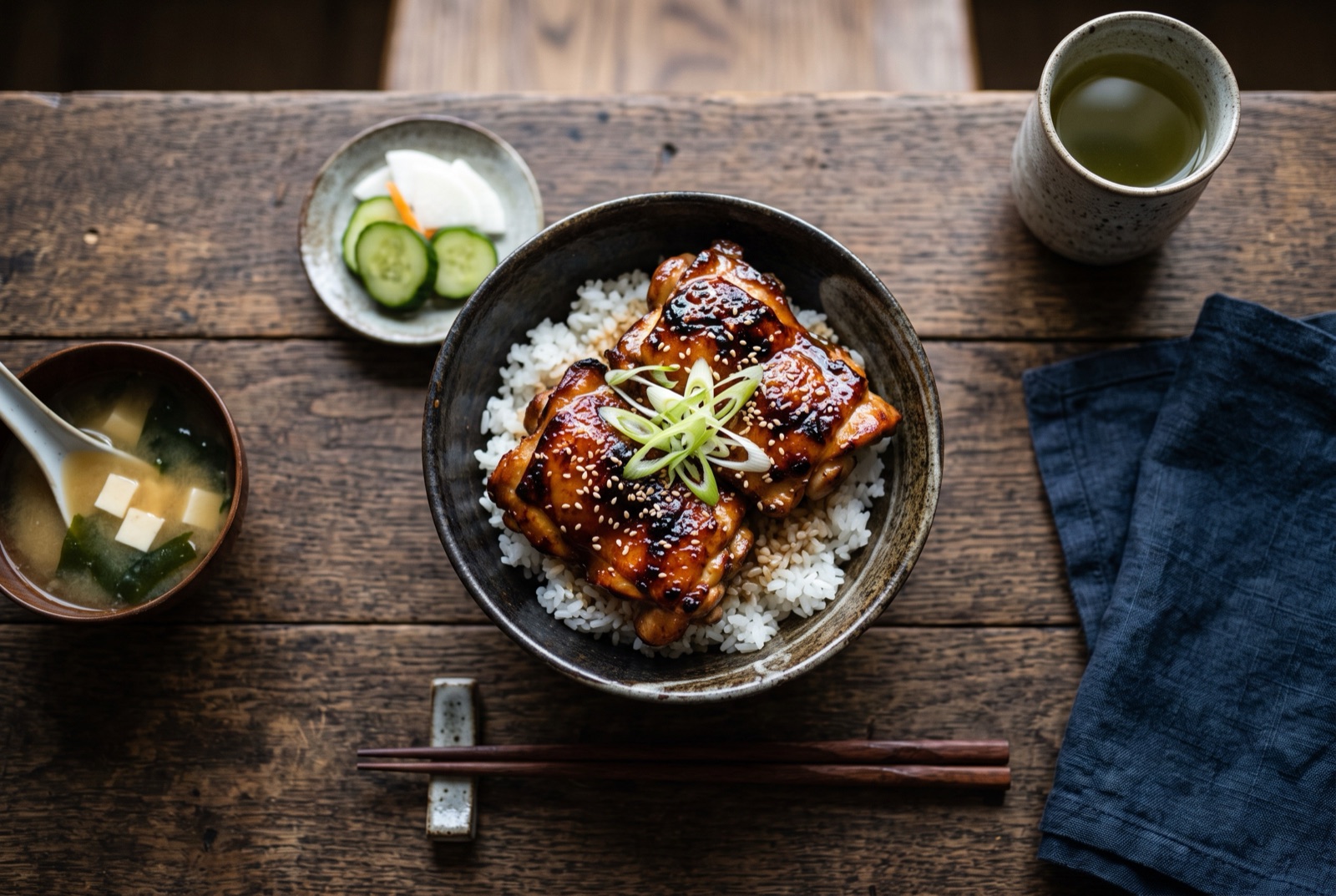
Japan has 9 more dishes in the atlas — Agedashi Dofu and Chicken Teriyaki, and 7 more.
Recipe by The DishRoute Kitchen · published August 19, 2026 · updated August 19, 2026