Shoyu Ramen.
Tokyo-Style Soy Sauce Ramen
醤油ラーメン · Shōyu rāmen · say it: SHOW-yoo RAH-men
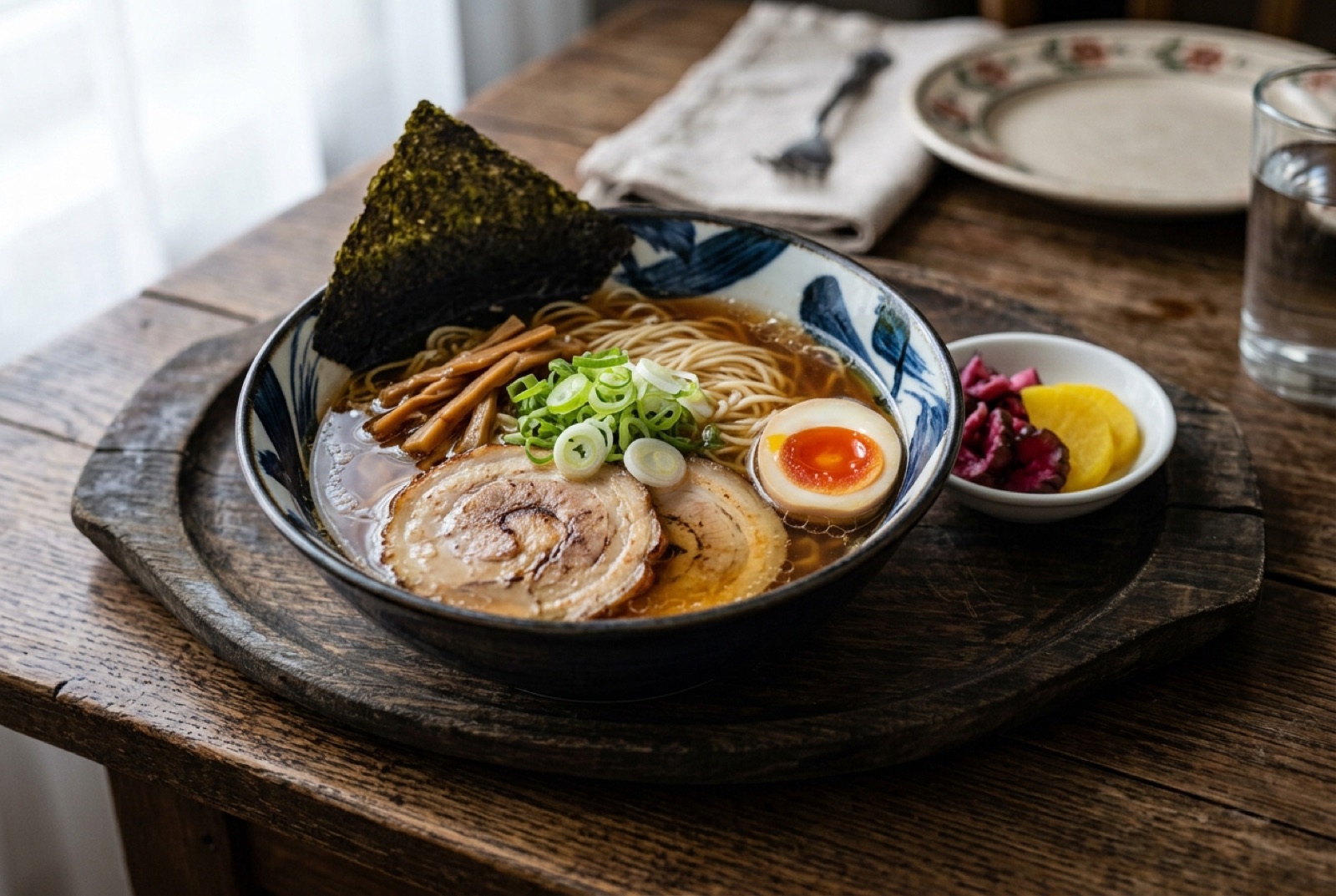
Shoyu ramen is the original Tokyo bowl: a clear, amber chicken broth seasoned at the last moment with a soy sauce tare, poured over springy alkaline noodles and finished with a soft marinated egg, scallions and a slick of aroma oil. Unlike creamy tonkotsu, this style is about clarity and balance — you can taste the chicken, the soy and the noodles separately in every spoonful. It tastes savory, gently sweet from mirin, and deeply comforting without being heavy. This home version skips the pro-kitchen theatrics but keeps the architecture of a real bowl: broth, tare, oil, noodles, toppings — each made properly, none of them difficult.

- Gate
- JapanKanto (Tokyo)
- Prep
- 30 min
- Cook
- 2 hr
- Total time
- 6 hr 30 min incl. 4 hr rest
- Serves
- 4
- Status
- Medium
- Nutrition / serving · estimated
- Calories 620 kcal
- Protein 38 g
- Carbs 58 g
- Fat 24 g
- Sodium 1900 mg
Why this recipe works.
- Real ramen architecture (broth + tare + oil), scaled to a home stove — no 12-hour bone boils.
- The tare method means the broth stays unseasoned and reusable, and every bowl adjusts to taste.
- Timed egg and noodle steps take the guesswork out of the two easiest things to ruin.
- Every component can be made days ahead; serving day is ten minutes of assembly.
Ingredients.
14 itemsFor the broth
For the tare
For the toppings
For assembly
Equipment
- Large pot (4 l or more)
- Fine-mesh strainer
- Small saucepan
- Timer
Instructions.
Start the broth
Put the chicken, kombu, ginger, garlic and scallion whites in a large pot with 1.2 kg of chicken and 2.5 l of cold water. Bring it just to the edge of a boil over medium heat, then immediately lower to the barest simmer — a bubble or two breaking the surface. Skim the gray foam from the first 10 minutes.
Simmer gently
Remove the kombu once the pot is hot (it turns bitter if boiled), and let the broth simmer uncovered for 2 hours. It should stay clear and amber, reducing to about 1.6 liters — never let it reach a rolling boil, or it will cloud.
Tip If the level drops fast, your heat is too high. Top up with hot water only in the first hour.
Make the tare
While the broth simmers, combine the soy sauce, mirin and sake in a small saucepan. Bring to a bare simmer for 2 minutes to burn off the alcohol, then take it off the heat and let it cool completely.
Cook and marinate the eggs
Lower fridge-cold eggs into boiling water and cook exactly 6 minutes 30 seconds, then move them straight into ice water for 10 minutes. Peel gently and submerge in half of the cooled tare mixed with 60 ml of water. Marinate at least 4 hours in the fridge, turning once.
Tip A splash of vinegar in the boiling water helps if an egg cracks. Older eggs peel more cleanly than very fresh ones.
Strain and hold the broth
Strain the broth through a fine-mesh sieve, pressing nothing (pressing clouds it). Discard the solids, but pick any good chicken meat off the thighs and shred it for topping. Keep the broth hot, just below a simmer, and season it with nothing yet.
Assemble the bowls
Warm four bowls with hot water and empty them. Into each bowl put 2 tablespoons of the remaining tare and a half tablespoon of sesame oil. Cook the noodles in plenty of unsalted boiling water for about 1 minute (or per package), drain hard, shaking off every drop of water.
Finish and serve
Pour about 400 ml of hot broth over the tare in each bowl and stir once. Add the drained noodles, lifting and folding them so they do not clump. Top with a halved marinated egg, shredded chicken, scallion greens and a pinch of white pepper. Serve immediately — ramen does not wait.
Tips from our kitchen.
- Do not let the broth boil hard. A bare simmer keeps it clear; a rolling boil emulsifies fat and turns it cloudy — that is a different (tonkotsu-style) technique entirely.
- Season the bowl, not the pot. The tare goes into each serving bowl and the hot broth is poured over it — this keeps the broth reusable and lets each person adjust saltiness.
- Cook the eggs to 6 minutes 30 seconds exactly and shock them in ice water; the yolk should be jammy, not runny and not chalky. Marinate at least 4 hours.
- Warm the serving bowls with hot water before assembly. Ramen is served near-scalding, and a cold bowl kills the temperature in seconds.
- Have every topping ready before the noodles hit the water. Fresh ramen noodles cook in about a minute, and they wait for no one — overcooked noodles are the most common home-ramen failure.
Substitutions.
- Fresh ramen noodles → Dried ramen or thin wheat noodles
- Cook per package minus 30 seconds. Instant-ramen noodles work in a pinch; discard their seasoning packet.
- Mirin → Sake + ½ tsp sugar
- Or dry sherry with a pinch of sugar — you need gentle sweetness against the soy.
- Chicken wings and thighs for broth → A whole chicken carcass
- Any bony, skin-on chicken parts work; bones and skin build body, breast meat adds nothing.
Variations.
- Shio ramen
- Swap the soy tare for a salt-based one (salt, sake, a little dashi) — lighter and even clearer, the connoisseur's Tokyo bowl.
- Spicy shoyu
- Add a spoon of chili crisp or rayu to the finished bowl, plus a squeeze of ginger — a modern shop standard.
- Vegetarian shoyu
- Build the broth from kombu and dried shiitake instead of chicken, and use the same tare; finish with corn and butter.
Storage & reheating.
Broth keeps 4 days refrigerated or 3 months frozen — freeze it in portion-sized containers with the tare stored separately. Marinated eggs keep 3 days in the fridge (they get saltier the longer they sit). Do not store assembled ramen; cooked noodles turn to mush within minutes, so always cook noodles fresh per bowl.
Serve with
Steamed rice on the side, izakaya-style pickles, or gyoza if you are making a night of it.
The story behind Shoyu Ramen.
Ramen is a Chinese immigrant that Japan adopted and never gave back. Wheat noodles in broth arrived with Chinese cooks in the late nineteenth century, and the dish that formed around them in Tokyo — then called shina soba, "Chinese noodles" — was seasoned the local way, with soy sauce. The shop most often credited with codifying the style, Rairaiken in Asakusa, opened in 1910 and served a soy-seasoned chicken broth with Chinese-style noodles; that template, refined over a century, is what we now call shoyu ramen. It remains the default bowl of the capital, the style every Tokyo neighborhood shop measures itself against.
What makes ramen ramen, rather than soup with noodles, is its modular grammar. The broth carries body; the tare — a concentrated seasoning liquid waiting at the bottom of the bowl — carries salt and identity; an aroma oil carries fragrance; the noodles carry chew. Shops guard their tare recipes the way distilleries guard yeast strains, and the same broth can become shoyu, shio or miso ramen depending on which tare hits it. Understanding this changed home ramen for good: instead of chasing one magic pot, you build components, and assembly takes ninety seconds.
After the Second World War, cheap American wheat flour and returning soldiers who had eaten noodles in China turned ramen from a niche urban dish into national fuel, sold from yatai carts to workers rebuilding the country. Instant ramen, invented by Momofuku Ando in 1958, carried the idea worldwide. But the bowl in this recipe is the one that started it all — and the one Tokyo still queues for on cold nights.
Questions, answered.
What does shoyu ramen taste like compared to tonkotsu?
Shoyu ramen is clear, savory and comparatively light — you taste chicken, soy sauce and a gentle mirin sweetness in a broth with the body of a strong tea. Tonkotsu is the opposite: pork bones boiled hard for hours until the broth is opaque, creamy and rich enough to coat a spoon. Shoyu is the style you can eat weekly; tonkotsu is the indulgence.
Can I make shoyu ramen without special noodles?
Yes, with caveats. The defining bounce of ramen noodles comes from kansui (alkaline salts), which regular pasta lacks. Dried ramen from an Asian grocery is the best substitute; thin wheat noodles work acceptably. A known hack is boiling spaghetti with a teaspoon of baked baking soda per liter, which alkalizes the water and mimics the chew surprisingly well.
What exactly is tare and why not just salt the broth?
Tare is a concentrated seasoning — here soy sauce, mirin and sake simmered briefly — placed in the bowl before the broth is poured in. Keeping seasoning separate from broth is how ramen shops run one stockpot into multiple menu items, and at home it means every bowl can be tuned to taste and the leftover broth stays unsalted and versatile.
How far ahead can I prepare the components?
Everything except the noodles improves with a head start. The broth can be made 3–4 days ahead and refrigerated; the tare keeps for weeks; the eggs need at least 4 hours in the marinade and peak around 24. On serving day you only boil water, cook noodles for a minute and assemble — about ten minutes of actual work.
Is shoyu ramen the same as soy sauce soup?
No — soy sauce is the seasoning, not the broth. The body of the bowl is a chicken broth (often reinforced with kombu), and the soy tare seasons it at assembly. If you simply dilute soy sauce with hot water you get salty brown water, not ramen; the layered construction is the entire point of the dish.
You might also like.
All recipes →
Keep exploring Japan.
Japan has 9 more dishes in the atlas — Agedashi Dofu and Chicken Teriyaki, and 7 more.
Recipe by The DishRoute Kitchen · published August 18, 2026 · updated August 18, 2026