Gyudon.
Japanese Beef and Onion Rice Bowl
牛丼 · Gyūdon · say it: GYOO-don
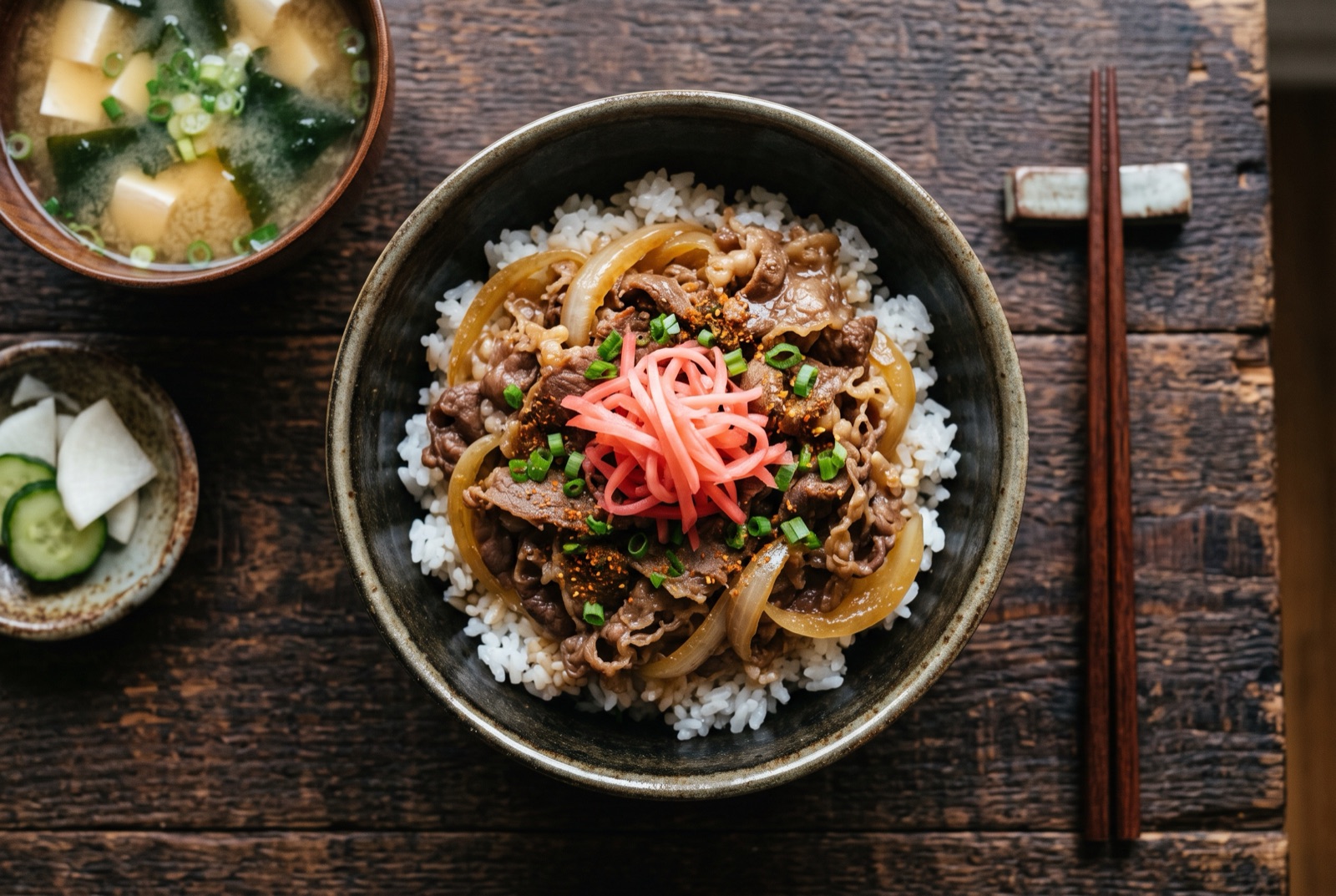
Gyudon is a bowl of hot rice buried under thin slices of beef and onion that have been simmered — not fried — in a broth of dashi, soy sauce, mirin and sake. The beef stays tender because it is sliced almost transparent and cooked for barely five minutes; the onion collapses into sweetness and thickens the sauce; and the rice underneath soaks up the broth that runs off, which is really the point of the dish. The flavour is savoury and openly sweet, with a clean dashi backbone. From start to table it takes about twenty minutes, most of which is the rice cooking, which is why it is one of the most-eaten meals in Japan.

- Gate
- JapanTokyo
- Prep
- 10 min
- Cook
- 15 min
- Total time
- 25 min
- Serves
- 4
- Status
- Easy
- Nutrition / serving · estimated
- Calories 620 kcal
- Protein 34 g
- Carbs 78 g
- Fat 17 g
- Fiber 3 g
- Sugar 12 g
- Sodium 1350 mg
Why this recipe works.
- Real dashi in the simmering liquid, so the broth tastes layered instead of just sweet and salty.
- The onions go in first and cook until translucent, which is what makes the sauce round rather than sharp.
- A clear method for slicing your own beef paper-thin at home when pre-sliced is not available.
- Fast enough for a weeknight — the beef needs five minutes, and the rice sets the pace.
Ingredients.
14 itemsFor the rice
For the beef
For the broth
To serve
Equipment
- Wide shallow pan or sauté pan with a lid
- Rice cooker or heavy lidded pot
- Sharp knife
- Ladle
Instructions.
Start the rice
Rinse the rice in several changes of cold water until the water runs almost clear, then cook it in a rice cooker or a covered pot with 400 ml water: bring to a boil, drop to the lowest heat for 12 minutes, then leave covered off the heat for 10 minutes to steam.
Build the broth
Combine the dashi, soy sauce, mirin, sake, sugar and grated ginger in a wide pan and bring to a simmer over medium heat. Let it bubble for a minute so the alcohol in the sake cooks off and the smell turns sweet and savoury rather than sharp.
Soften the onions
Add 2 of onion wedges, spreading them across the pan in a single layer. Simmer uncovered for 5–6 minutes until they turn translucent and slump against each other, and the broth smells sweet — undercooked onion will taste raw in the finished bowl.
Simmer the beef
Lower the heat so the liquid barely trembles and add the beef slice by slice, separating each one as it goes in. Cook for 4–5 minutes, skimming the grey foam that rises in the first minute, until no pink remains and the slices have curled and darkened.
Tip Never let it boil hard here. A gentle simmer keeps the beef silky; a rolling boil makes it chewy within a minute.
Reduce and taste
Raise the heat briefly and let the broth reduce until it just barely covers the beef and coats the onions with a glossy film. Taste it — it should read sweet first, then salty, with a savoury dashi finish. Add a splash more soy or a pinch of sugar to steer it.
Fill the bowls
Pack hot rice into four deep bowls and spoon the beef and onion over the top with a ladleful of broth for each, letting it run down into the rice. Finish with sliced scallions, a heap of beni shoga, a shake of shichimi and an egg on top if you are using one.
Tips from our kitchen.
- The beef must be sliced 1–2 mm thin. Freeze a piece of chuck or sirloin for 45 minutes until firm at the edges, then slice across the grain with a long, sharp knife.
- Simmer the onion until it turns translucent and slumps before the beef goes in — undercooked onion stays sharp and never sweetens the sauce.
- Separate the beef slices as you drop them in, one at a time. Dumped in as a clump they weld together and cook unevenly.
- Skim the grey foam that rises in the first minute after the beef goes in; leaving it makes the broth cloudy and slightly metallic.
- Do not let the pan boil hard once the beef is in. A rolling boil squeezes the slices tight and turns tender beef into chewy ribbons in about a minute.
- Cook the rice while the broth simmers and serve it straight from the pot — gyudon over cold or reheated rice loses most of its appeal.
Substitutions.
- Sake → Dry sherry, or an extra 2 tbsp dashi plus 1 tsp rice vinegar
- Sake softens the beef and takes the edge off the soy. The dashi-and-vinegar route works, though the sauce is slightly flatter.
- Mirin → 2 tbsp dashi + 2 tsp sugar per tablespoon of mirin
- Mirin brings sweetness and a light gloss. Sugar covers the sweetness; the shine is the part you lose.
- Thin-sliced beef → Thin-sliced pork belly or shoulder
- This makes butadon, a standard variation sold in the same shops. Cooking time is the same.
- Bonito dashi → Kombu and dried shiitake dashi
- A vegetarian base if you are also swapping the beef for firm tofu or mushrooms. The shiitake add the savoury depth the bonito would have.
Variations.
- Gyudon with onsen egg
- A slow-cooked egg with a barely set white broken over the hot beef, so the yolk runs into the broth and makes the sauce silky.
- Negi-dama gyudon
- Topped with a heap of sliced scallions and a raw egg yolk in a hollow in the middle — the chain-shop order for people who want it richer.
- Butadon
- The same bowl built with thin pork instead of beef, common in Hokkaido where it is often grilled and glazed rather than simmered.
- Cheese gyudon
- A modern chain-menu version with melting cheese over the beef. Not traditional in any sense, and genuinely popular with children.
Storage & reheating.
The beef and onion keep 3 days refrigerated in their broth and reheat well over low heat — do not boil, or the beef toughens. Store the topping and rice separately, since rice sitting in broth turns to porridge. The simmered beef also freezes for up to a month in a sealed container with enough broth to cover it; thaw overnight and warm gently. Cook fresh rice for serving rather than reheating old rice, which is the part that never survives.
Serve with
Miso soup, a small dish of Japanese pickles, and beni shoga pickled ginger heaped on the bowl.
The story behind Gyudon.
Gyudon grew out of gyunabe, the beef hotpot that became fashionable in Japan in the late nineteenth century, when the government actively promoted meat-eating after centuries in which beef had been largely absent from the Japanese diet for Buddhist and practical reasons. Cooks began ladling the hotpot beef and its sauce straight over rice for customers who wanted to eat fast and leave, and that shortcut became gyumeshi and then gyudon — literally beef bowl.
In the twentieth century the dish became inseparable from the chain restaurant. Yoshinoya, Sukiya and Matsuya built enormous businesses on counters where a bowl arrives in under a minute, costs less than a sandwich, and can be ordered with the size of the rice and the amount of beef adjusted by a single word. Chain gyudon is genuinely good, and Japanese people are affectionate rather than snobbish about it: it is the meal for the shift worker at 3am, the student between classes, and the salaryman who has twelve minutes for lunch. When the price of a beef bowl rises, it makes the national news.
The home version is not an imitation of that so much as its parent. Because you are simmering a small batch you can be more generous with the dashi, let the onion soften properly, and finish each bowl the way you like it — an onsen egg broken over the top, a heap of beni shoga pickled ginger, seven-spice shichimi, or a scattering of scallions. The one non-negotiable is the beef: it has to be sliced thin enough to cook through the moment it hits the broth, which for most people outside Japan means buying it frozen from an Asian grocer or slicing it yourself half-frozen at home.
Questions, answered.
Where do I find beef sliced thin enough for gyudon?
Asian and Japanese grocers sell it frozen, labelled shabu-shabu or sukiyaki beef, which is exactly right. Korean shops sell similar slices for bulgogi. Otherwise, freeze a piece of boneless chuck or sirloin for 45–60 minutes until firm but not solid and slice it across the grain as thin as your knife allows — 2 mm is workable.
Why did my beef turn out tough?
Either the slices were too thick or the pan was boiling. Thin beef needs no more than 4–5 minutes at a gentle simmer, and it is done the moment the pink disappears. Hard boiling contracts the muscle fibres quickly and squeezes out the moisture, which is why the same beef can be silky one time and stringy the next.
Can I make gyudon without dashi?
You can use water, but the bowl will taste mainly of soy and sugar, with none of the savoury background that makes it moreish. A 5 g piece of kombu soaked in the water for 20 minutes takes almost no effort and covers most of the gap. Instant dashi powder is what most Japanese households actually use on a weeknight.
Is gyudon supposed to be sweet?
Yes, noticeably so. The mirin, sake and sugar are meant to be tasted, balanced against the salt of the soy sauce and the depth of the dashi. If it tastes cloying to you, cut the sugar by half and add a splash more soy — many home cooks in Japan adjust the ratio the same way.
What is the pink stuff served on top?
Beni shoga, ginger cut into thin strips and pickled in plum vinegar, which gives it the bright colour and a sharp, salty bite. It cuts through the sweetness of the broth. It is not the same as gari, the pale pink sliced ginger served with sushi, which is sweeter and milder.
You might also like.
All recipes →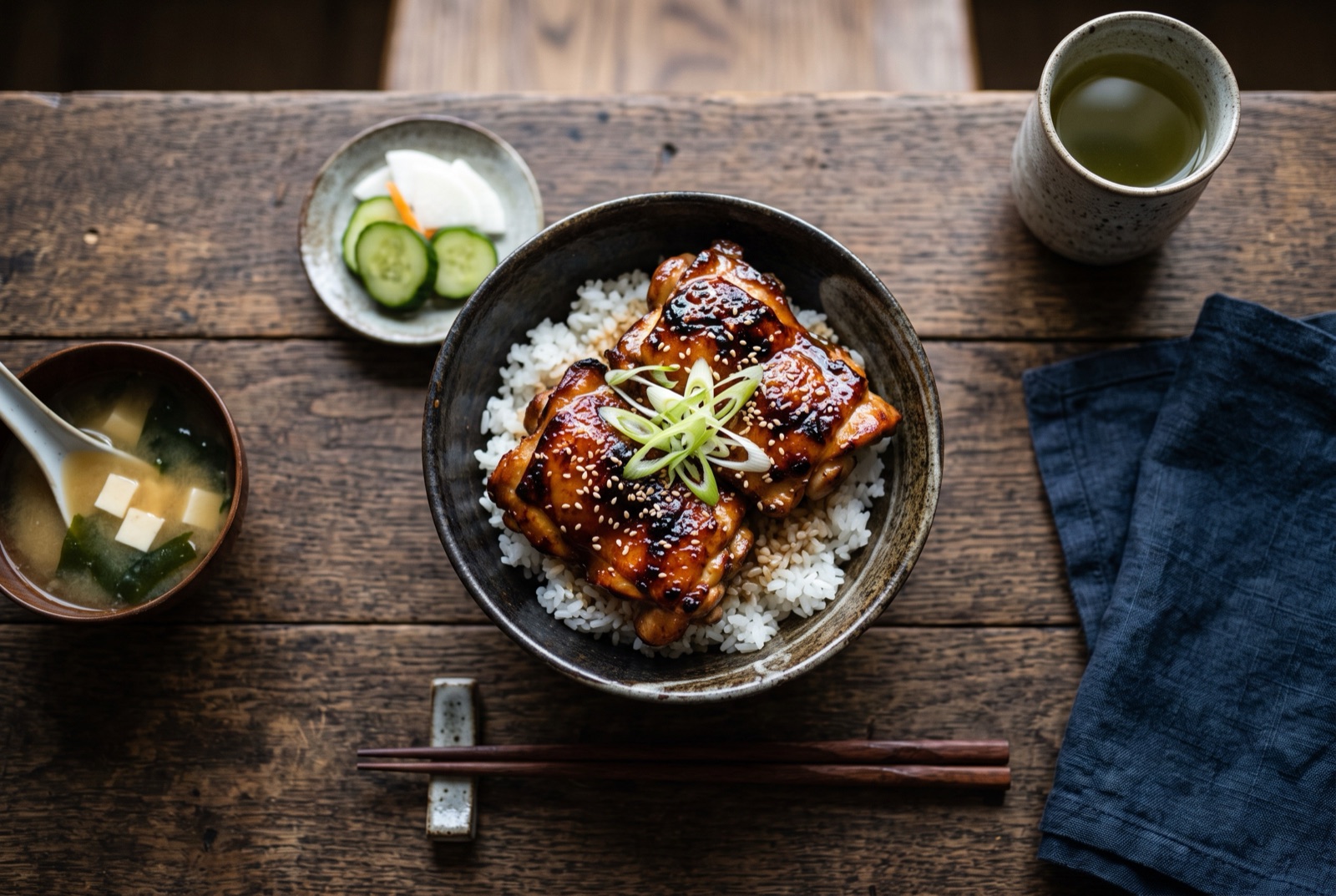
Keep exploring Japan.
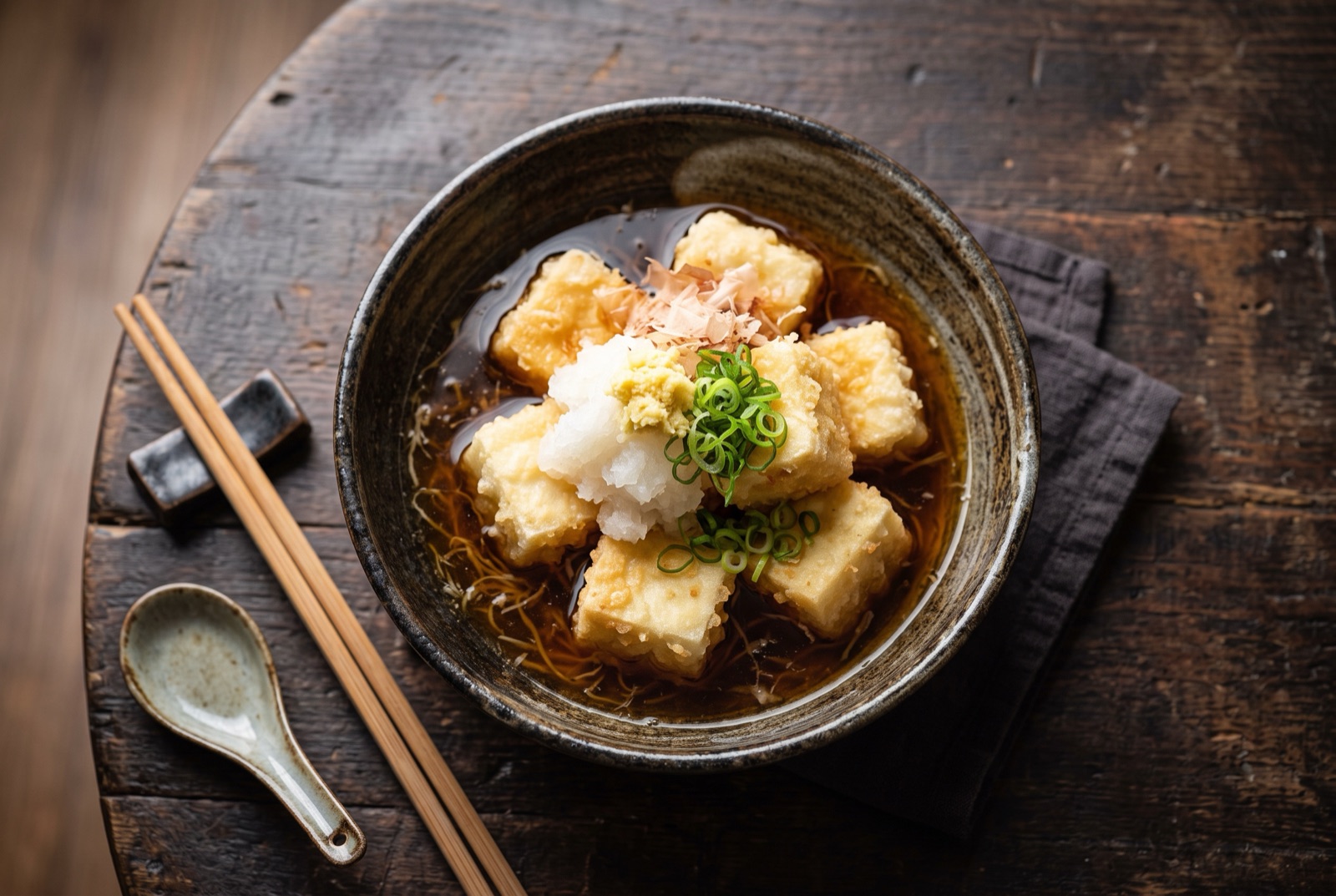
Japan has 9 more dishes in the atlas — Agedashi Dofu and Chicken Teriyaki, and 7 more.
Recipe by The DishRoute Kitchen · published August 19, 2026 · updated August 19, 2026