Gratin Dauphinois.
Creamy Baked Potato Gratin
Gratin dauphinois · say it: grah-TAN doh-fee-NWAH
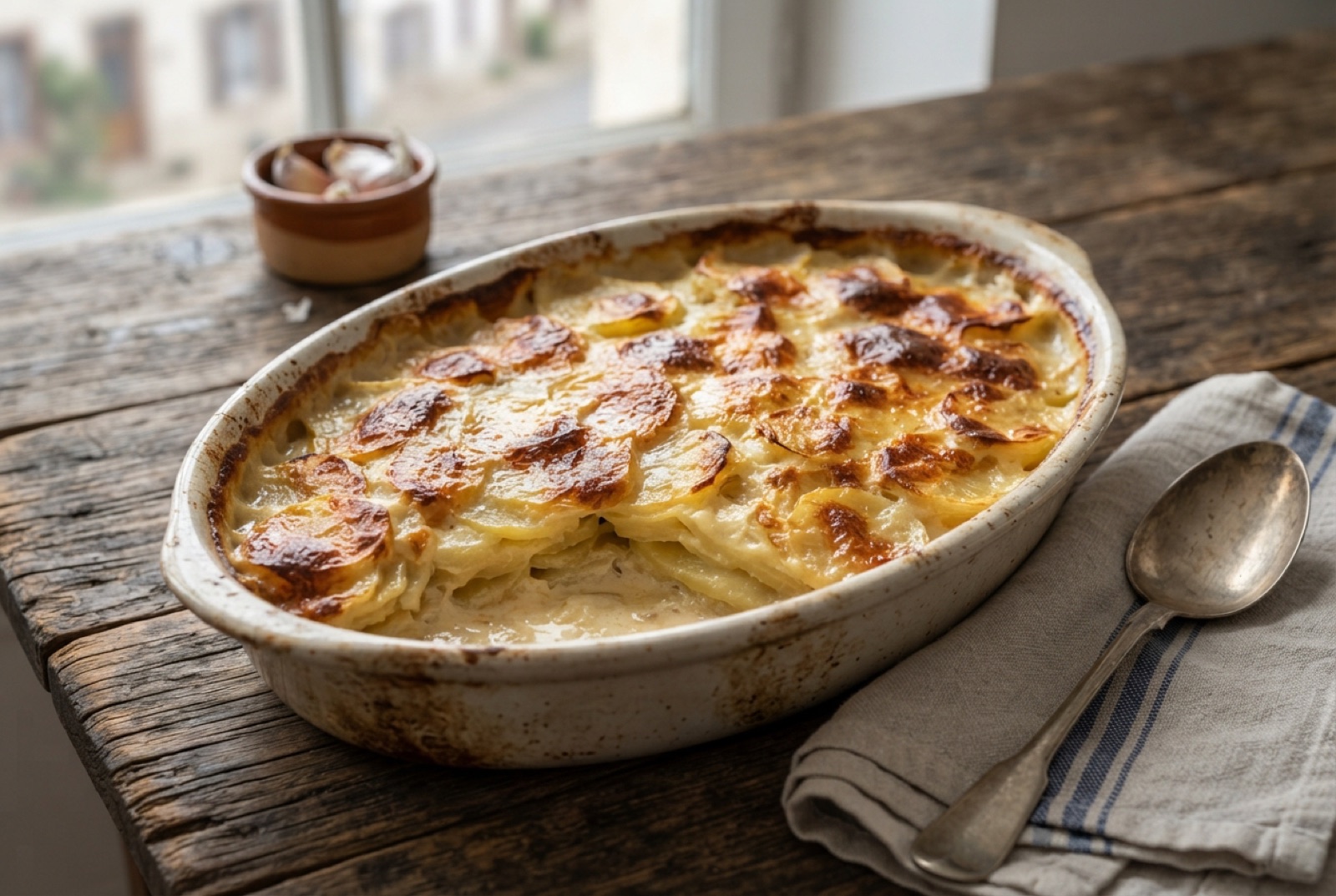
Gratin dauphinois is potatoes, cream, milk, garlic and nutmeg, baked long and low until the slices soften completely and the starch they shed thickens the dairy around them into a sauce that sets. Cut into it and the layers hold together in a single piece rather than sliding apart; the taste is sweet, deeply savoury and unmistakably of potato, with the garlic present only as a background note. There is no cheese in the traditional recipe and none is needed — the browning on top comes from the cream itself catching in the oven. It is the best thing you can do to a potato with four ingredients and ninety minutes of oven time.

- Gate
- FranceDauphiné
- Prep
- 20 min
- Cook
- 1 hr 30 min
- Total time
- 2 hr 5 min incl. 15 min rest
- Serves
- 6
- Status
- Easy
- Nutrition / serving · estimated
- Calories 425 kcal
- Protein 8 g
- Carbs 33 g
- Fat 29 g
- Fiber 3 g
- Sugar 6 g
- Sodium 540 mg
Why this recipe works.
- No cheese, following the actual Dauphiné recipe, with a clear explanation of what the cheesy version is really called.
- The slices are never rinsed, so their own starch thickens the cream instead of leaving a thin pool at the bottom.
- A pre-simmer in the dairy guarantees the potatoes cook evenly and cuts the oven time by a third.
- Slow, moderate heat throughout, which is what keeps the cream from splitting into oil and curds.
Ingredients.
8 itemsFor the gratin
Equipment
- Mandoline or very sharp knife
- Wide shallow baking dish, about 30 x 20 cm
- Large saucepan
Instructions.
Prepare the dish
Heat the oven to 160°C. Rub the inside of a wide, shallow baking dish all over with the cut face of the halved garlic clove, pressing hard so it leaves a film, then butter the dish generously including the corners and rim.
Slice the potatoes
Slice 1.2 kg of peeled potatoes into rounds 2–3 mm thick, ideally on a mandoline so they are all the same. Do not rinse them and do not hold them in water — the cloudy starch on each slice is what will thicken the cream.
Tip Work straight into the pan rather than a bowl, so the slices spend as little time as possible oxidising in the air.
Simmer in the dairy
Put the slices in a large saucepan with the milk, cream, crushed garlic clove, nutmeg, salt and pepper. Bring slowly to a bare simmer over medium-low heat, stirring gently now and then, and cook for 10 minutes until the liquid has visibly thickened and coats the slices like a loose sauce.
Tip Stir carefully with a spatula from the bottom — the starch catches and scorches easily once it starts to thicken.
Layer into the dish
Tip the contents of the pan into the prepared dish and use a fork to spread the slices into even, overlapping layers, pressing them flat so the liquid rises just to the surface. The top layer should be barely covered, not swimming.
Bake low and slow
Bake uncovered for 75–90 minutes, until the top is deep gold and blistered in patches and a knife tip slides through the whole depth without resistance. The surface should look set rather than sloshing when you shake the dish.
Tip If the top browns before the middle is soft, lay a sheet of foil loosely over it and keep going.
Rest, then serve
Take the dish out and leave it on the counter for 15 minutes. The sauce tightens as it cools and only then will a spatula lift a clean square with the layers intact. Serve hot, straight from the dish.
Tips from our kitchen.
- Never rinse the sliced potatoes. The starch clinging to each slice is the only thickener in the dish, and washing it off leaves you with potatoes floating in hot milk.
- Slice 2–3 mm thick and keep it consistent — a mandoline is worth using here. Uneven slices mean some are collapsing while others are still crunchy.
- Use a floury or all-purpose potato such as Bintje, Maris Piper, Russet or Yukon Gold. Very waxy salad potatoes stay firm and never release enough starch to bind the cream.
- Rub the dish hard with a cut garlic clove and leave it at that. Chopped garlic sitting in a gratin for an hour and a half tends to catch and turn bitter.
- Keep the oven at 160°C. Above about 180°C the cream separates into a greasy layer and the top scorches before the middle is cooked.
- Let the gratin rest 15 minutes out of the oven. Straight from the heat the sauce is loose; as it cools it sets enough to hold a clean square on the spatula.
Substitutions.
- Double cream → All whole milk, or milk with crème fraîche stirred in
- An all-milk gratin is the older, poorer version and still works, though it sets firmer and tastes noticeably leaner. Do not use low-fat milk — it splits.
- Whole milk → More cream, for a very rich version
- All-cream gratins are common in restaurants. They are excellent but heavy; the milk-and-cream mix is closer to how it is cooked at home.
- Fresh nutmeg → A pinch of ground nutmeg, or leave it out
- Nutmeg is traditional and quietly important, but ground nutmeg loses aroma quickly — use half as much and expect less perfume.
Variations.
- Gratin savoyard
- The neighbouring version from Savoy: beef or chicken stock instead of cream, plenty of Beaufort or Gruyère between the layers, and dots of butter. Lighter in the mouth, sharper in flavour.
- With a bay and thyme infusion
- Warm the milk and cream with a bay leaf and two thyme sprigs for ten minutes, then strain before using. Subtle, herbal and a good match for lamb.
- Individual gratins
- Layer into buttered ramekins and bake for 45–50 minutes. They brown more per portion and unmould neatly, which suits a plated dinner.
Storage & reheating.
Refrigerate for up to 3 days, covered. It reheats better than almost any other potato dish: cut into portions, sit them in an oven dish with a spoonful of milk, cover with foil and warm at 160°C for 20–25 minutes, uncovering for the last 5 to re-crisp the top. Cold leftovers can be cut into slabs and fried in butter until crisp on both sides, which some people prefer to the original. Freezing is possible but the texture suffers — the cream turns slightly grainy and the potatoes go watery on thawing.
Serve with
Roast lamb, a plain roast chicken or a steak, plus a green salad with a mustard vinaigrette to cut the cream.
The story behind Gratin Dauphinois.
The Dauphiné is the old province around Grenoble, in the western Alps, and its name attaches to this dish the way Lorraine attaches to quiche. The usual origin story points to a dinner given in Gap in 1788 by the local governor, at which a potato gratin was served to municipal officials — a claim repeated in almost every French cookbook and difficult to verify beyond the record of the menu itself. What that date does tell you is that the dish arrived early in the potato's French career. Potatoes were still viewed with suspicion in much of France at the time, and mountain regions where little else grew well were among the first to take them seriously.
The cheese question is where the arguments start, and unlike some culinary disputes this one has a clear answer. A gratin dauphinois contains potatoes, cream or milk, garlic, butter, salt and nutmeg — no cheese, no eggs. Add Gruyère or Beaufort and stock instead of cream and you have made a gratin savoyard, from Savoy just to the north, which is a fine dish with its own name. The versions crusted with cheese sold everywhere as dauphinois are simply mislabelled, and while nobody is going to police your oven, it is worth knowing that the cheeseless original is not a stripped-down version of anything. It is the richer, smoother one.
The technique matters more than the ingredient list. Sliced potatoes are never rinsed, because the surface starch is what thickens the cream; the dish is rubbed with raw garlic rather than having garlic scattered through it, so no piece burns; and the whole thing bakes slowly at a moderate temperature so the potato cooks through before the dairy splits. In the Alps it is served with roast meat, with charcuterie, or on its own with a salad, and it turns up on Sunday tables and in ski-station canteens with equal frequency. It is peasant arithmetic — cheap starch plus expensive fat — that has never needed improving.
Questions, answered.
Should gratin dauphinois have cheese?
No. The traditional Dauphiné recipe is potatoes, milk and cream, garlic, butter, salt and nutmeg — the golden crust comes from the cream browning, not from cheese. A potato gratin made with cheese and stock is a gratin savoyard, from the neighbouring region of Savoy. Adding Gruyère will not ruin your dinner, but it makes a different dish that already has its own name.
Why did my gratin turn out watery?
Three usual causes: the potato slices were rinsed after cutting, which washes away the starch that thickens the sauce; the potatoes were too waxy to release much starch; or the gratin was served straight from the oven before it had time to set. Skip the rinse, choose a floury or all-purpose variety, and rest the dish 15 minutes before cutting.
Why did the cream split into oil and curds?
The oven was too hot. Dairy separates when it gets close to boiling for a long stretch, and a gratin baked at 200°C will do exactly that while the potatoes are still hard in the middle. Keep it at 160°C and give it the full 75–90 minutes. Using low-fat milk or single cream also increases the risk, since less fat means a less stable emulsion.
What potatoes work best?
Floury or all-purpose varieties: Bintje and Charlotte in France, Maris Piper or King Edward in the UK, Russet or Yukon Gold elsewhere. They release plenty of starch and collapse into tender layers. Very waxy potatoes such as new potatoes or Charlotte-style salad varieties hold their shape too well and leave the cream thin.
Can I prepare it in advance?
Yes. Bake it completely, cool, and refrigerate up to two days, then reheat covered at 160°C for 25–30 minutes. This actually improves how neatly it cuts. What you should not do is slice the potatoes hours ahead and leave them sitting — they oxidise grey, and storing them in water washes off the starch you need.
You might also like.
All recipes →
Keep exploring France.
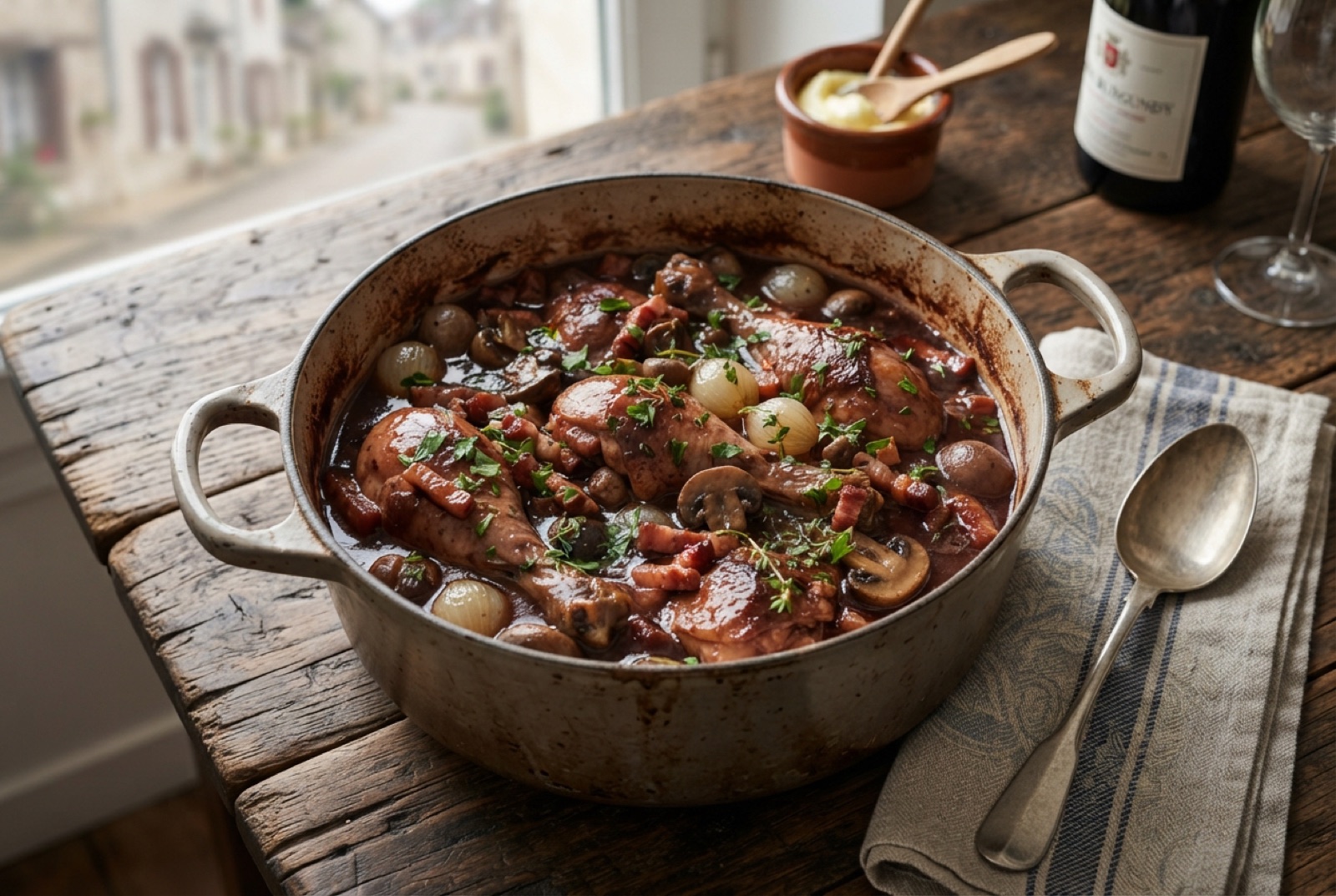
France has 9 more dishes in the atlas — Baguette and Bœuf Bourguignon, and 7 more.
Recipe by The DishRoute Kitchen · published August 19, 2026 · updated August 19, 2026