Arroz con Guandú y Coco.
Coconut Rice with Pigeon Peas
Arroz con guandú y coco · say it: ah-RROHS kohn gwahn-DOO ee KOH-koh
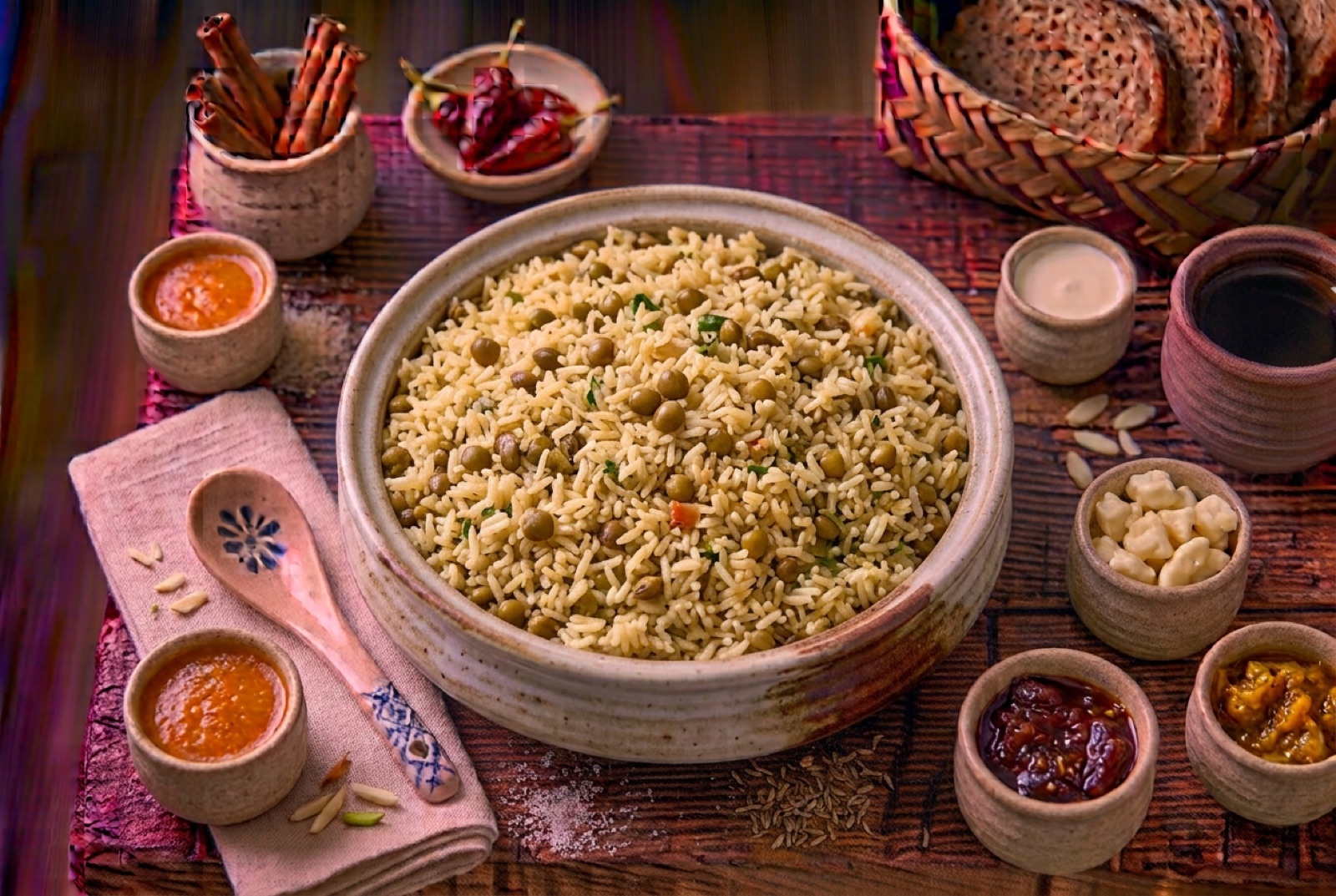
Arroz con guandú y coco is white rice cooked in coconut milk instead of water, with pigeon peas stirred through and culantro giving it a green, herbal edge. Done right the grains stay separate and glossy rather than sticky, the coconut reads as a background sweetness rather than a dessert flavour, and the peas hold their shape with a firm, almost chestnut bite. It is the rice Panamanians put on the table at Christmas, at birthdays and at any Sunday lunch that matters, usually next to roast pork or chicken — but on its own it is a full vegetarian plate, since the peas and rice together do the work of a main. The technique is simple; the discipline is in not stirring it once the lid goes on.

- Gate
- PanamaColón and the Caribbean coast
- Prep
- 15 min
- Cook
- 30 min
- Total time
- 55 min incl. 10 min rest
- Serves
- 4
- Status
- Medium
- Nutrition / serving · estimated
- Calories 520 kcal
- Protein 13 g
- Carbs 82 g
- Fat 16 g
- Fiber 8 g
- Sugar 4 g
- Sodium 620 mg
Why this recipe works.
- Coconut milk and stock are balanced so the rice tastes rounded rather than sweet like a dessert.
- Uses the achiote-and-sofrito base that Panamanian cooks actually build under this rice.
- Clear guidance for fresh, frozen, canned and dried pigeon peas, which all need different liquid.
- Naturally vegetarian and vegan as written, with no substitutions needed to get there.
Ingredients.
13 itemsFor the base
For the rice
Equipment
- Heavy lidded pot or rice pot
- Fine sieve for rinsing rice
- Fork for fluffing
Instructions.
Build the sofrito
Heat the oil in a heavy lidded pot over medium heat and cook the onion and bell pepper for 6 minutes until soft and translucent with no bite. Stir in the garlic, achiote and chopped culantro and cook one minute more, until the pot turns orange and smells strongly herbal.
Warm the peas
Add the pigeon peas and stir for 2 minutes so they take on the colour of the base. If you are using dried peas, they must already be boiled until just tender — they will not soften in coconut milk.
Add rice and liquid
Stir in 400 g of rinsed rice, then pour in the coconut milk and stock, add the salt, oregano and the whole chile if using, and stir once to level the surface. Taste the liquid now: it should be noticeably salty, since the rice will absorb all of it.
Simmer covered
Bring to a full boil uncovered, then immediately turn the heat to the lowest setting, cover tightly and cook 20 minutes. Do not lift the lid or stir at any point — every peek releases the steam that cooks the top layer.
Tip If your lid is loose, lay a sheet of foil under it. Escaping steam is the usual reason for crunchy grains on top.
Rest off the heat
Take the pot off the heat and leave it covered for 10 minutes. The grains finish absorbing the last of the liquid and firm up during this rest, which is why fluffing straight off the flame tears them.
Fluff and serve
Remove the chile, then fluff with a fork from the edges toward the middle, lifting rather than stirring. The grains should be separate, glossy and pale orange, with the peas whole and studded through. Serve warm.
Tips from our kitchen.
- Rinse the rice for this one until the water runs almost clear — here you want separate grains, the opposite of guacho.
- Shake the coconut milk can hard before opening, or whisk the solid cap into the liquid; unmixed fat makes greasy patches.
- Once the lid is on, do not lift it or stir. Every peek costs steam and gives you unevenly cooked rice.
- If using dried pigeon peas, boil them separately until just tender first — they will never soften properly in coconut milk.
- Let the pot rest off the heat for ten minutes before fluffing, so the grains firm up instead of tearing.
- Fluff with a fork, from the edges inward, never with a spoon that compacts the rice.
Substitutions.
- Fresh pigeon peas (guandú) → Canned or frozen pigeon peas, drained and rinsed
- Canned peas are already soft, so add them at the same time as the rice and expect a slightly softer bite. Frozen ones are closest to fresh.
- Pigeon peas → Black-eyed peas or small red beans
- Not traditional, but they hold their shape in coconut milk the same way. Black-eyed peas are the closer match in texture and cooking time.
- Culantro → A large handful of cilantro, stems included
- Add cilantro in the last five minutes rather than at the start, since it loses its aroma over a long covered simmer.
Variations.
- With coconut oil and titijé
- Some Caribbean-coast cooks fry the sofrito in coconut oil and cook the coconut milk down first until the solids brown, which gives the rice a toasted, almost caramel depth.
- Arroz con guandú sin coco
- The inland version made with stock instead of coconut milk. Drier, herbier and more savoury, and the standard everyday form outside Colón.
- With salted pork
- A common holiday upgrade: diced salt pork or bacon rendered before the sofrito, which makes the rice richer and no longer vegetarian.
Storage & reheating.
Keeps 4 days refrigerated in a sealed container. The coconut fat firms up cold and the rice hardens, so reheat covered with a tablespoon of water per portion, either in a pan over low heat or in the microwave, until steam comes through. It freezes acceptably for 2 months, though the peas soften noticeably. Cool it fully before refrigerating: rice left warm at room temperature for hours is one of the few genuine food-safety risks in a home kitchen.
Serve with
Roast pork or stewed chicken at Christmas — or on its own with fried ripe plantain and a slice of white cheese.
The story behind Arroz con Guandú y Coco.
Guandú — pigeon pea, called gandules in Puerto Rico and toor dal in India — travelled from Africa to the Caribbean and became one of the region's defining legumes. In Panama it grows in dooryards and on farm edges, and the fresh green pods come into season around November and December, which is precisely why this rice became Christmas food. Fresh guandú, still soft and grassy, is a different ingredient from the dried or canned version, and Panamanians who grew up on it are quick to say so.
The coconut half of the dish belongs to the Caribbean side of the country. Colón and Bocas del Toro were shaped by Afro-Antillean communities — many of them descendants of West Indian workers who arrived for the railway and the canal — and coconut milk runs through that kitchen the way cream runs through Normandy. Grating and pressing fresh coconut for its milk was ordinary domestic work within living memory; canned coconut milk is now standard in city kitchens and nobody pretends otherwise.
At a Panamanian holiday table this rice sits alongside tamales, ropa vieja or a roast, and it is the dish people go back to for a second spoonful. It also travels well and reheats without complaint, so it appears at potlucks, church suppers and beach picnics all year. The version below uses canned or frozen guandú, because fresh pods are hard to find outside Panama, and adjusts the liquid accordingly — dried peas drink far more coconut milk than fresh ones and will leave you with dry rice if you cook them the same way.
Questions, answered.
What are guandú and can I use canned ones?
Guandú is the pigeon pea, a small legume grown across the tropics and known as gandules in Puerto Rico. Canned pigeon peas work perfectly well — drain and rinse them, and add them along with the rice since they are already cooked. Fresh or frozen green ones have a firmer, grassier character if you can find them at a Latin or Caribbean grocer.
Why is my coconut rice sticky or gummy?
Usually too much liquid, or rice that was not rinsed. Coconut milk is thicker than water, so it needs slightly less volume than a standard rice ratio, and unrinsed grains release starch that glues everything together. Rinse until the water runs nearly clear and measure the liquid carefully.
Can I make this with light coconut milk?
You can, but the rice will taste thinner and less rounded, because most of the flavour lives in the coconut fat. If light coconut milk is what you have, use it in place of both the coconut milk and the stock so at least the coconut character is not diluted twice over.
Is this dish vegan?
As written, yes — it uses only rice, coconut milk, pigeon peas, vegetables and herbs, with vegetable stock. The common holiday variation with salt pork or bacon is not, and neither is any version cooked in chicken stock, so check which one you are being served.
How do I stop the bottom from burning?
Coconut milk contains sugar and scorches more readily than water. Use a heavy pot, drop the heat to the lowest setting the moment the liquid comes to a boil, and cover tightly. A lightly browned, crisp layer at the base is not a mistake, though — many cooks consider it the best part and serve it deliberately.
You might also like.
All recipes →
Keep exploring Panama.
Panama has 9 more dishes in the atlas — Carimañolas and Ceviche de Corvina, and 7 more.
All Panama recipes Rice recipes Coconut milk recipes Culantro recipes mainsidevegetarianvegandairy freegluten freenut freeRecipe by The DishRoute Kitchen · published August 20, 2026 · updated August 20, 2026