Guacho de Mariscos.
Panamanian Soupy Seafood Rice
Guacho de mariscos · say it: GWAH-choh deh mah-REES-kohs
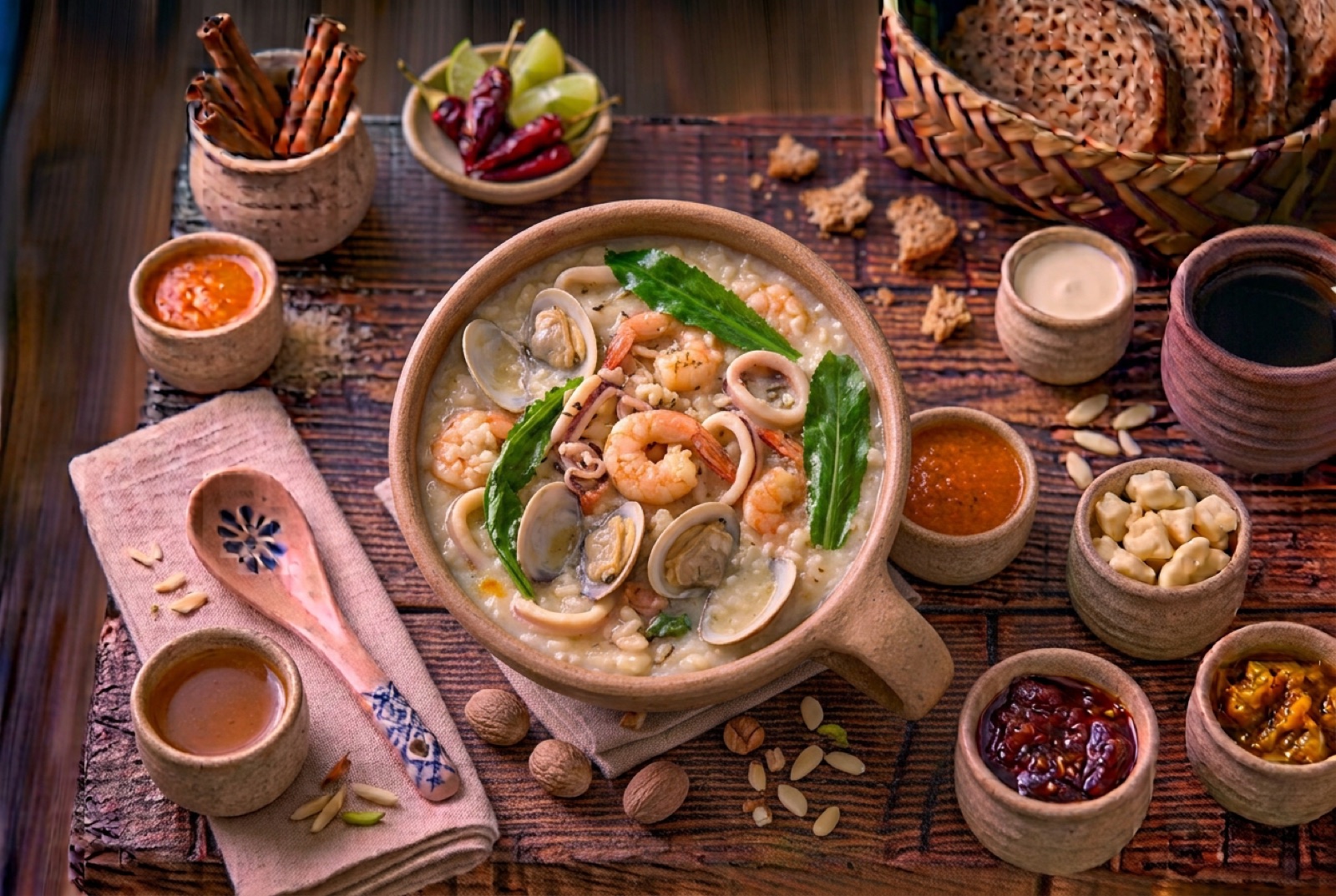
Guacho is rice cooked wrong on purpose. Where most cooks fight to keep grains separate, a guacho is stirred and pushed until the starch comes out and the whole pot turns into something between a risotto and a chowder — thick enough to hold a spoon upright, loose enough to be eaten from a bowl. The seafood version is the coastal one: shrimp, squid and clams dropped in near the end so they stay tender, coconut milk stirred through for sweetness and body, and culantro throughout so the pot smells green even under all that shellfish. The flavour is deep and slightly briny, with a soft coconut roundness and a habanero warmth that arrives late. It is a one-pot dinner that reads as generous no matter how much or how little seafood you actually put in.

- Gate
- PanamaDarién and Colón
- Prep
- 25 min
- Cook
- 40 min
- Total time
- 1 hr 5 min
- Serves
- 4
- Status
- Medium
- Nutrition / serving · estimated
- Calories 610 kcal
- Protein 38 g
- Carbs 74 g
- Fat 18 g
- Fiber 3 g
- Sugar 6 g
- Sodium 980 mg
Why this recipe works.
- Builds the starchy body from the rice itself rather than thickening with flour or cream.
- Seafood is staged so shrimp, squid and clams each finish at the right moment instead of turning rubbery.
- Coconut milk goes in late, so it stays sweet and does not cook down into an oily broth.
- Works with frozen shellfish, which is how most Panamanian home cooks outside the coast actually make it.
Ingredients.
17 itemsFor the base
Seafood
To finish
Equipment
- Heavy wide pot or Dutch oven
- Small pan for keeping stock hot
- Wooden spoon
Instructions.
Start the sofrito
Warm the oil in a heavy wide pot over medium heat and cook the onion and bell pepper for 7 minutes until soft and glassy with no raw crunch left. Add the garlic and cook one minute, until it smells nutty rather than sharp.
Colour the base
Stir in the tomatoes, tomato paste and achiote and cook 6 minutes, pressing the tomato apart, until the mixture turns deep orange-red and the oil separates out around the edges of the pan.
Toast the rice
Add 350 g of rice and stir for 2 minutes so every grain takes on the colour of the base and turns slightly chalky in the centre. Do not rinse the rice at any point — its surface starch is what thickens the finished pot.
Cook it soupy
Pour in 1 litre of the hot stock, drop in the whole chile if using, and simmer uncovered over medium-low heat for about 20 minutes, stirring every couple of minutes and scraping the base. Add more stock whenever the surface stops looking wet — the pot should never look like dry rice.
Tip By minute 15 the grains should be swollen and beginning to fray at the edges. That fraying is the starch you want.
Add the seafood
Fish out the chile. Nestle in the clams, cover and cook 4 minutes until they open, then stir in the shrimp and squid and cook 3 minutes more, until the shrimp are just opaque and curled into a loose C rather than a tight spiral.
Tip Discard any clams that stayed shut. A tightly curled shrimp is already overcooked.
Finish with coconut and culantro
Pour in the coconut milk, scatter over the chopped culantro and stir once through. Let it bubble for 2 minutes, then taste and correct with salt and black pepper. Serve straight from the pot with lime wedges, while it is still loose enough to pour.
Tips from our kitchen.
- Use a medium- or long-grain white rice and do not rinse it — you want that surface starch to thicken the pot.
- Keep the stock hot in a separate pan. Cold liquid stalls the pot and lengthens the cooking by ten minutes.
- Stir often but not constantly; scrape the bottom each time so the rice does not catch and scorch.
- Squid needs either two minutes or forty. Anything between those turns it into rubber bands, so add it right at the end.
- Discard any clams that stay shut after cooking, and any that were already open and did not close when tapped raw.
- Finish looser than you think you want. Guacho keeps thickening in the bowl on the way to the table.
Substitutions.
- Clams → Mussels, or a small can of clams with their juice
- Canned clams are common in home kitchens; add them with their liquid in the final two minutes so they only warm through.
- Squid → Extra shrimp, or firm white fish in 3 cm cubes
- Fish cubes go in with the shrimp and should be nudged rather than stirred so they do not break up into the rice.
- Culantro → A generous bunch of cilantro, stems included, added late
- Use the stems too — they carry more of the flavour that culantro would have supplied and hold up marginally better in the hot pot.
Variations.
- Guacho de rabito
- The inland classic: salted pork tail simmered until soft, with pigeon peas and no seafood. Smokier, saltier, and traditionally the most sought-after version.
- Guacho de guandú
- Made with fresh pigeon peas and coconut milk, seafood optional. The peas turn the rice a dusty green-brown and add a nutty backbone.
- Darién style, no coconut
- Pacific-side version built on seafood stock alone, with more culantro and chile. Sharper and brinier, with nothing sweet to round the edges.
Storage & reheating.
Guacho keeps 2 days refrigerated but the rice absorbs everything and sets solid — expect to add 100–200 ml of stock or water per portion when reheating, and warm it gently in a covered pan while stirring. The seafood will be firmer the second day, which is unavoidable. Do not freeze it: the rice turns grainy and the shrimp go woolly. If you are cooking ahead deliberately, make the rice base without seafood, refrigerate, then loosen it and add fresh shellfish when you reheat.
Serve with
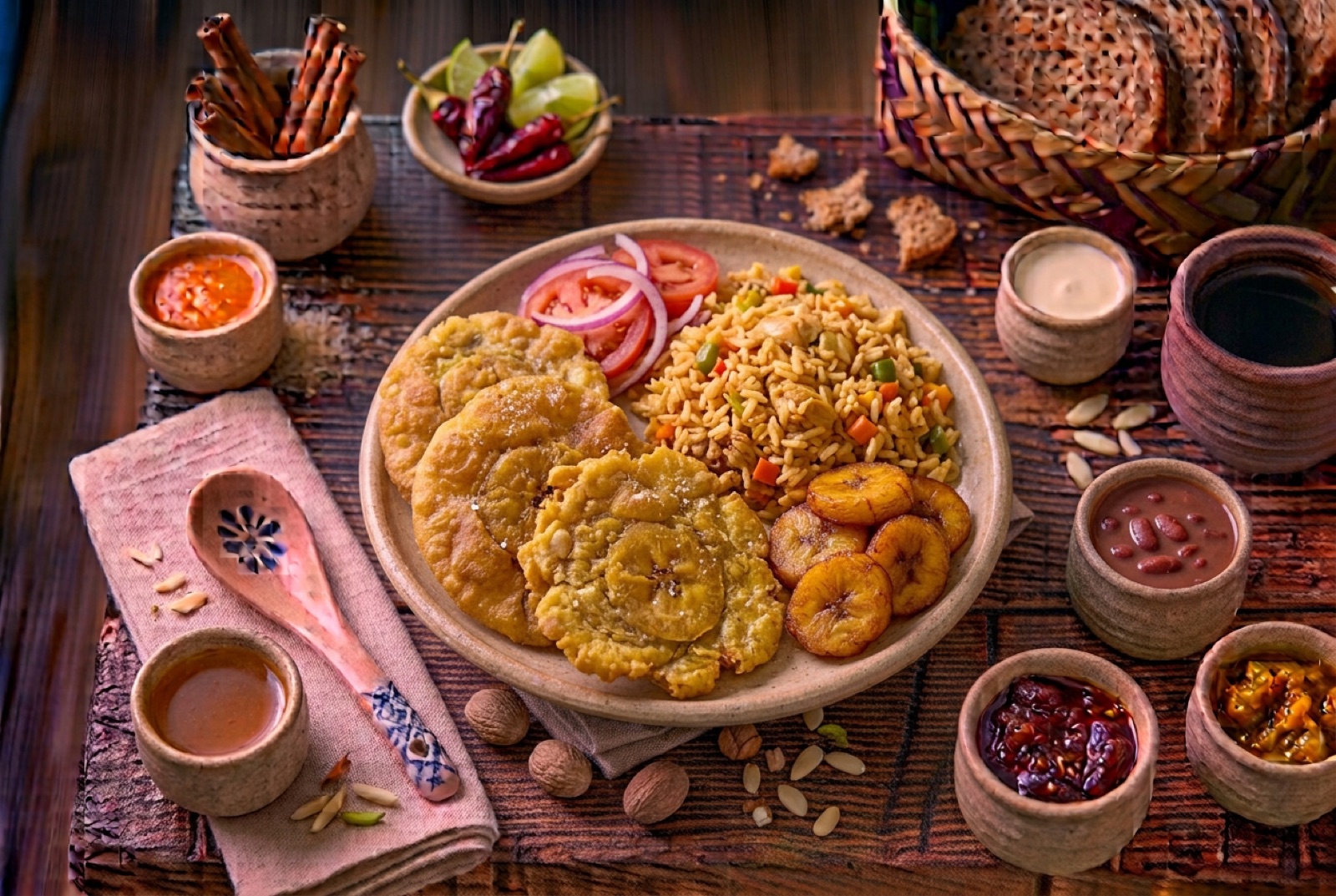
Patacones for scooping, lime wedges, and a bottle of Panamanian chile sauce on the table.
The story behind Guacho de Mariscos.
Guacho belongs to the wet, hot provinces on either side of the isthmus — Darién on the Pacific side and Colón on the Caribbean — where rice is grown, seafood is cheap and coconut palms are everywhere. The word itself simply describes the texture: soupy, sloppy, deliberately unruly. Panamanians make guacho with almost anything, and each version has its own following. Guacho de rabito uses salted pork tail, guacho de mariscos uses whatever the boat brought in, and guandú makes an appearance in both when pigeon peas are in season.
What separates guacho from Spanish arroz caldoso or Italian risotto is that nobody is guarding the grain. The rice is meant to break down. Cooks add liquid freely and stir with intent, and the finished dish is judged on whether it moves as a single mass rather than on whether individual grains are al dente. In Colón, where Afro-Caribbean cooking shaped the local kitchen through generations of West Indian labourers who came to build the railway and later the canal, coconut milk is standard and the pot leans sweet. In Darién the coconut is often lighter or absent, and the herb and chile do more of the work.
Seafood guacho is Sunday food and beach food. It shows up at gatherings where a single pot has to feed a crowd and where the cook wants to make the most of a modest bag of shrimp, and it is the sort of dish that gets carried to the table in the pot it was cooked in. Home cooks who live inland make it with frozen shrimp and canned clams without apology; the technique matters more than the provenance of the shellfish.
Questions, answered.
What is the difference between guacho and arroz con mariscos?
Arroz con mariscos is a dry rice dish where the grains stay separate, closer to a paella. Guacho is deliberately soupy — extra liquid and frequent stirring release the rice starch until the whole pot thickens into a porridge you eat with a spoon. Same ingredients in many cases, completely different texture and intent.
Can I use frozen seafood for guacho?
Yes, and most home cooks do. Thaw shrimp and squid fully and pat them dry first, otherwise the water they release thins the pot and drops its temperature. Frozen clams and mussels are usually pre-cooked, so add them in the last two minutes purely to heat through.
Why did my rice turn to mush?
Guacho is supposed to be soft, but total collapse usually means either too much liquid added too fast or a short-grain rice that breaks down quickly. Add stock in stages rather than all at once, and use a medium- or long-grain white rice. If it has already gone too far, stop adding liquid and let it sit off the heat for five minutes to firm up.
Do I need coconut milk?
Not strictly. The Caribbean side of Panama uses it as standard, while Pacific-side versions from Darién often skip it and rely on seafood stock, culantro and chile. Without coconut the dish is brinier and sharper; with it, rounder and slightly sweet. Both are traditional, so choose the one you would rather eat.
How thick should guacho be when it is done?
Loose enough to fall off a spoon in a slow ribbon, but thick enough that a trail dragged through the pot closes over in two or three seconds. It thickens noticeably as it cools, so pull it from the heat while it still looks slightly too wet.
You might also like.
All recipes →
Keep exploring Panama.
Panama has 9 more dishes in the atlas — Arroz con Guandú y Coco and Carimañolas, and 7 more.
Recipe by The DishRoute Kitchen · published August 20, 2026 · updated August 20, 2026